
The Brave Cut – A Study in Modern Leaf Manipulation
von Wing Yan Lau @yukilau
- 801
- 17
- 0
Introduction
For my second practice, I moved away from the traditional Shin-Soe-Hikae structure to explore a more modern, sculptural approach to Ikebana. This project focuses on the intentional manipulation of foliage to create mass, line, and movement.
Living in Taipei, I wanted to use materials that felt local and accessible, but I challenged myself to see them in a new way. Instead of allowing the leaves to dictate the form, I took a "brave" approach—reshaping, thinning, and cutting the material to find a balance between asymmetry and depth. This was a significant shift for me, moving from a passive observer of nature to an active participant in its design.
Supplies
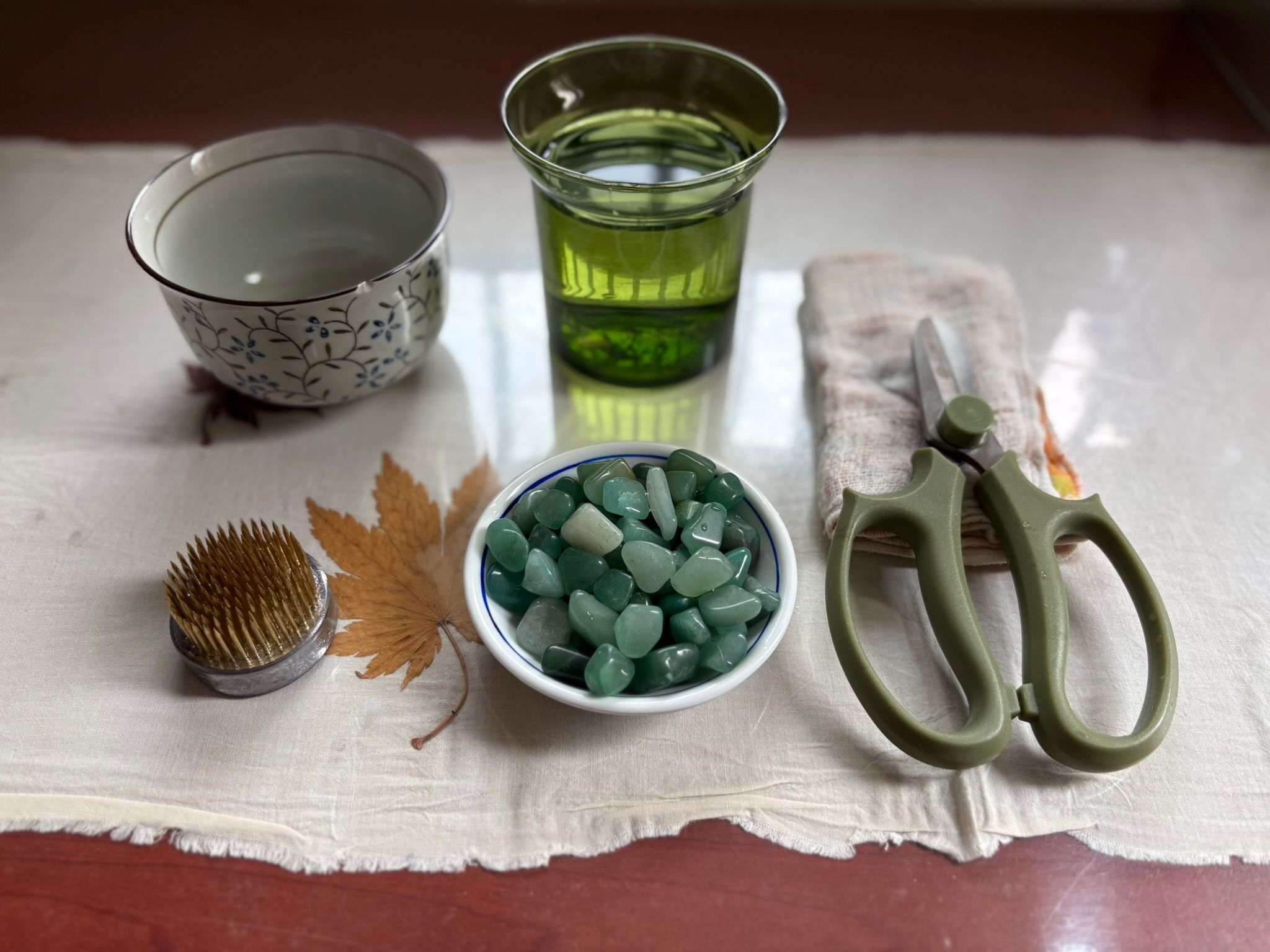
Botanicals:
Fuji Aspidistra (富士葉蘭): Chosen for its sleek surface and responsiveness to cutting.
Bird’s Nest Fern (山蘇): A local favourite from the Jianguo Holiday Flower Market: https://share.google/cLnzotpCrPSVK16d5, used for its wavy texture.
Vase: A gifted bowl from a classmate in Taiwan. Its slight dents and "wabi-sabi" character provided a rustic contrast to the modern arrangement.
Kenzan: A rare, locally made Taiwan kenzan found in the same flower market too—a small piece of local craftsmanship from a retiring generation of makers.
Sourcing and Discovery
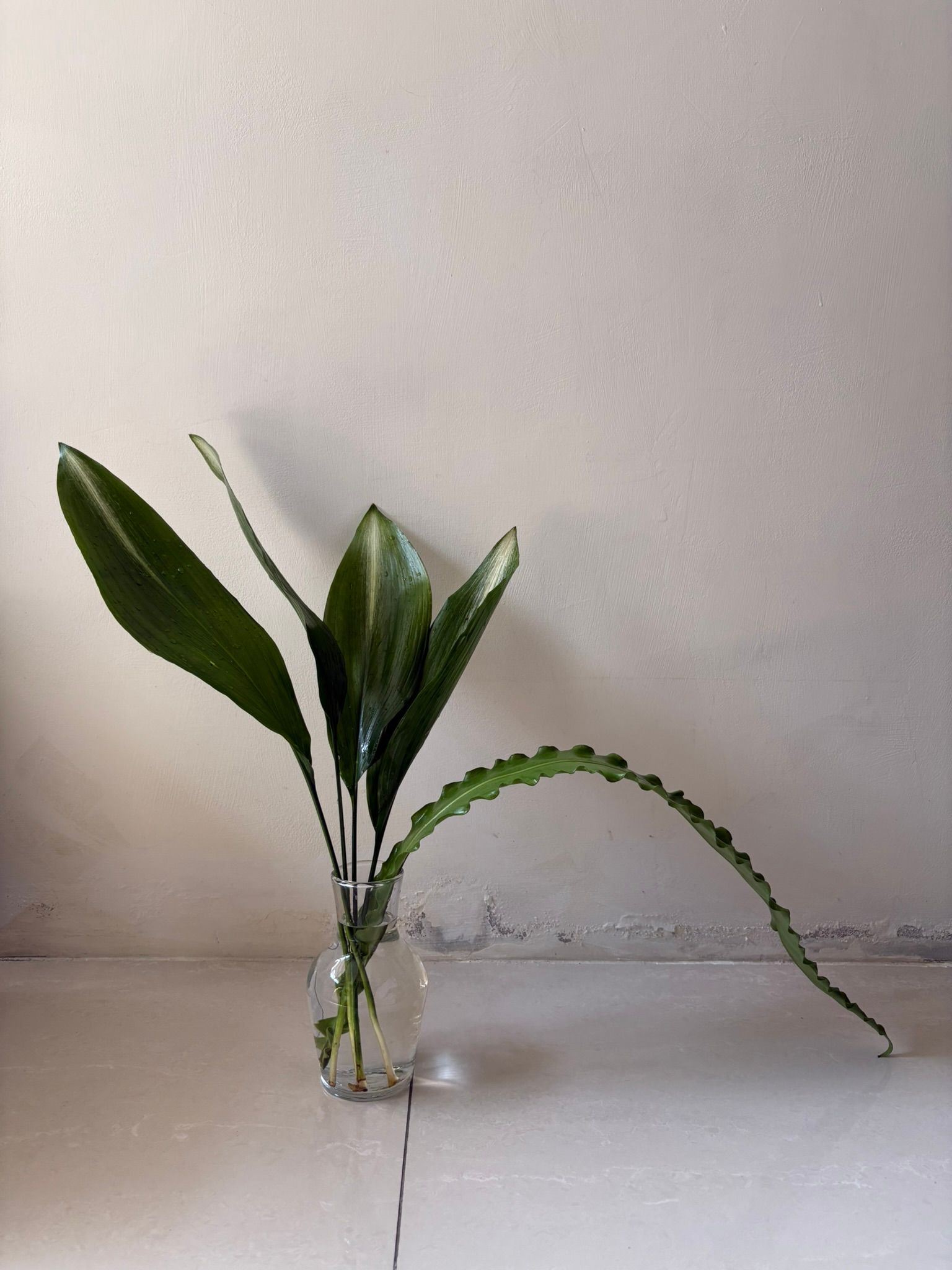
My journey began at the Jianguo Holiday Flower Market in Taipei. Finding specific cut foliage was a challenge, but through a bit of "tricky" detective work and the kindness of local stall masters, I secured the Fuji Aspidistra and Bird’s Nest Fern. I also rediscovered a gifted bowl during a recent home clearing, which felt like the perfect vessel for this exercise.
The First Attempt and Failure
I initially struggled to manipulate the Bird’s Nest Fern. Its natural midrib is much tougher and less predictable than the Aspidistra. In my first attempt, the leaf was too heavy and dropped away from the light, failing to meet the basic Ikebana principle of upward movement.
The Brave Decision
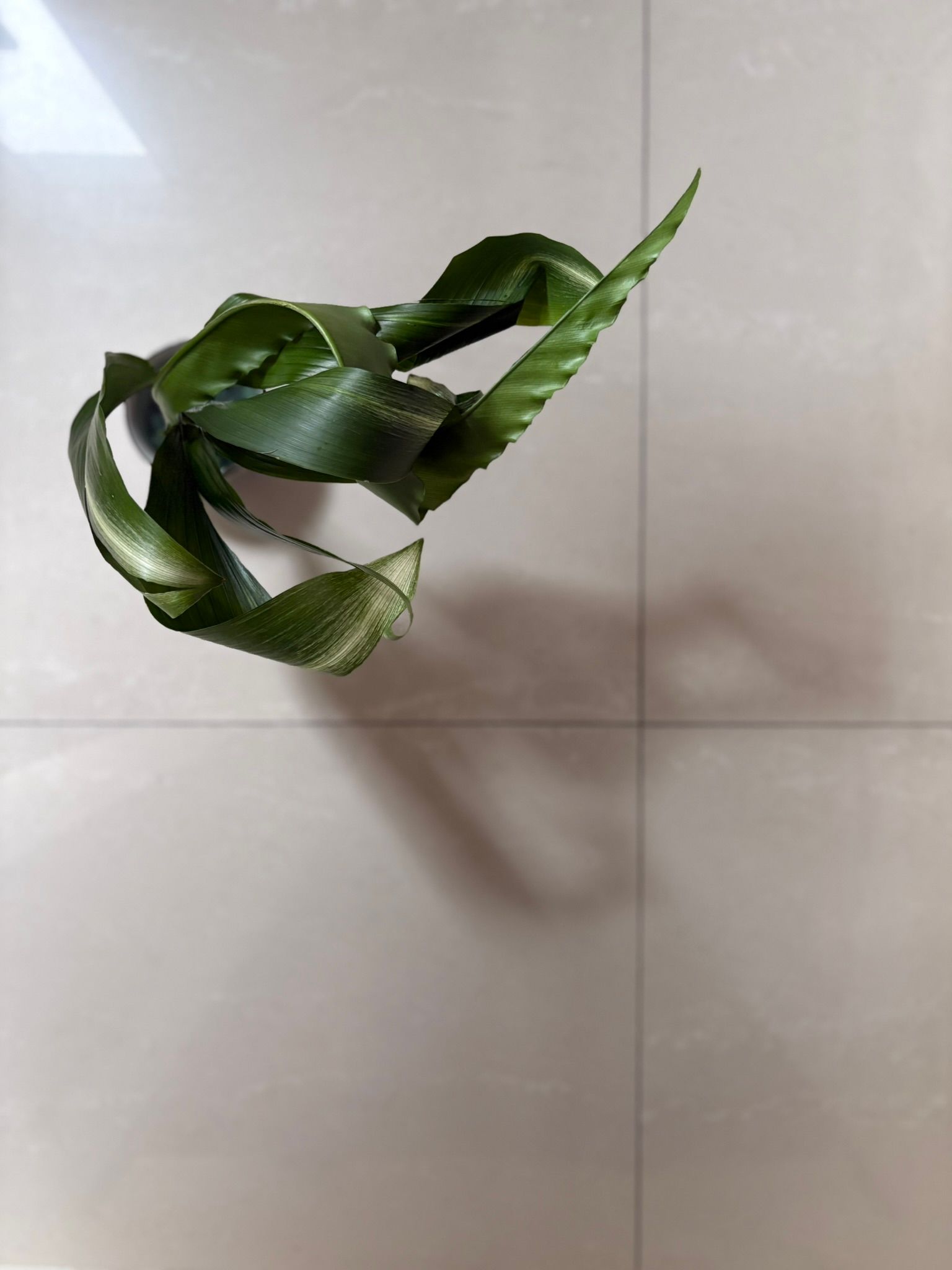
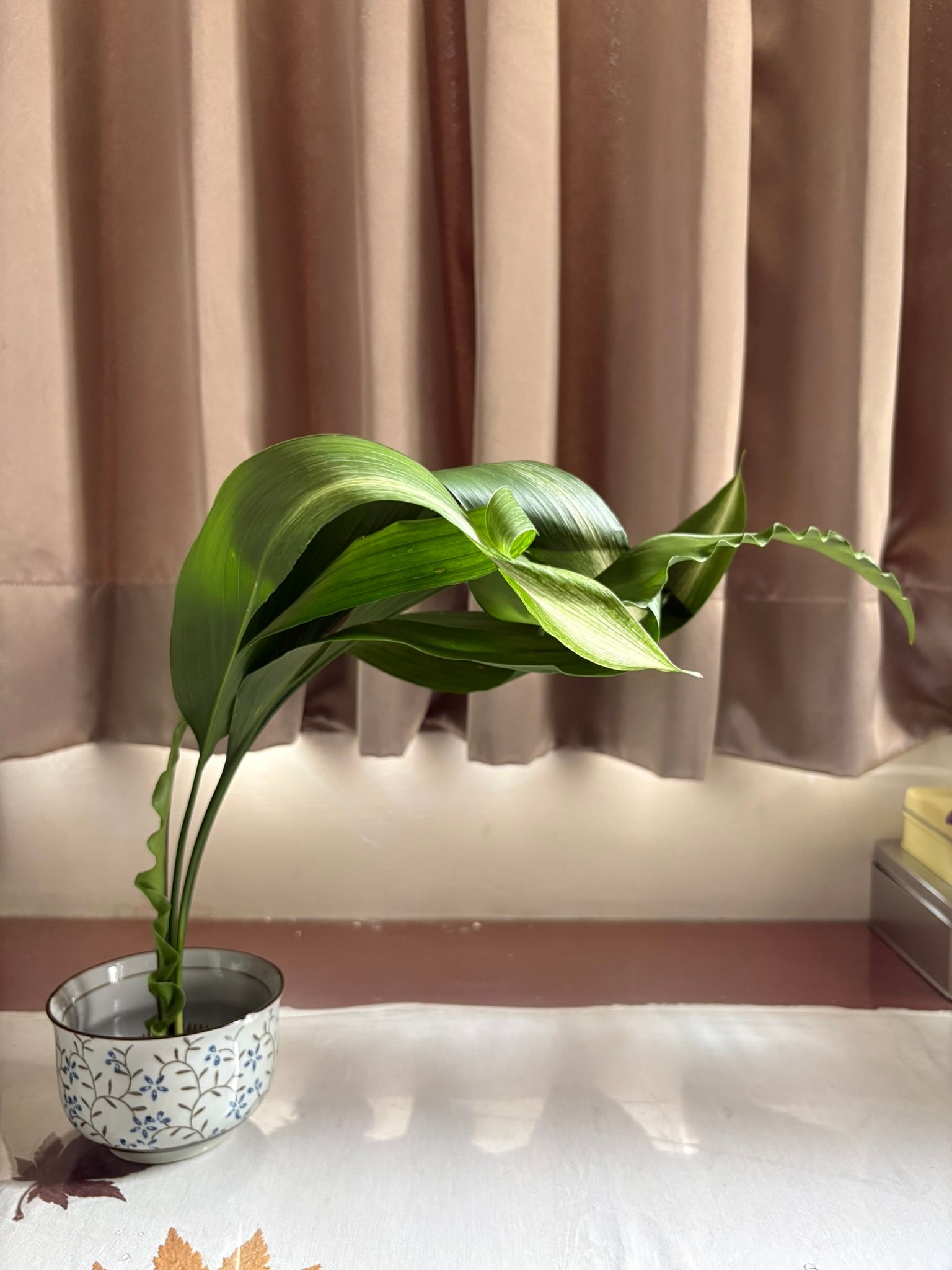
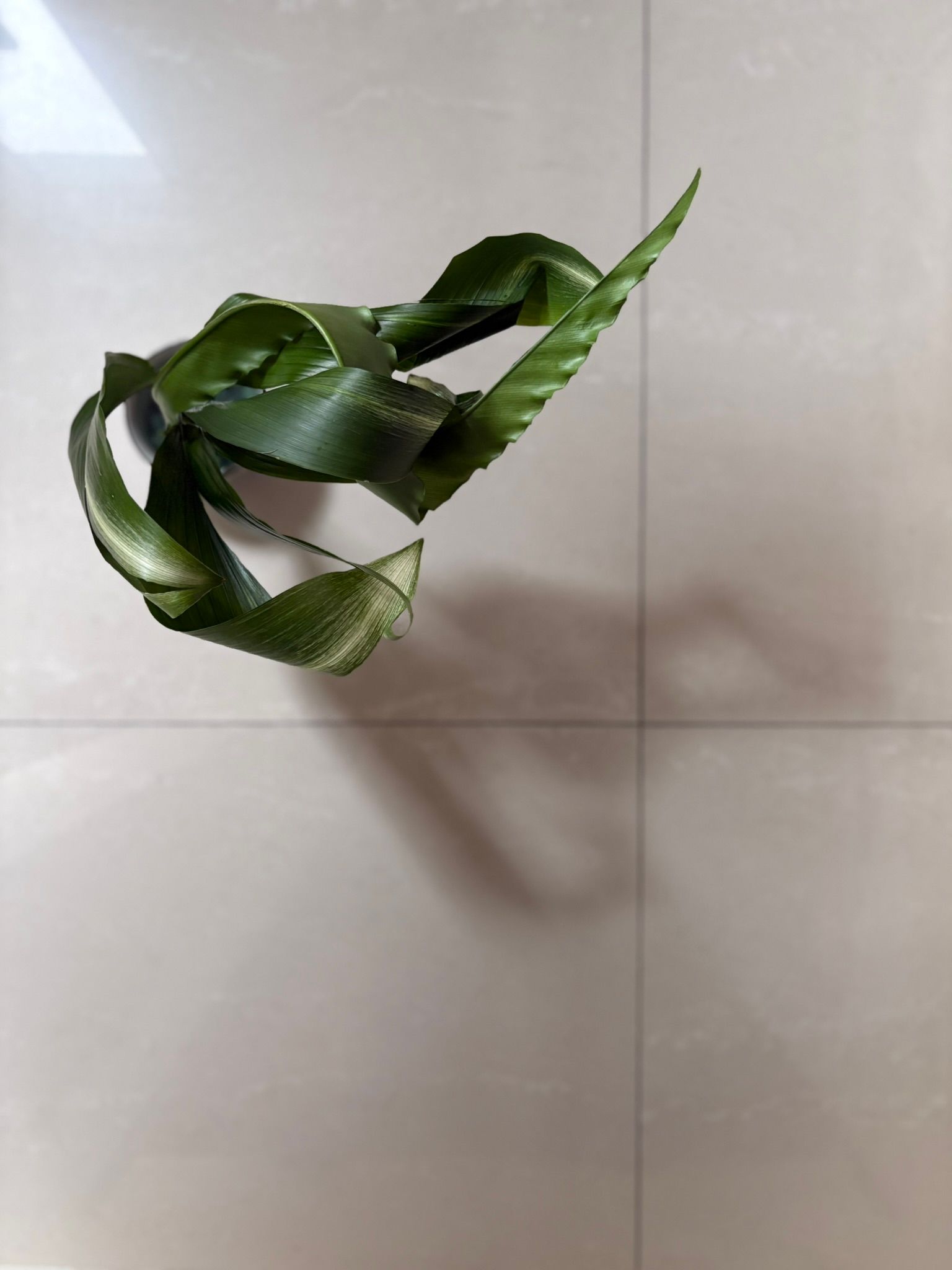
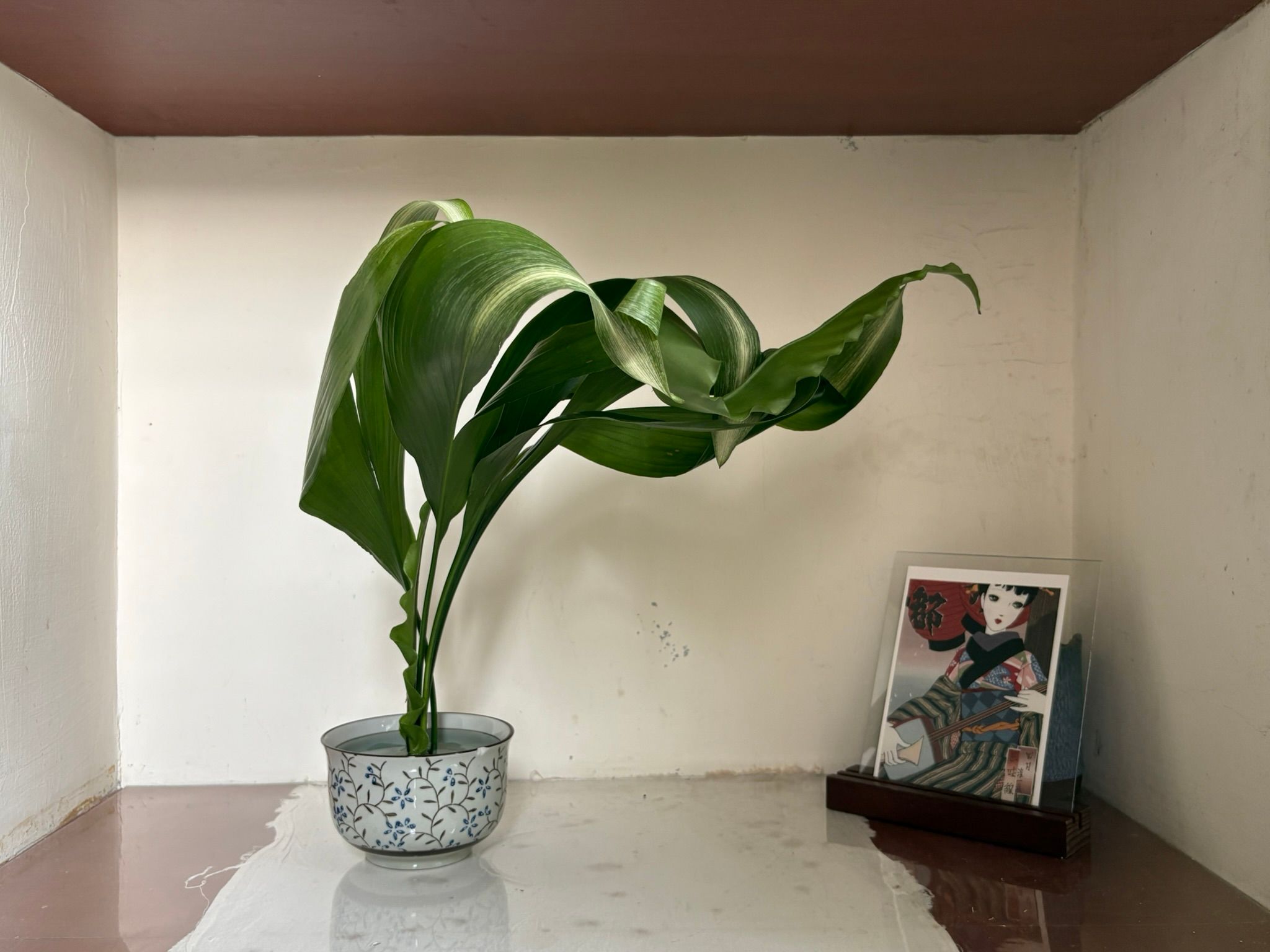
I decided to start over with a bolder strategy. I thinned the Bird’s Nest Fern significantly, cutting away the entire left side to reduce its weight and refine its line. While I accidentally over-cut one of the Aspidistra leaves, I adapted to the mistake by using the new shape to create an unexpected curve.
Balancing Movement and Depth
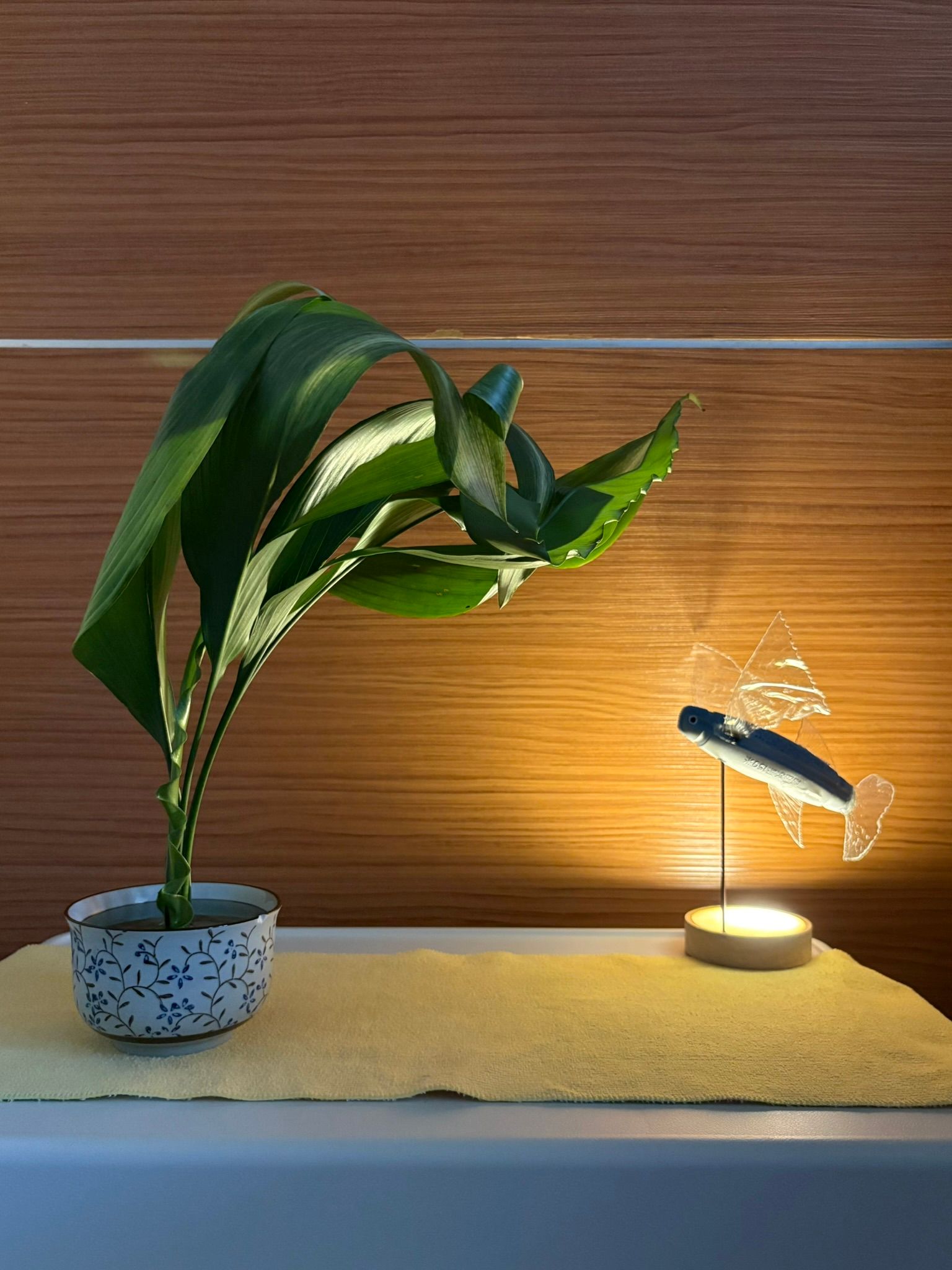
Using five leaves in total, I layered them to create a sense of depth and three-dimensionality. I chose not to use any mechanical aids like pins or tape, instead relying on the natural tension between the stems within the kenzan to support the weight. The final result is an asymmetrical composition that plays with negative space and focuses on the "round" feeling of the massed foliage.
Reflection
This practice taught me that creativity often requires a "brave cut." By breaking the natural rules of the leaf, I was able to find a more profound aesthetic balance. It was a fruitful exercise in technical skill and a meditative lesson in adaptation.


+0 Kommentare
Melden Sie sich an oder melden Sie sich kostenlos an, um zu kommentieren