
Marigold Eco Prints on Linen
by dboyanova @dboyanova
- 65
- 0
- 0
Introduction
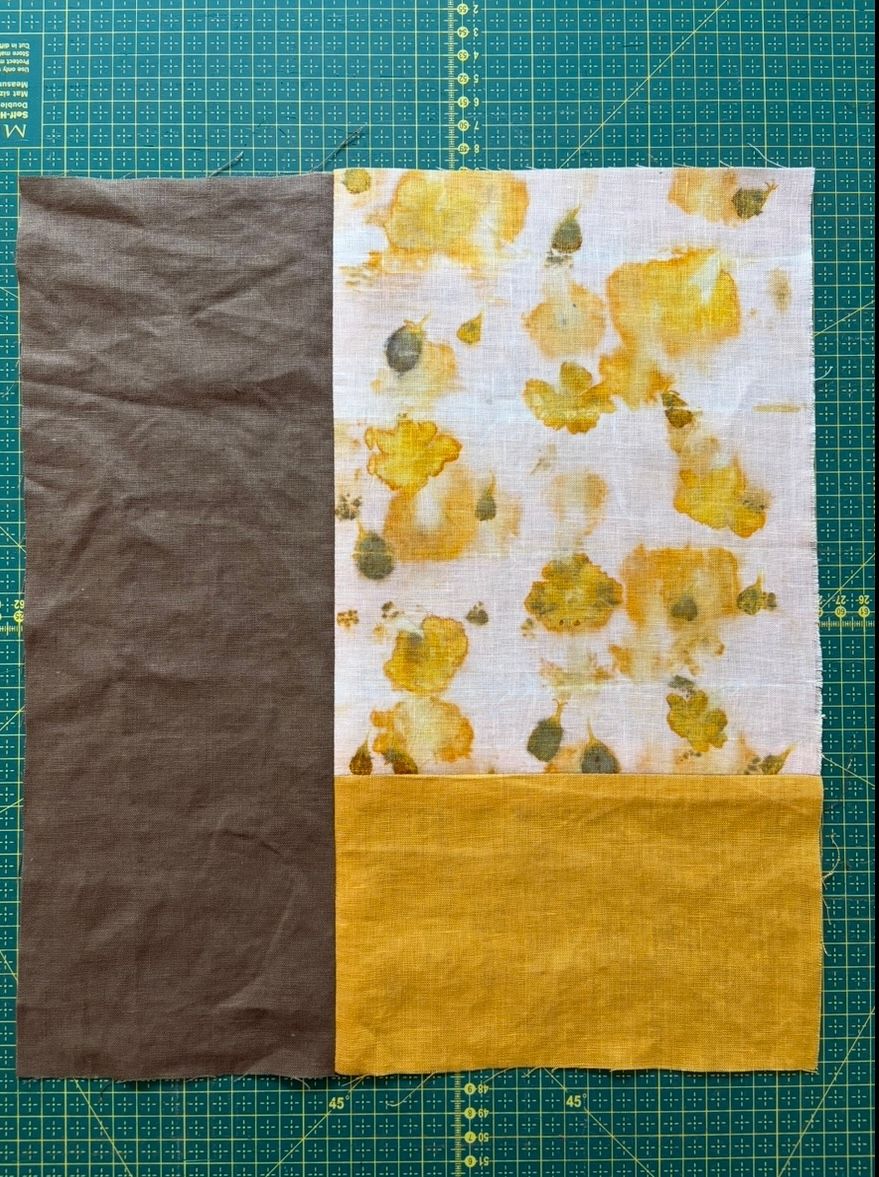
I created a series of botanical eco-printed linen samples that will become part of a handmade Roman shade for my living room.
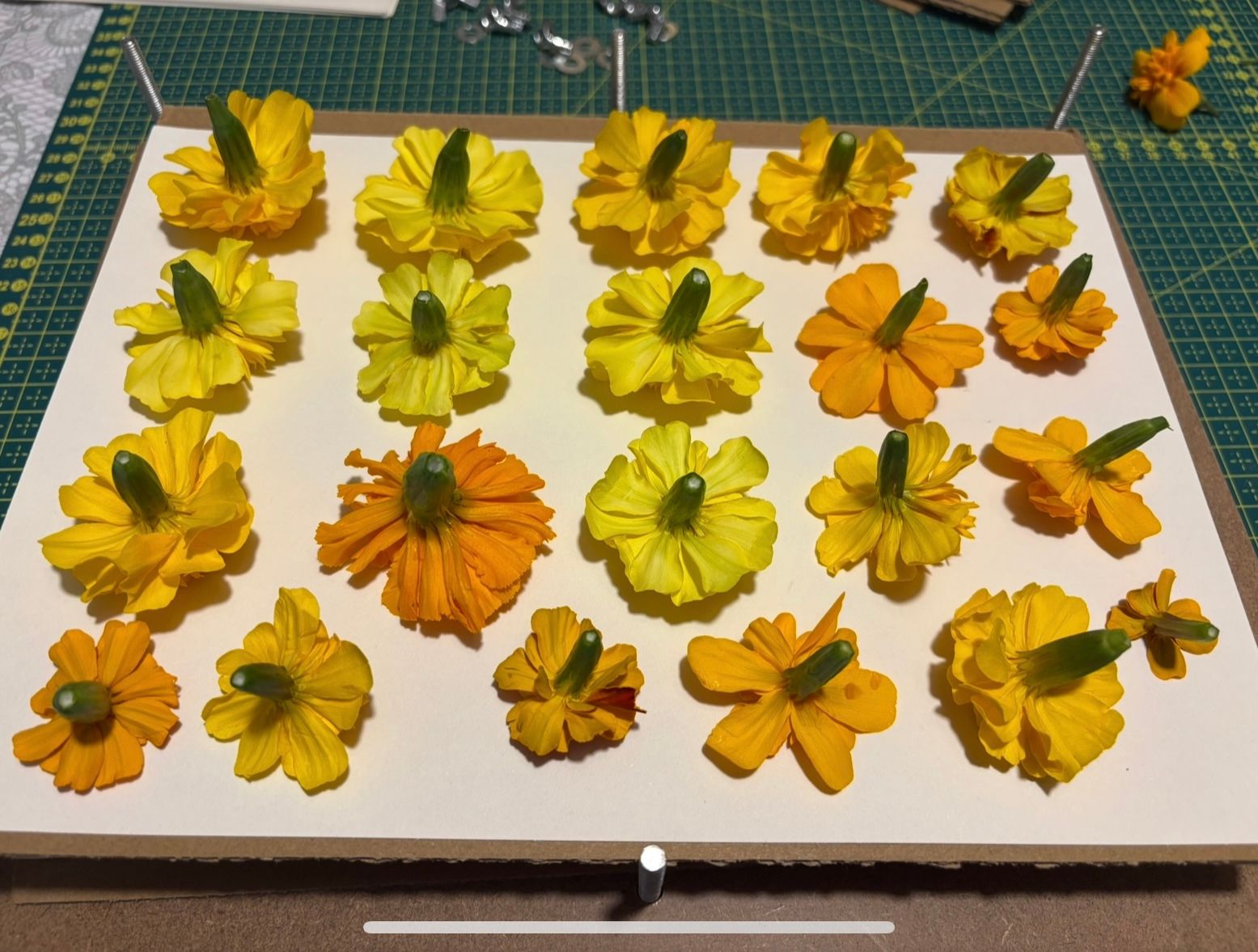
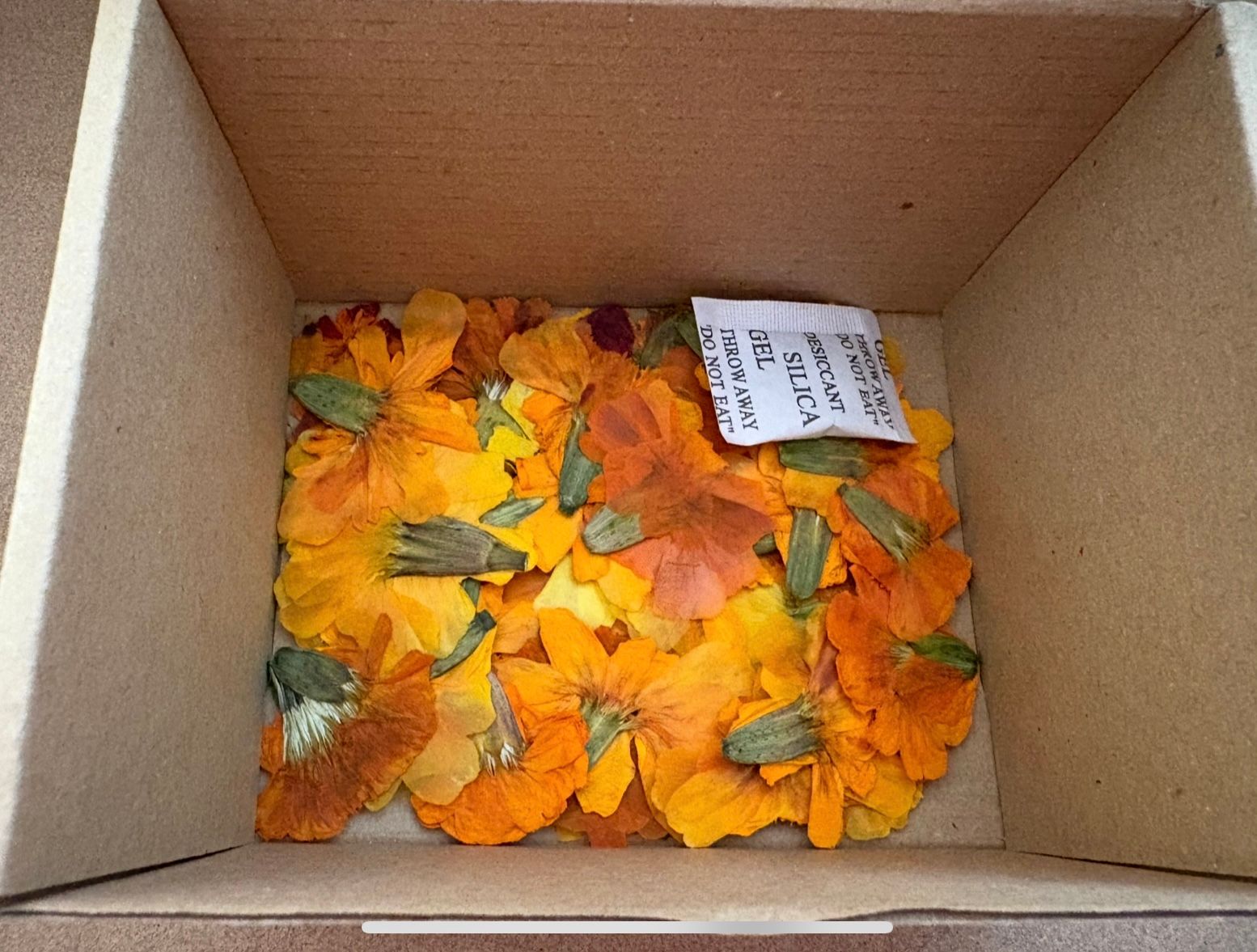
I love sewing and creating textiles for my home, and experimenting with fabrics has always been one of my biggest creative interests. Trying eco-printing was a long-term dream of mine, but it was surprisingly difficult to find the right materials and tools where I live. Over the past year I slowly collected flowers, dried many of them in a flower press and waited for the right moment to finally try with this technique.
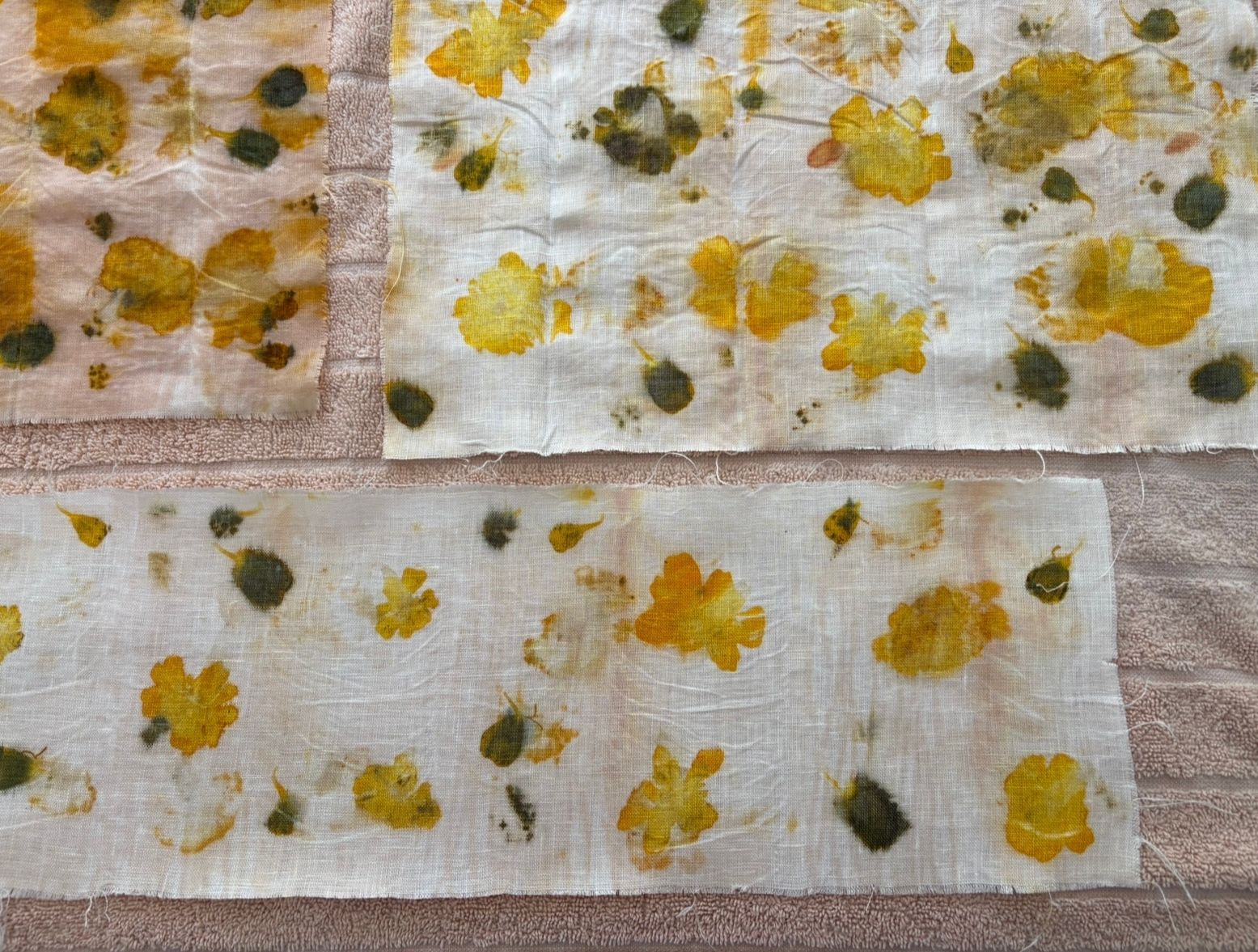
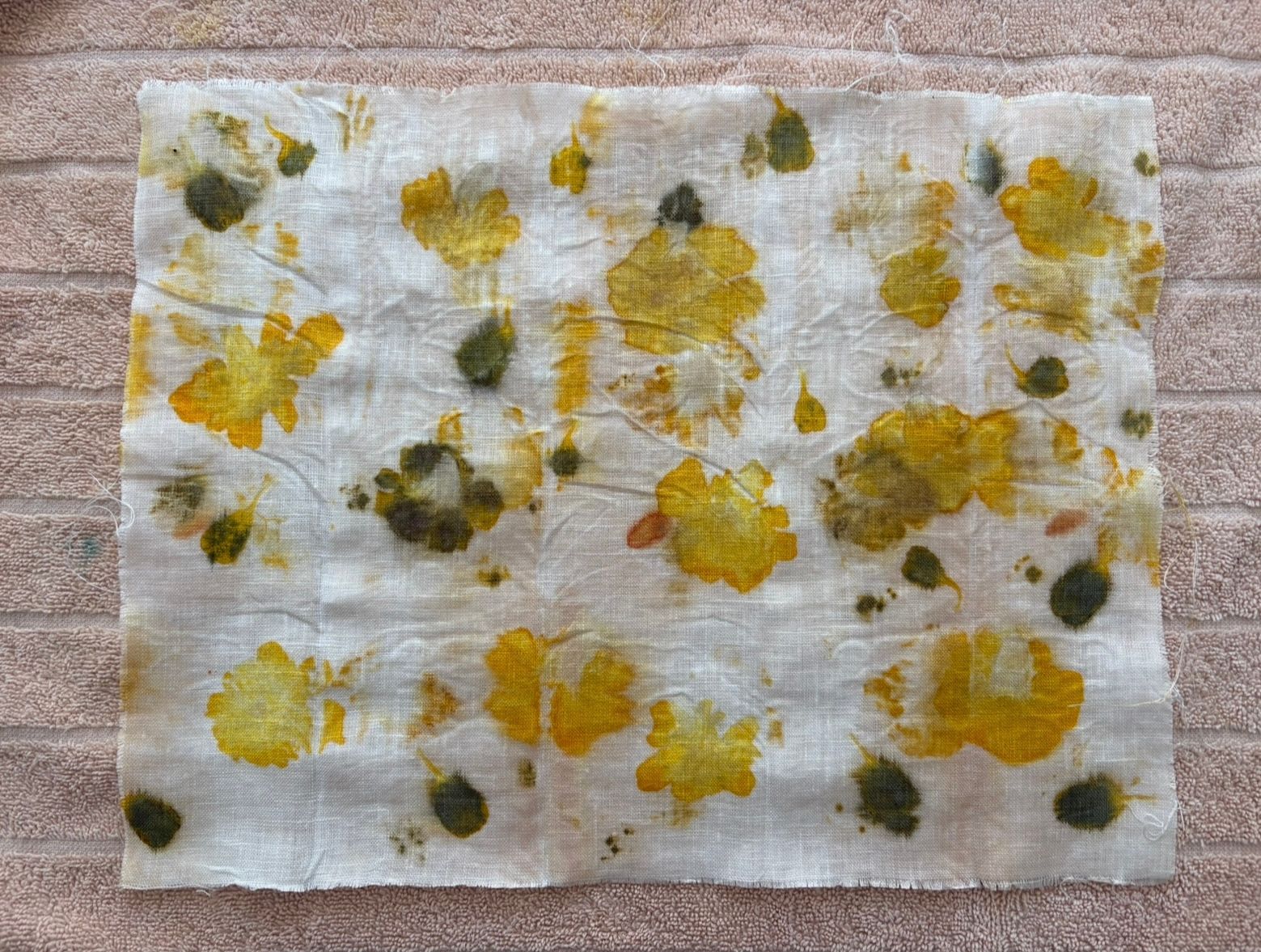
My first attempt was very experimental. I used many different local plants and flowers to see how they would react on linen, but most of them produced very soft or unclear results. The flowers that worked best were the marigolds I had dried last year, together with onion skins. Since my final textile project requires warm yellow, orange, and green tones, I focused my second attempt mainly on orange and yellow marigolds, as well as dark red marigold petals that surprisingly produced beautiful green shades during steaming.
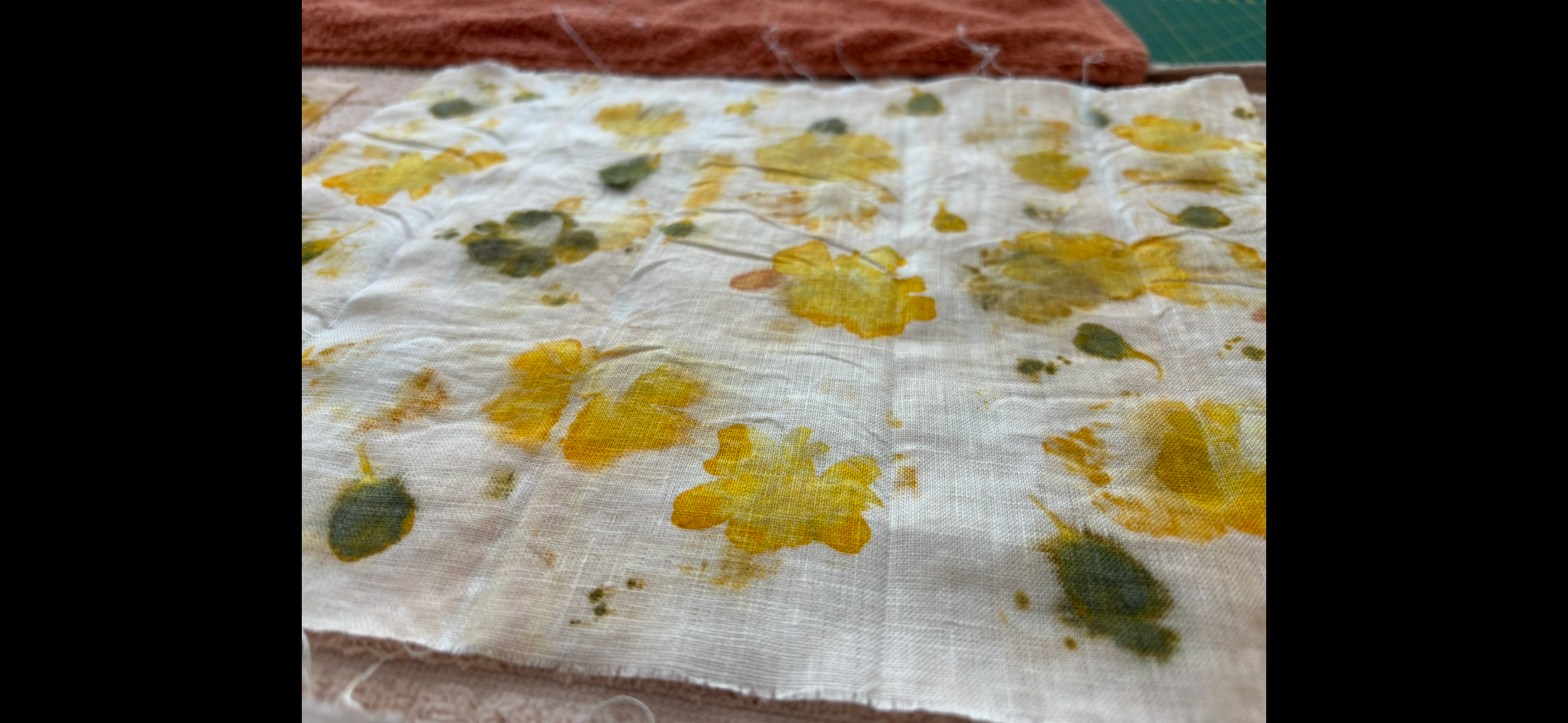
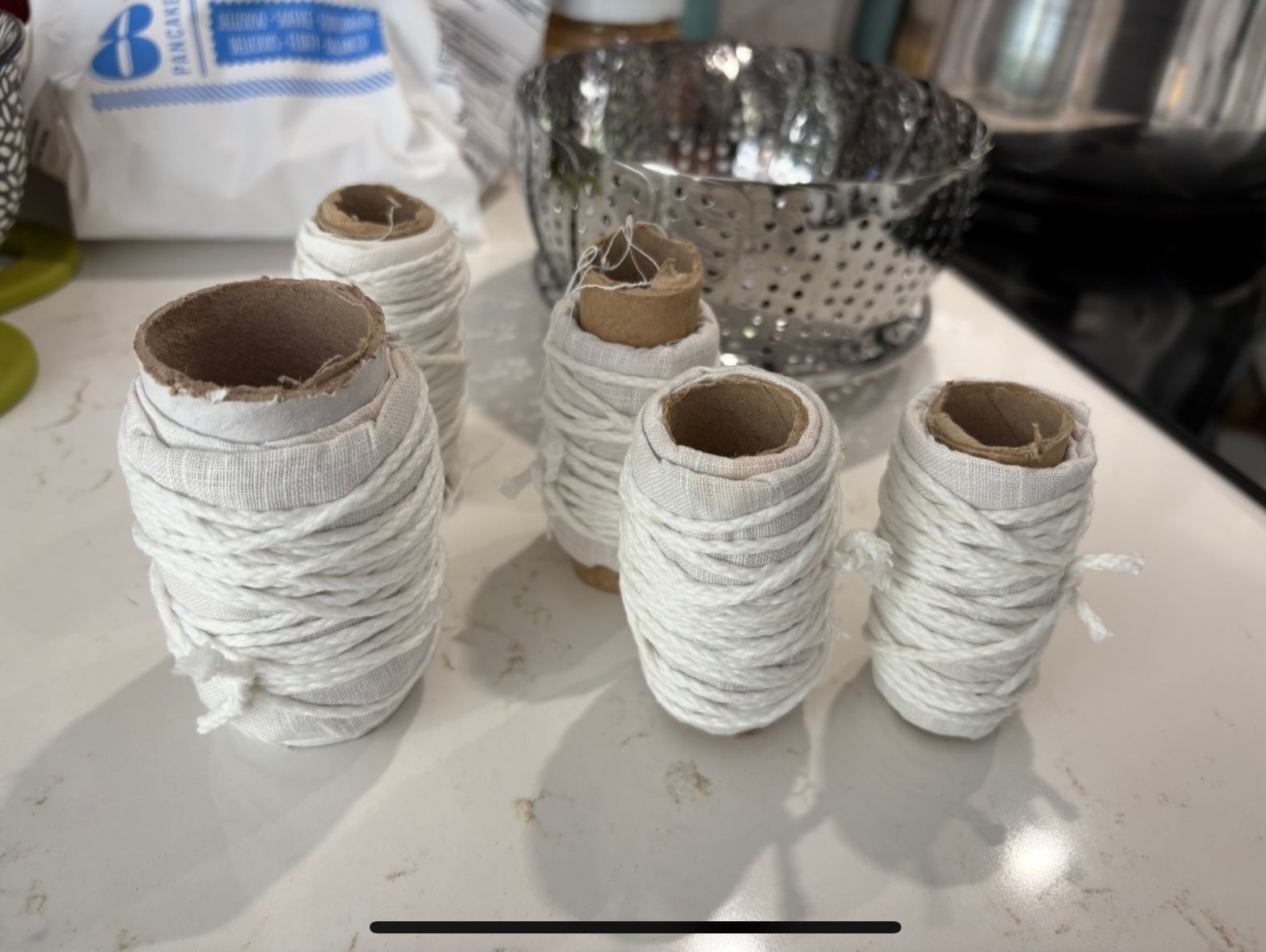
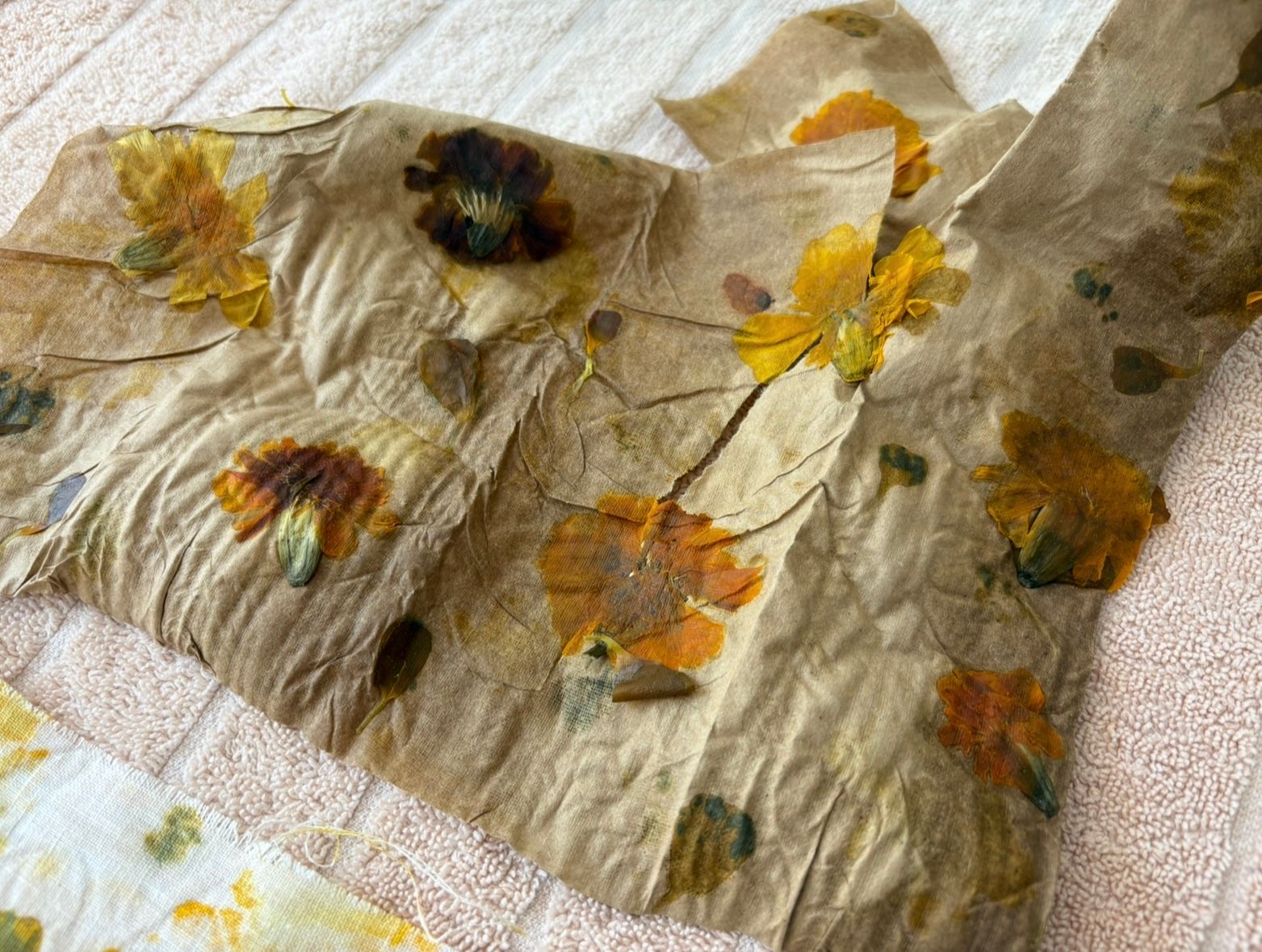
I worked on off-white 100% linen and used craft paper while wrapping the fabric around the steaming tubes. At first I was disappointed because the craft paper left visible brown stripes on the fabric, but later I started seeing them as part of the artistic result. The stripes created an aged, layered textile effect that I now actually enjoy and would like to explore further in future experiments.
Supplies
I worked with 100% off-white linen fabric and followed the eco-printing process from the course. For scouring, I used clear Marseille soap together with washing soda instead of soda ash. After rinsing, I mordanted the fabric with aluminum acetate and calcium carbonate according to the instructions.
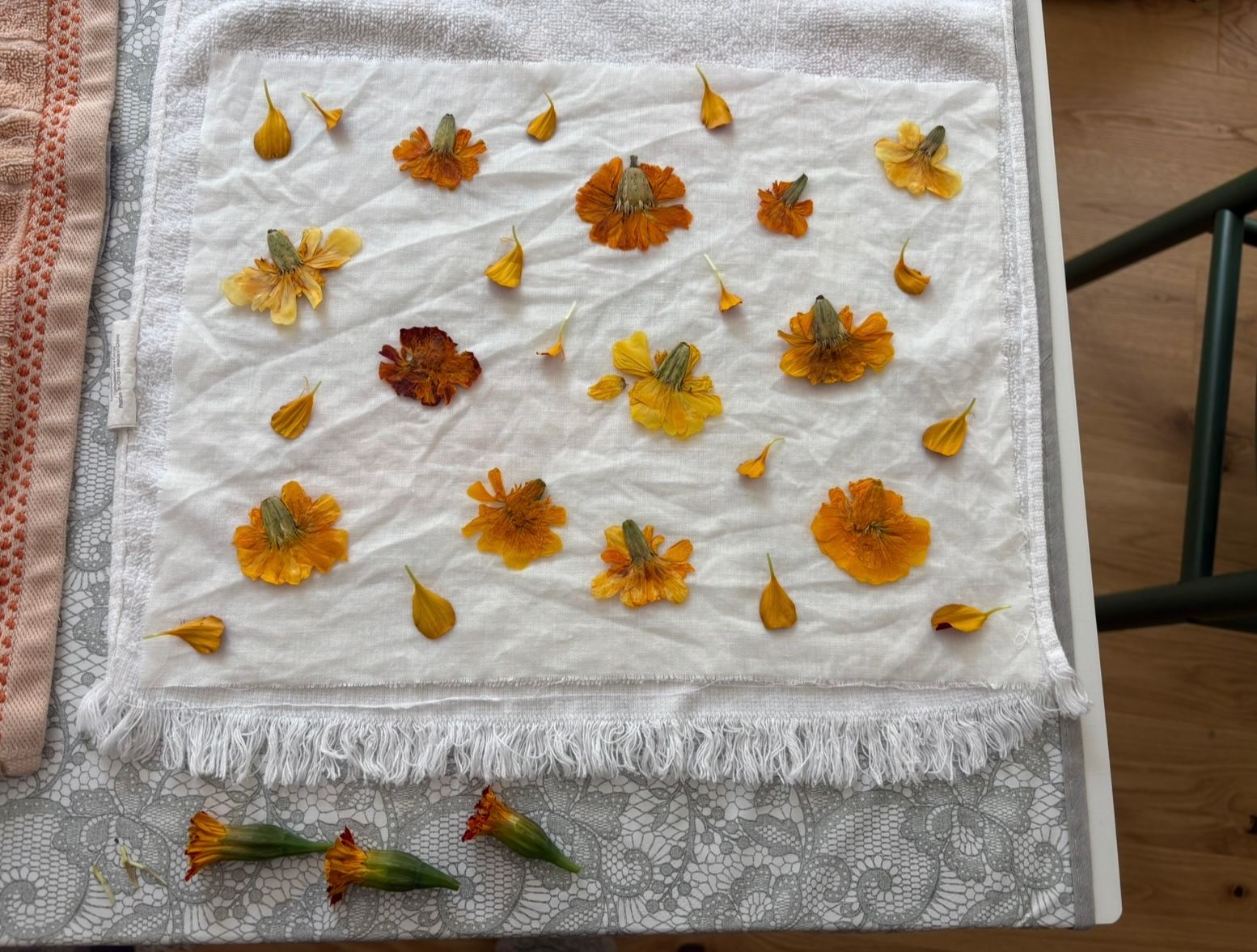
For the botanical printing, I mainly used dried orange and yellow marigolds preserved in a flower press, together with fresh dark red marigold petals. The fabric was tightly wrapped, rolled around sturdy cardboard tubes, and steamed.
Marigold Eco Prints on Linen
My process was very experimental and based on learning through mistakes.
The first sample taught me a lot about moisture levels, flower placement, rinsing, paper thickness and steaming time. I realized that too much water caused the pigments to bleed, while tighter wrapping and slightly drier fabric created much clearer outlines.
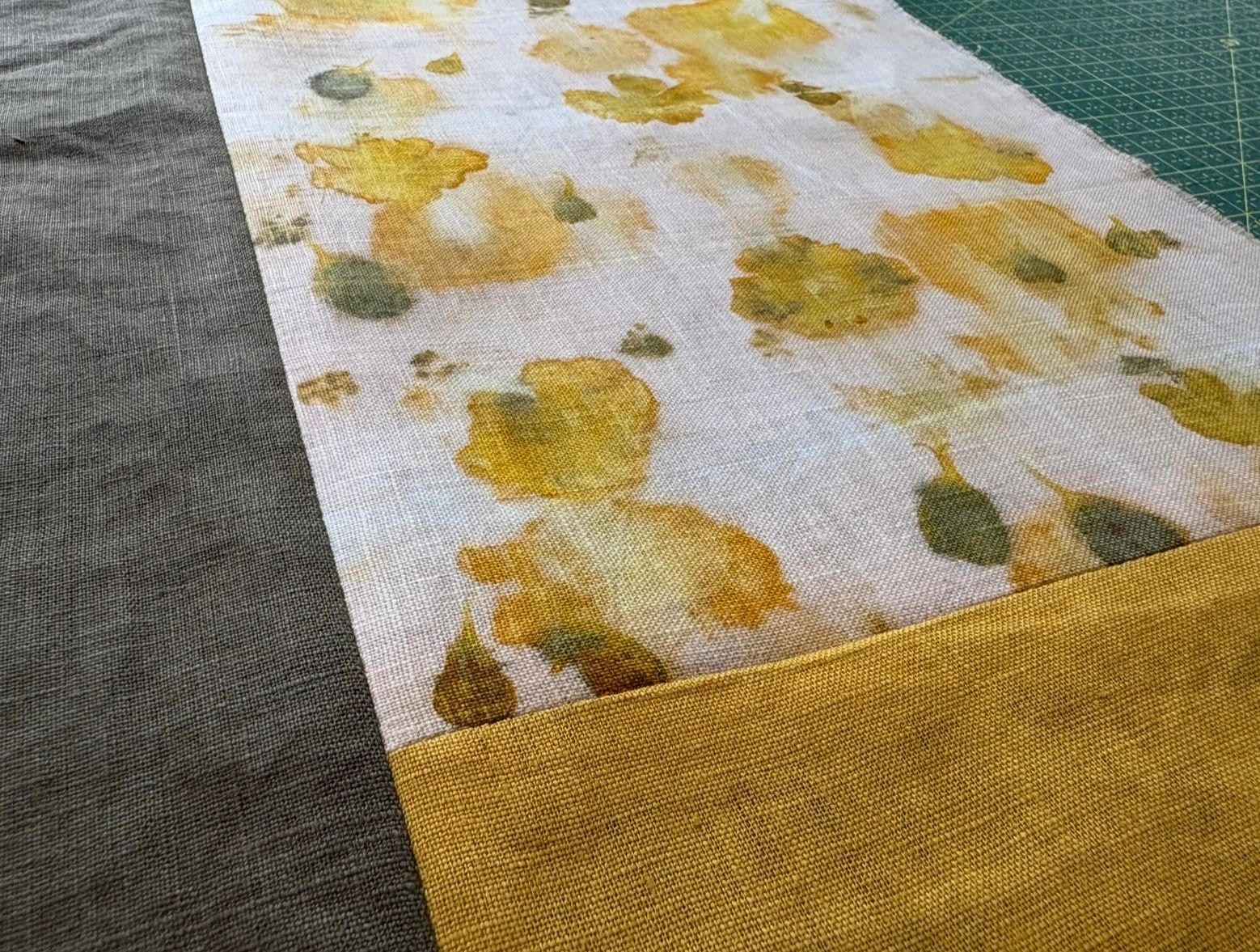
For the second attempt, I simplified my palette and focused mainly on marigolds. I also steamed the fabric longer and wrapped it much more tightly. One of the most interesting discoveries for me was that dark red marigold petals created soft green shades that looked almost like leaves around the yellow flowers.
Even though the colors became softer while drying, I started appreciating the faded botanical effect and the imperfections created by the process. Since this fabric will be used for an interior textile rather than clothing, I enjoy the idea that it can evolve over time and become layered with embroidery, stitching, or even paint later if needed.
This course finally encouraged me not only to experiment, but also to actually finish and document a creative project from beginning to end.
0 comments
Log in or join for Free to comment