Technical Drawing Techniques for 3D Representation
A course by Rodrigo Chávez HeresIndustrial and Strategic Designer
A course by Rodrigo Chávez Heres, Industrial and Strategic Designer

Develop three-dimensional ideas applying principles of geometry and volumetric drawing
Geometry is the cornerstone of technical drawing, and mastering its principles is the key to accurately representing the world that surrounds you. Join industrial designer Rodrigo Chávez and learn basic drawing techniques to create a 3D representation of a lamp.
By the end of the course, you'll know how to easily make precise 3D designs of any object using volumetric drawing and applying key concepts you've learned including perspective, lines, depth, and hierarchy.
What will you learn in this online course?
15 lessons & 21 downloads
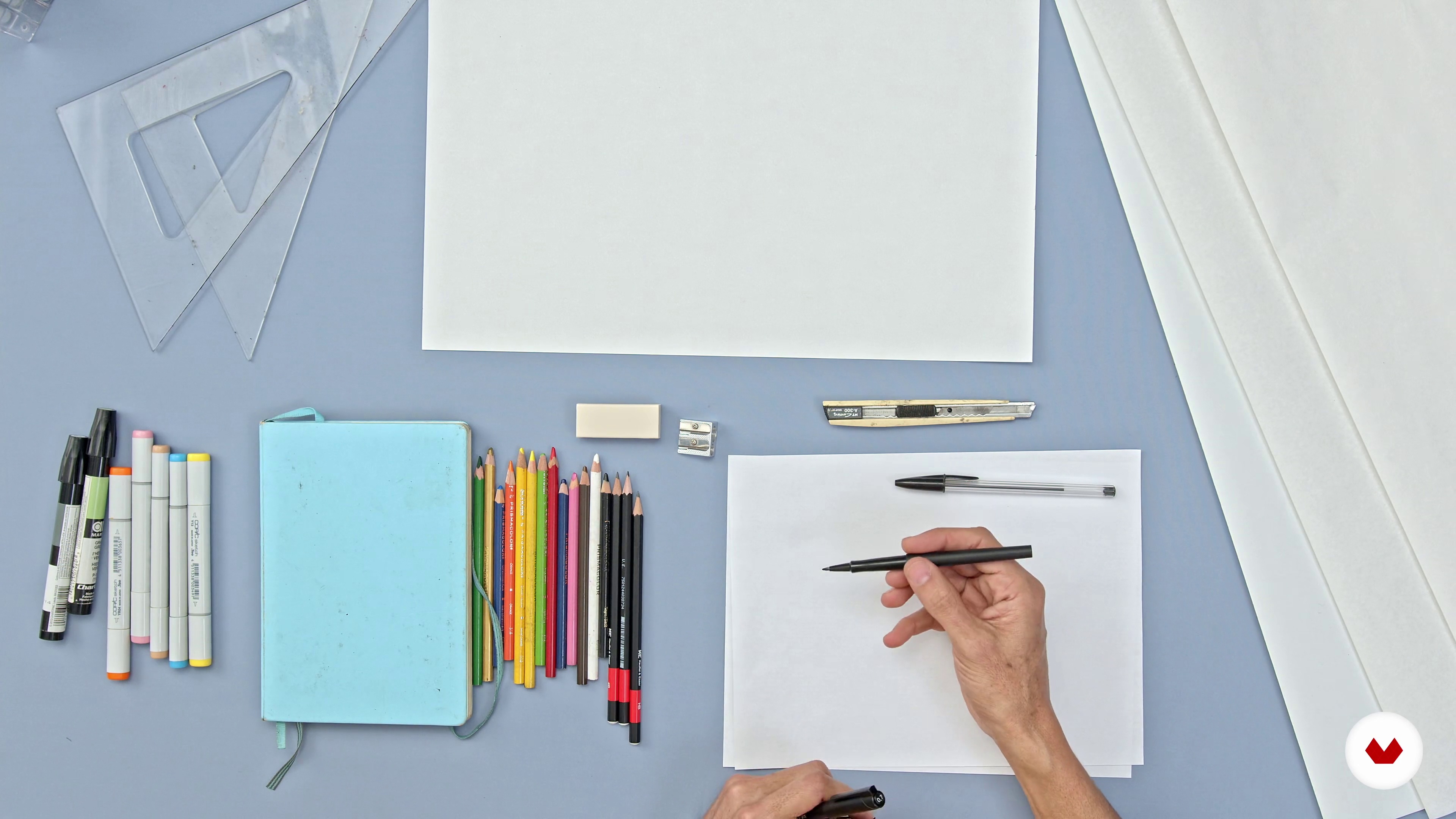
Recommended material
4 minutes, 1 second

From your pencil to paper
14 minutes, 6 seconds
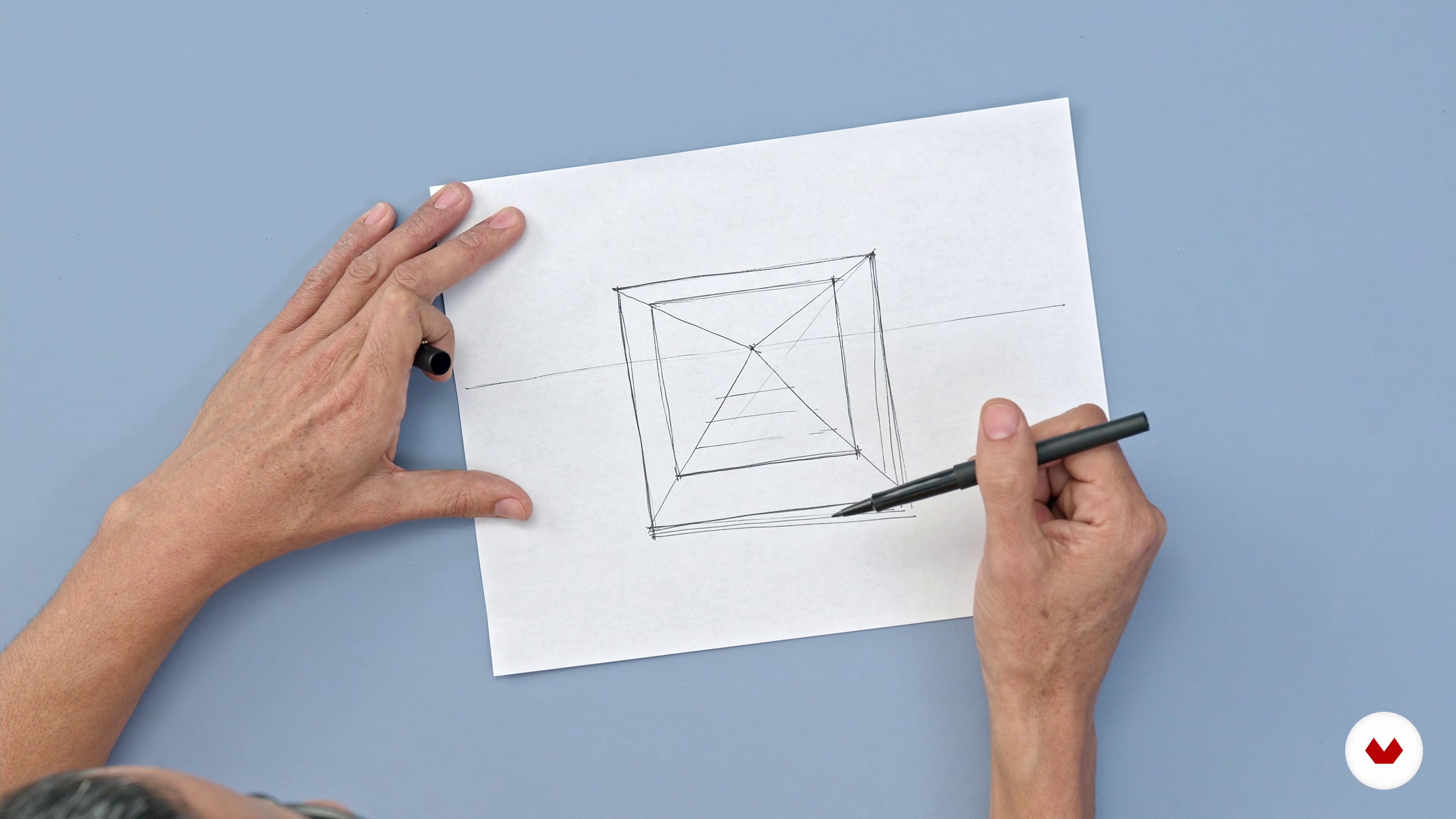
Principles of three-dimensionality 1
20 minutes, 4 seconds
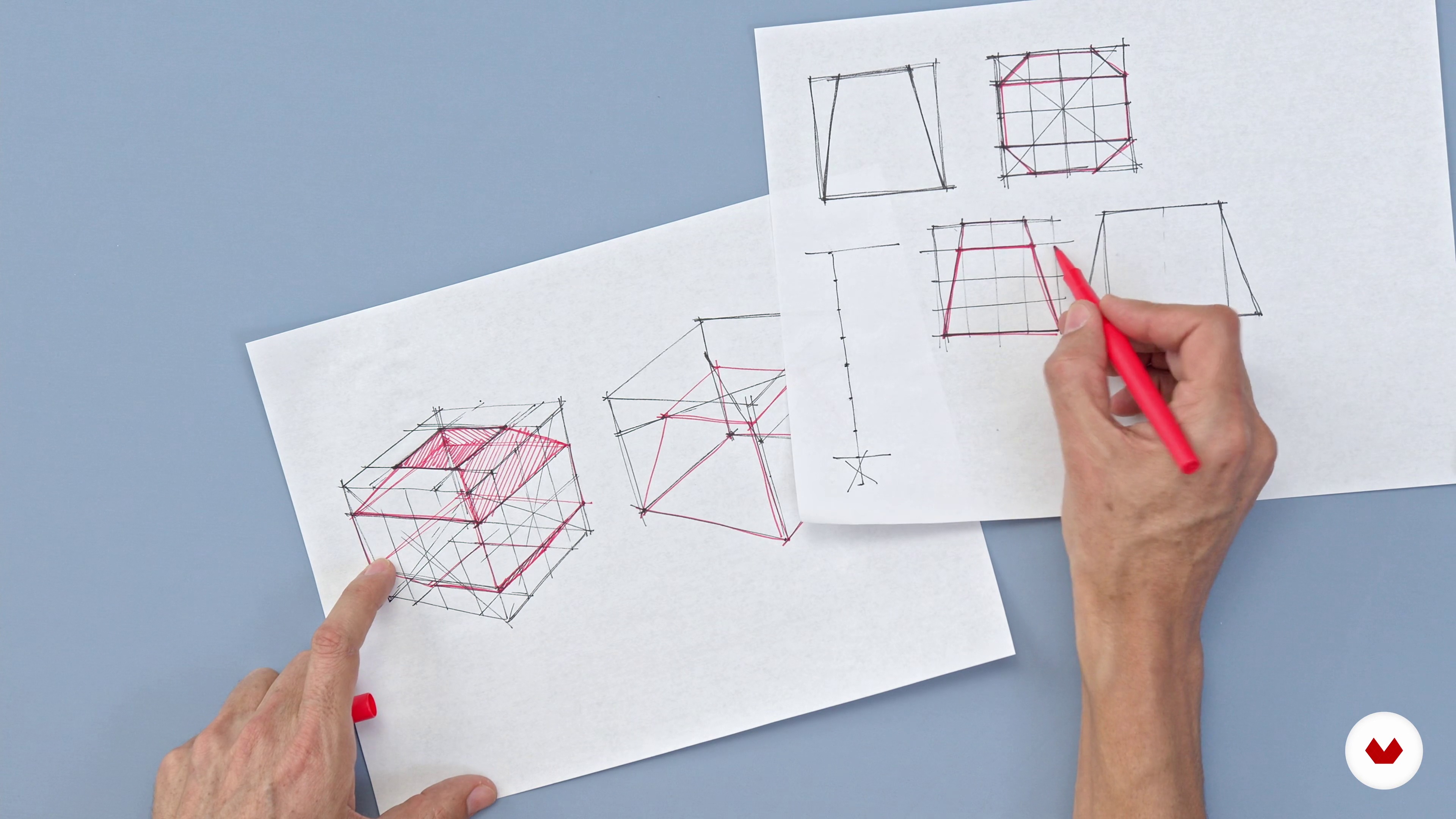
Lamps with simple straight volumes 1
14 minutes, 41 seconds
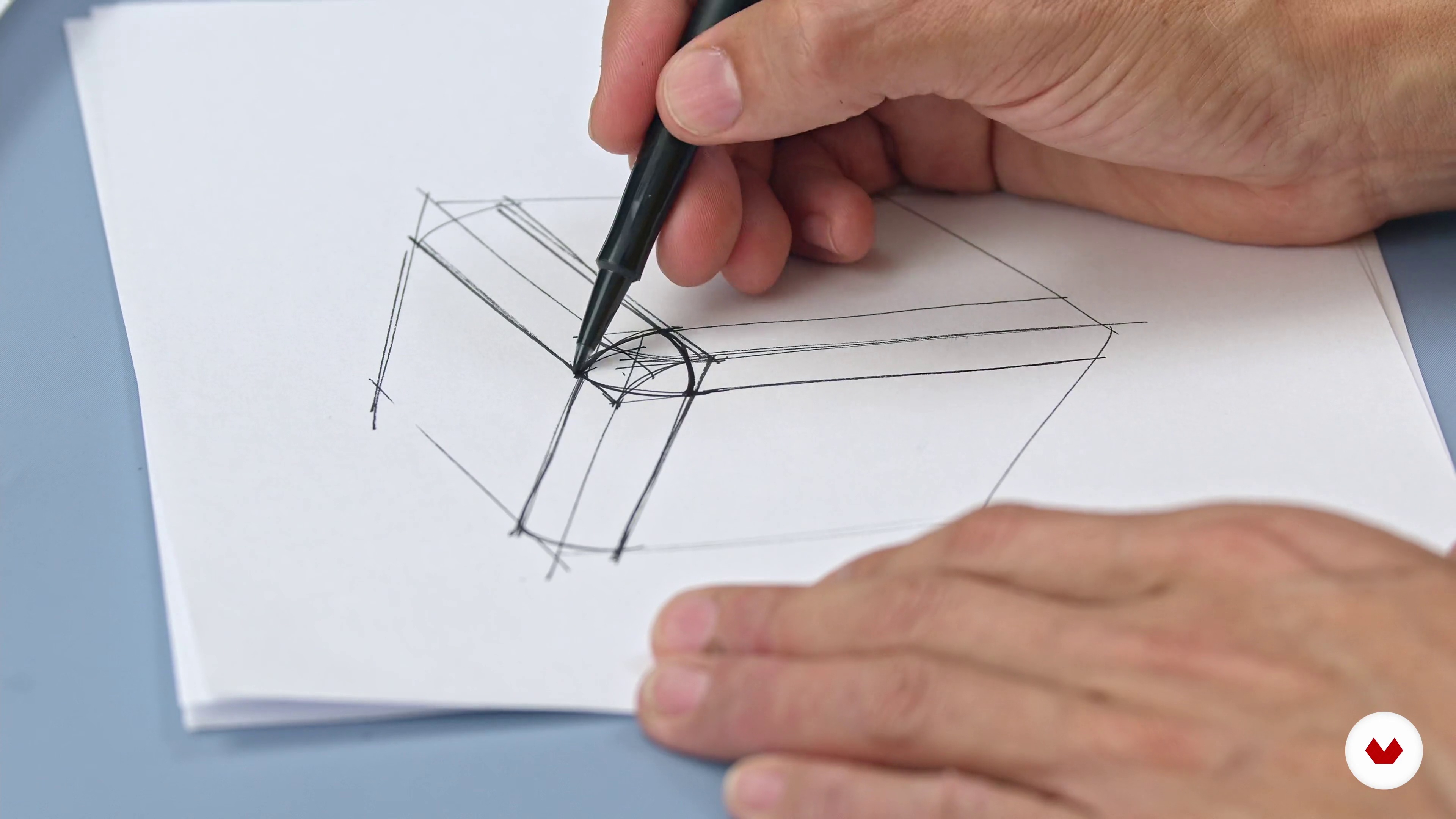
Lamps with complex volumes 1
20 minutes, 11 seconds
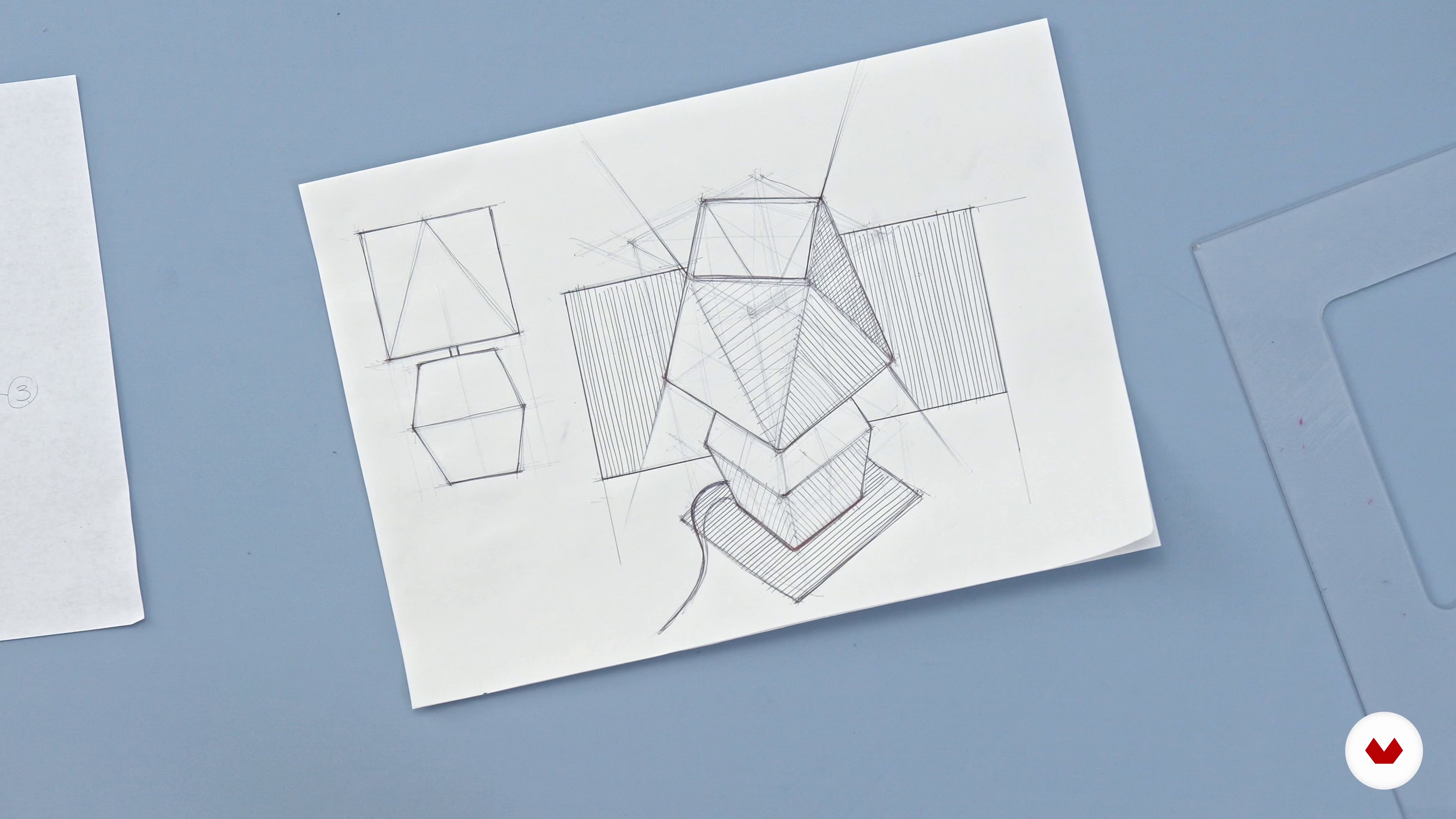
Background and information
12 minutes, 40 seconds
What's included in this course?
Begin the course by getting to know Rodrigo Chávez, who tells you about his professional background and work as a strategic and industrial designer. He also shares the influences and inspirations that have motivated him throughout his career.
Start with the basic concepts of 3D drawing that enable you to understand and depict objects in three dimensions. Learn how to sketch a cube and use it as the foundation for representing more complex objects. Discover the importance of line quality in your work and why you shouldn't erase during the drawing process: if you can see your mistakes, you can learn from them.
Next, draw a series of lamps with simple volume and adjust their proportions and defining characteristics based on whether it's a floor, ceiling, or table lamp.
Finally, take your drawings to new heights by adding intent and hierarchy, creating depth, and playing with line width.
What is this course's project?
Create a set of 3D technical drawings of lamps based on geometric shapes.
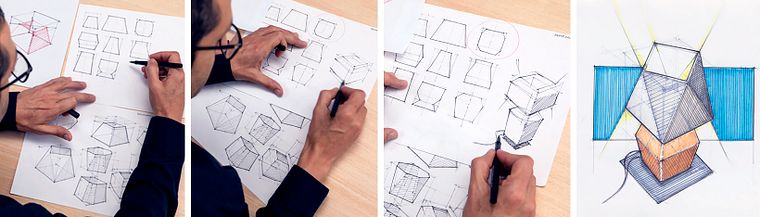
Projects by course students


Who is this online course for?
Architects, designers, digital artists, interior designers, mechanical engineers, and anyone interested in drawing in 3D using geometry.
Requirements and materials
No previous knowledge is necessary for this course.
As for the materials, you need pens, paper, and markers.
Reviews
- 22 days ago
otimo curso!
- 4 months ago
Con las explicaciones tan claras y sencillas de perspectiva, pierdes el miedo y te atreves a la reperesentación espacial de cualquier objeto.
- 4 months ago
Me encanta! Aprendí mucha cosas
- 5 months ago
Perfecto
- 7 months ago
Muy padre!

In 2005, he landed a job in one of the industry-leading office furniture companies, Grupo Di, and worked his way up to Chief Designer. He also began postgraduate studies at the Polytechnic University of Milan that same year and earned a master's degree in strategic design. In 2009, Rodrigo returned to Mexico and began collaborating with the design studio La Jabonera where he worked with major brands including Colgate, Comex, Coca-Cola, Bticino, and Landor. He currently collaborates on design projects under the brand Heres Diseño and is head of the design department at the Architecture, Art, and Design School of Monterrey.
Content
- U1
Introduction
- Presentation
- Influences
- U2
Basic elements of drawing
- Recommended material
- From your pencil to paper
- Principles of three-dimensionality 1
- Principles of three-dimensionality 2
- U3
How to draw a product
- Lamps with simple straight volumes 1
- Lamps with simple straight volumes 2
- Lamps with simple curved volumes 1
- Lamps with simple curved volumes 2
- Lamps with complex volumes 1
- Lamps with complex volumes 2
- U4
Definition and detail
- Final stroke
- Background and information
- Lights and color
- FP
Final project
- Technical Drawing Techniques for 3D Representation
What to expect from a Domestika course
Learn at your own pace
Enjoy learning from home without a set schedule and with an easy-to-follow method. You set your own pace.
Learn from the best professionals
Learn valuable methods and techniques explained by top experts in the creative sector.
Meet expert teachers
Each expert teaches what they do best, with clear guidelines, true passion, and professional insight in every lesson.
Certificates
PLUSIf you're a Plus member, get a custom certificate signed by your teacher for every course. Share it on your portfolio, social media, or wherever you like.
Get front-row seats
Videos of the highest quality, so you don't miss a single detail. With unlimited access, you can watch them as many times as you need to perfect your technique.
Share knowledge and ideas
Ask questions, request feedback, or offer solutions. Share your learning experience with other students in the community who are as passionate about creativity as you are.
Connect with a global creative community
The community is home to millions of people from around the world who are curious and passionate about exploring and expressing their creativity.
Watch professionally produced courses
Domestika curates its teacher roster and produces every course in-house to ensure a high-quality online learning experience.
FAQs
This course is aimed at people with an intermediate level in technical or artistic drawing, so basic knowledge of geometry and freehand drawing is recommended.
You will need bond paper, pencils of various hardness, set squares, a ruler, a knife or sharpener, markers, Prismacolor pencils, tracing paper, and a notebook for exercises.
You will learn to apply geometric principles to create three-dimensional representations, use perspectives, control proportions, depict volumes, and transfer hand sketches to digital environments.
The course focuses on three-dimensional technical drawing techniques, perspective, volume representation, lamp construction, and fundamentals of digital modeling applied to design.
Yes, the course offers guided exercises to draw lamps, cars, airplanes, and complex shapes using geometry and perspective.
The course teaches techniques to build and represent volumes using perspectives, technical lines, hatching, and applied geometry methods, enhancing volume perception and expression.
Yes, you will learn to apply shadows, hatching, contrasts, and geometric backgrounds to add depth and realism to your drawings.