Botanical Illustration with Watercolors
A course by Paulina Maciel · Canela, Designer and Illustrator

Joined June 2015
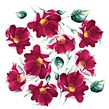
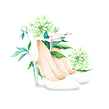

Discover the techniques to create illustrated compositions with plants and flowers
Joined June 2015

When two passions come together, the results can transform a creative project into something exceptional. The work of designer and illustrator Paulina Maciel is a clear example. She seamlessly combines the unpredictable results of watercolor with her love for nature. According to Paulina, by making the act of observation a part of our daily lives, we can learn to value it. And, perhaps more importantly, understand the importance of holding onto it.
In this course, Paulina teaches you each step of her creative process for making botanical illustrations with watercolors. Using real flowers and plants as a model, learn how to digitize your work, make edits, and apply your creativity to any product. And if you decide to further your learning path, discover Paulina’s other course Botanical Watercolor Sketchbook, where you learn how to combine watercolor with other techniques.
Featured review

I enjoyed this course and I really recommend Paulina. You can see she has the experience and lots of patience to create her art. I will definitely use her tips for my next project!
What will you learn in this online course?
17 lessons & 13 downloads
What's included in this course?
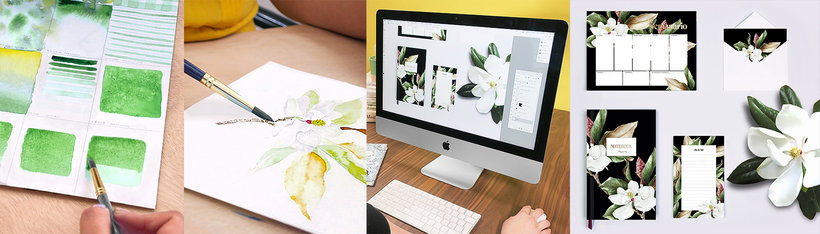
Begin your course by getting to know the work of your instructor, Paulina Maciel. She introduces you to some of her influences and goes through the materials needed in this course, including some of the more technical aspects.
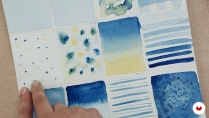
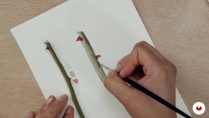
Next, start painting with some watercolor exercises. Learn some different ways to apply your paint and practice creating different textures that are found in nature.
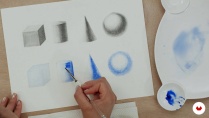
Learn to apply light and shadow to add extra volume to your illustrations. Discover some ways to identify the geometric shapes of different plants and flowers so they are easier to draw. Take a closer look at the different parts of a plant and determine the ones essential to your illustration.
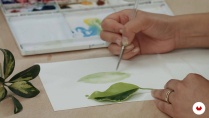
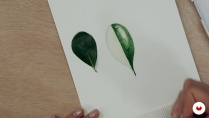
Paulina explores botanical illustration with two different methods: by painting directly with watercolors, and applying a grisaille technique with graphite.
After creating your final illustration with the techniques laid out, Paulina teaches you how to digitize and retouch your illustration in Photoshop so it can be applied to just about anything.
- 96% positive reviews (4.3K)
- 157,739 students
- 17 lessons (2h 32m)
- 13 additional resources (9 files)
- Online and at your own pace
- Available on the app
- Audio: Spanish, English, French, Italian, Portuguese, Turkish
- Spanish · English · Portuguese · German · Italian · French · Polish · Dutch · Turkish · Romanian · Indonesian
- Level: Beginner
- Unlimited access forever
What is this course's project?
Create an illustration of a botanical arrangement, based on a real flower, as a starting point for designing a stationery set.
Projects by course students


Who is this online course for?
Designers, illustrators, cartoonists, or anyone interested in exploring the botanical world using watercolor illustration.
Requirements and materials
No prior knowledge is necessary, but basic skills in Adobe Photoshop are useful for digitizing and applying your final illustration.
Materials include: watercolor paint in tubes, tablets, or liquids, watercolor paper, some round brushes, and a selection of leaves, plants, and flowers that will serve as models.

Reviews

Paulina Maciel · Canela
A course by Paulina Maciel · Canela
Paulina Maciel's first encounter with watercolor was at university while she was studying design. It wasn't until a few years later that she decided to deepen her knowledge and explore nature through this technique with professional training at a watercolor academy. Her first commission was a wedding invitation for some friends and since then, there have been many more, although not always related to wedding stationery. Her training in design has given an extra boost to her illustrations, enabling her to apply them in all kinds of projects.
Content
-
U1
Introduction
-
Presentation
-
Influences
-
Materials
-
-
U2
Painting the water
-
Introduction to watercolor
-
Volume
-
Opaque textures
-
Bright textures
-
Textures with hairs and spines
-
Rough and dry textures
-
-
U3
Looking for style
-
Botanical illustration
-
Botanical illustration styles I
-
Botanical illustration styles II
-
-
U4
The botanical composition
-
Plant morphology
-
Botanical composition
-
-
U5
Digital finish
-
Digitalize watercolor
-
Cutout
-
Composition
-
-
FP
Final project
-
Illustrating botanicals
-
What to expect from a Domestika course
-
Learn at your own pace
Enjoy learning from home without a set schedule and with an easy-to-follow method. You set your own pace.
-
Learn from the best professionals
Learn valuable methods and techniques explained by top experts in the creative sector.
-
Meet expert teachers
Each expert teaches what they do best, with clear guidelines, true passion, and professional insight in every lesson.
-
Certificates
PlusIf you're a Plus member, get a custom certificate signed by your teacher for every course. Share it on your portfolio, social media, or wherever you like.
-
Get front-row seats
Videos of the highest quality, so you don't miss a single detail. With unlimited access, you can watch them as many times as you need to perfect your technique.
-
Share knowledge and ideas
Ask questions, request feedback, or offer solutions. Share your learning experience with other students in the community who are as passionate about creativity as you are.
-
Connect with a global creative community
The community is home to millions of people from around the world who are curious and passionate about exploring and expressing their creativity.
-
Watch professionally produced courses
Domestika curates its teacher roster and produces every course in-house to ensure a high-quality online learning experience.
FAQs
This course is aimed at intermediate students who already know the basics of watercolor. You don’t have to be an expert, but some basic drawing and watercolor painting experience is recommended.
You’ll need watercolors, brushes of various sizes (including a fine brush), cold-pressed watercolor paper, pencil, eraser, coarse salt, a craft knife, gel pen, and access to a scanner or camera to digitize your illustrations.
You’ll learn wet and dry watercolor techniques, gradients, transparency, texture creation, how to depict volume and light, digitizing illustrations, and adapting botanical art for graphic products and stationery.
The course covers techniques like wet and dry base, gradients, stippling, variegated washes, using salt for texture, grisaille, pigment mixing, creating highlights, and digitizing illustrations.
You’ll be taught how to scan or photograph your work, adjust colors and levels, clean up imperfections, and crop elements using digital editing tools to prepare them for graphic products or stationery.
Dry brush technique offers more control and sharp edges by applying pigment on dry paper. Wet-on-wet involves moistening the paper first, allowing for blends and soft edges ideal for gradients and smooth transitions.
Yes, the course teaches how to analyze and depict natural textures like fuzz, thorns, dry leaves, rough surfaces, and botanical details using various watercolor techniques and complementary tools.
Hermoso curso e inspirador.
Más bien es un curso de colorear
Todo bien
This is good for a beginner or novice botanical artist the first few lessons in particular.
I found the English translation was often out of sync or too fast; sometimes I even slowed the speed of the video so that it could be understood clearly.
I would have appreciated a full lesson on the final project as this is a complex piece of watercolour work.
I didn't find the final digital lesson useful at all and didn't see the point of it in this class.
Ótimo