Introduction to Ceramic 3D Printing
A course by Unfold, Creative Studio


Learn how to design and create ceramic pieces by combining digital modelling techniques with clay and 3D printing

The beauty of new technologies is how they revolutionize traditional practices. Through their design studio Unfold, Dries Verbruggen and his partner Claire explore the intersection between ancient techniques and methods of the future to reconnect with a more local, human, and sustainable form of production. Known as the pioneers of ceramic 3D printing, they’ve collaborated with clients like Hermès, Aesop, and Barnabé Fillion Parfums.
In this course, Dries gives you a complete walkthrough of how to create functional ceramic pieces with 3D printing. Discover how to give shape to your designs and bring them to life through a variety of printing techniques.
What will you learn in this online course?
15 lessons & 16 downloads

What's included in this course?
Begin by getting to know Dries, co-founder of Unfold, and your teacher for this course. He shares his creative journey that led him and his partner to start their studio, which is now a leader in ceramic 3D printing. Hear about some of the people and things that have influenced their studio’s process, tools, and work.
Get an overview of what ceramic 3D printing is, how it compares to working with plastics, and how it fits into the larger context of digital manufacturing. Explore the unique characteristics of 3D printing with clay and hear about Dries’ design philosophy, which he calls ‘thinking in lines’. Then learn about the different types of 3D printers and clay, as well as their specifications.
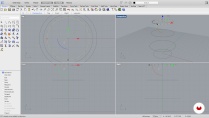
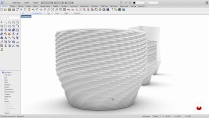
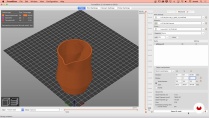
Dries then guides you through the process of 3D-modelling a sugar bowl and milk jug in Rhino, following the ‘thinking in lines’ approach. Learn some simple techniques to add patterns to your objects. Then see how to set up the PrusaSlicer software, as Dries guides you through the settings step by step.
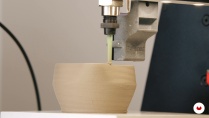
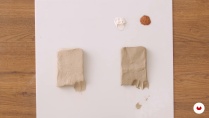
Discover how to prepare the clay by getting the right clay consistency for printing and filling the necessary cartridges. Then see how to set up the 3D printer to print your designs in clay. Dries also shows you how to fine tune the printing process for the best results. Add the finishing touches by hand before completing the traditional ceramic process by glazing and firing your piece in a kiln.
- 100% positive reviews (63)
- 4,418 students
- 15 lessons (2h 40m)
- 16 additional resources (4 files)
- Online and at your own pace
- Available on the app
- Audio: English, Spanish (Latam), French, Italian, Portuguese, Turkish
- English · Spanish · Portuguese · German · French · Italian · Polish · Dutch · Turkish
- Level: Beginner
- Unlimited access forever
Recommended software & tools for this course
 Rhino
RhinoWhat is this course's project?
Create a 3D printed ceramic sugar and milk set in which each item explores a distinct technique.

Projects by course students


Who is this online course for?
This course is for anyone interested in exploring the world of 3D printing with clay.
Whether you are a ceramicist interested in exploring the use of digital tools, experienced in 3D printing and want to explore the use of clay, or are simply curious about the intersection between traditional crafts and new technologies, this course is for you.
Requirements and materials
No previous experience is necessary.
To take this course, you need access to Rhino 6 or higher (they offer a 90-day free trial). Dries uses the free open-source software PrusaSlicer to prepare the 3D models. You will also need access to a 3D printer and kiln, which Dries helps you locate. To prepare the clay, you will need some basic tools that the teacher covers in the course.

Reviews

Unfold
A course by Unfold
Unfold is an Antwerp-based creative design studio founded by Claire Warnier and Dries Verbruggen in 2002. They specialize in the fields of art, design, technology, and craftsmanship. Through their studio, they explore the intersection between traditional crafts and new technologies, like 3D printing, robotics, or artificial intelligence.
The studio is known for being the pioneers of ceramic 3D printing and there, Claire and Dries have worked with clients such as Ecover, Hermès, Aesop, L’Oréal, Barnabé Fillion Parfums, Artek, MAS Museum, Middelheim Museum, Droog Design, Joris Laarman Lab and Anya Gallaccio. Their work has been exhibited in a number of museums such as Center Pompidou in Paris, the New Museum in New York, Yingge Ceramics Museum in Taipei, Design Museum London, and others. Unfold was also the recipient of the Designer of the Year award (2017) in Belgium.
Content
-
U1
Introduction
-
About Me
-
Influences
-
-
U2
Ceramic 3D Printing Basics, Tools, and Materials
-
What Is Ceramic 3D Printing?
-
Design Philosophy: Thinking in Lines
-
Different Types of Printers
-
Different Types of Clay
-
-
U3
3D Modelling and Slicing of Your Milk and Sugar Set
-
Modelling a Milk Jug 1
-
Modelling a Milk Jug 2
-
Modelling a Sugar Bowl with Patterns
-
Setting Up and Slicing with Prusa Slice
-
-
U4
Printing Your Milk and Sugar Set
-
Preparing the Clay
-
Filling the Cartridges
-
Setting Up the System
-
3D Printing your Milk Jug and Sugar Bowl
-
Surface Treatment and Glazing
-
-
FP
Final project
-
Introduction to Ceramic 3D Printing
-
What to expect from a Domestika course
-
Learn at your own pace
Enjoy learning from home without a set schedule and with an easy-to-follow method. You set your own pace.
-
Learn from the best professionals
Learn valuable methods and techniques explained by top experts in the creative sector.
-
Meet expert teachers
Each expert teaches what they do best, with clear guidelines, true passion, and professional insight in every lesson.
-
Certificates
PlusIf you're a Plus member, get a custom certificate signed by your teacher for every course. Share it on your portfolio, social media, or wherever you like.
-
Get front-row seats
Videos of the highest quality, so you don't miss a single detail. With unlimited access, you can watch them as many times as you need to perfect your technique.
-
Share knowledge and ideas
Ask questions, request feedback, or offer solutions. Share your learning experience with other students in the community who are as passionate about creativity as you are.
-
Connect with a global creative community
The community is home to millions of people from around the world who are curious and passionate about exploring and expressing their creativity.
-
Watch professionally produced courses
Domestika curates its teacher roster and produces every course in-house to ensure a high-quality online learning experience.
FAQs
Ceramic 3D printing uses a specially equipped 3D printer to build ceramic objects layer by layer from clay. Digital models are created in CAD software, sliced into printable instructions, and then extruded as wet clay for further finishing and firing.
This course is designed for intermediate users with some prior experience in 3D modeling or ceramics. Beginners may follow along, but a basic understanding of either ceramics or digital design is recommended.
You’ll need a computer with CAD and slicing software, a ceramic-compatible 3D printer, clay cartridges or extruder, a kiln for firing, and basic hand tools for finishing and glazing.
You will learn to use Rhino3D for designing ceramic models and PrusaSlicer for converting those models into instructions for the 3D printer.
Clay must be conditioned to the right moisture content, thoroughly mixed, de-aired to remove bubbles, and loaded into cartridges or extruders to ensure smooth, consistent printing.
You’ll learn how to integrate traditional ceramic processes with digital fabrication, prepare and model clay, operate slicing software, set up printers, hand-finish prints, and apply glazing techniques.
While prior experience with Rhino or 3D modeling is helpful, the course covers essential Rhino workflows and modeling strategies specific to ceramics, making it accessible for those with basic CAD skills.
 Rhino
Rhino
ssuper polecam, dość krótki mało zaawansowany ale jak za tę cenę to naprawde bardzo polecam
Muy bueno!
Amazing course, I was kinda scared when thinking of setting up the printer, but luckily it was detailed step by step explanation with all the secret tips and tricks.
I really loved how the teacher promoted honesty in working with the material and the clay flow to make the result really distintive. That really honors the tradition and the technology
The extra resources were super interesting!!! Going to print soon from La Plata, Argentina!!!
The course is really interesting. Wishing to see the part of CLEANING YOUR MACHINE and what are the best tips and tricks.
Now my clay is inside and I should figure out the rest and how to reuse or leave the setup for the next time.
Anyone knows how long is it possible to leave it inside?
Unique and detailed course, introducing me to two things I’m passionate about; ceramics and technology.