Pixel Art Character Animation for Video Games
A course by Daniel Benítez, Art Director

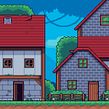
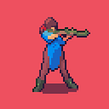
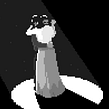

Bring your characters to life frame by frame in Pyxel Edit

The pixel aesthetic is back with a bang thanks to artists like Daniel Benítez, a video game developer and the cofounder of Fourattic, who keeps it very much alive in his animated creations. In this online course, he teaches you the techniques and processes behind animating a video game character and its surroundings in pixel art using the Pyxel Edit tool.
If you've already taken Daniel's previous course, Introduction to Character Design in Pixel Art, go even further in this one by animating your creations frame by frame and getting to grips with concepts such as timing, anticipation, and motion blur, as well as processes such as exporting and optimizing sprite sheets.
What will you learn in this online course?
17 lessons & 21 downloads
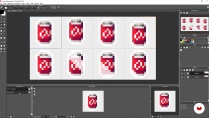
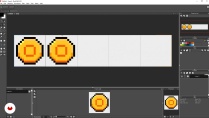
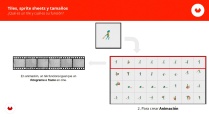
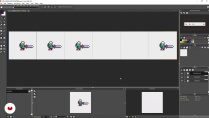
What's included in this course?
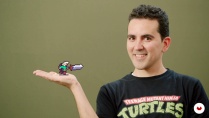
Start by getting to know Daniel, who tells you about his career in the world of video game design and specifically in pixel art. He then highlights some of the pixel art animators that have influenced him the most over the years, as well as animators and animation studios in other areas who have been just as inspirational to him.
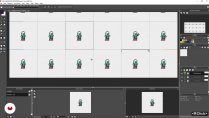
If you haven't already done so, download Pyxel Edit. Then Daniel walks you through its interface, with particular emphasis on the most important tools that the program has for developing animations.
Create a project using tilesets in Pyxel Edit. Discover what tiles are and what they are used for in animation.
The first action for your character is the waiting animation, starting off with basic shapes and silhouettes. Daniel uses some examples to explain what timing is within the context of animation, as well as what keyframes and motion tweens mean.
Next, create an animated walking cycle. Examine what it is exactly and what function it has in a video game before animating your character and reviewing animation concepts from the previous lesson.
The third and final character animation is the attack. Daniel introduces you to concepts and techniques like anticipation, motion blur, and easy in/out, which are essential for quality and smoothness in your animations.
Animate your character's surroundings using techniques such as modular animation and pixel-by-pixel animation.
Now you have all your animations made, learn how to export them separately or together in GIF format using Pyxel Edit. Find out how to export them so they can be used in video games by way of sprite sheets. Daniel wraps things up by sharing some more programs that are useful for this sprite sheet developing process.
- 98% positive reviews (433)
- 19,482 students
- 17 lessons (2h 54m)
- 21 additional resources (13 files)
- Online and at your own pace
- Available on the app
- Audio: Spanish, English, French, Italian, Portuguese, Turkish
- Spanish · English · Portuguese · German · French · Italian · Polish · Dutch · Turkish
- Level: Beginner
- Unlimited access forever
Recommended software & tools for this course
 Pyxel Edit
What is this course's project?
Animate a video game character, focusing on three of its most important states: waiting, walking, and attacking. Create some lightly animated surroundings using different techniques than those used for the character.

Projects by course students


Who is this online course for?
Designers, illustrators, animators, and anyone who wants to learn more about animation for video games using the pixel-art technique.
Requirements and materials
You need basic knowledge of character design and an understanding of Pyxel Edit or programs that offer a similar function such as Adobe Photoshop or Flash.

Reviews

Daniel Benítez
A course by Daniel Benítez
Daniel Benítez is an art director specialized in video games and pixel art, a technique that he has been evolving since beginning his career in the world of video games. He is the co-founder of Fourattic, an independent video game studio, and Mucho Pixels, a pixel art products and entertainment brand for video games.
Throughout his career, he has worked on creating games like Crossing Souls and Starr Mazer. He currently develops video games for companies like Gamee and Cartoon Network.
Content
-
U1
Introduction
-
Presentation
-
Influences
-
What will we do during the course
-
-
U2
Pyxel Edit: animation preparation
-
Pyxel Edit Download and Interface
-
Pyxel Edit overview for animation
-
Project Creation
-
-
U3
Animation of a pixel art character and its surroundings
-
Waiting animation: what it is and its function in video games 1
-
Waiting animation: what it is and its function in video games 2
-
Waiting animation: what it is and its function in video games 3
-
Walk cycle animation: what it is and its function in video games 1
-
Walk cycle animation: what it is and its function in video games 2
-
Walk cycle animation: what it is and its function in video games 3
-
Attack animation: what it is and its function in video games 1
-
Attack animation: what it is and its function in video games 2
-
Attack animation: what it is and its function in video games 3
-
Animation of the environment: what it is and its function in video games
-
-
U4
Export
-
Export Gifs and sprite sheets
-
-
FP
Final project
-
Pixel Art Character Animation for Video Games
-
What to expect from a Domestika course
-
Learn at your own pace
Enjoy learning from home without a set schedule and with an easy-to-follow method. You set your own pace.
-
Learn from the best professionals
Learn valuable methods and techniques explained by top experts in the creative sector.
-
Meet expert teachers
Each expert teaches what they do best, with clear guidelines, true passion, and professional insight in every lesson.
-
Certificates
PlusIf you're a Plus member, get a custom certificate signed by your teacher for every course. Share it on your portfolio, social media, or wherever you like.
-
Get front-row seats
Videos of the highest quality, so you don't miss a single detail. With unlimited access, you can watch them as many times as you need to perfect your technique.
-
Share knowledge and ideas
Ask questions, request feedback, or offer solutions. Share your learning experience with other students in the community who are as passionate about creativity as you are.
-
Connect with a global creative community
The community is home to millions of people from around the world who are curious and passionate about exploring and expressing their creativity.
-
Watch professionally produced courses
Domestika curates its teacher roster and produces every course in-house to ensure a high-quality online learning experience.
FAQs
You’ll learn how to design and animate characters and environments in pixel art, create walk and attack cycles, work with Pixel Edit, export animations in compatible formats, and apply techniques to achieve smooth animations for video games.
This is an intermediate-level course, recommended for those who already have basic knowledge of pixel art or digital animation and want to refine their techniques and workflows for video games.
You need basic digital art skills and a computer with Pixel Edit installed. Familiarity with animation concepts and character design is recommended.
Pixel Edit is a specialized tool for creating and animating pixel art graphics. In this course, you’ll learn how to use its main features like layers, tiles, keyframes, and animation export.
Yes, the course covers techniques for animating walk cycles, attacks, idle animations, and secondary movements for pixel art game characters.
You’ll learn how to export animations as GIFs or sprite sheets from Pixel Edit, optimizing them for game engines and digital platforms.
Yes, the course covers animating environments and objects using modular and pixel-by-pixel animation to create interactive, dynamic scenes.
Nice
Me ha gustado mucho el curso
Muy bueno el curso, hasta hora claro pero no te detallan sobre el programa que vas a usar , te dicen que programa vas a usar eso si, pero no te dicen que tienes obligatoriamente comprar el programa premium para avanzar el curso desde un inicio. Esto se lo digo porque pensé que el programa que se iba a usar iba ser completamente gratis pero no , ha sido uno de paga. El programa tienes dos , uno gratis y el premium, pero el que se va usar es el premium.
Muy bueno el curso. El profesor explica muy bien cada concepto.
Muy Completo el curso por muy poco tiempo