Lighting with Natural Light for Beginners
A course by Zony MayaPhotographer
A course by Zony Maya, Photographer

Learn to make the most of sunlight to create portraits with your reflex camera
New gadgets and technologies appear on the market every day that take digital photography a step further, from revolutionary cameras to magical improvements in editing software. One of the most important elements, however, remains the same—the sun.
In this online course, learn to harness sunlight in your photographs alongside Zony Maya, Mexican photographer and teacher of the Domestika course Flash Photography and Artificial Lighting for Beginners, where he teaches how to create great photos with very few resources.
What will you learn in this online course?
14 lessons & 17 downloads
How do our eyes see natural light?
3 minutes, 27 seconds
The color temperature of the light
9 minutes, 37 seconds
White balance
6 minutes, 18 seconds
7 ways to illuminate with sunlight
11 minutes, 22 seconds
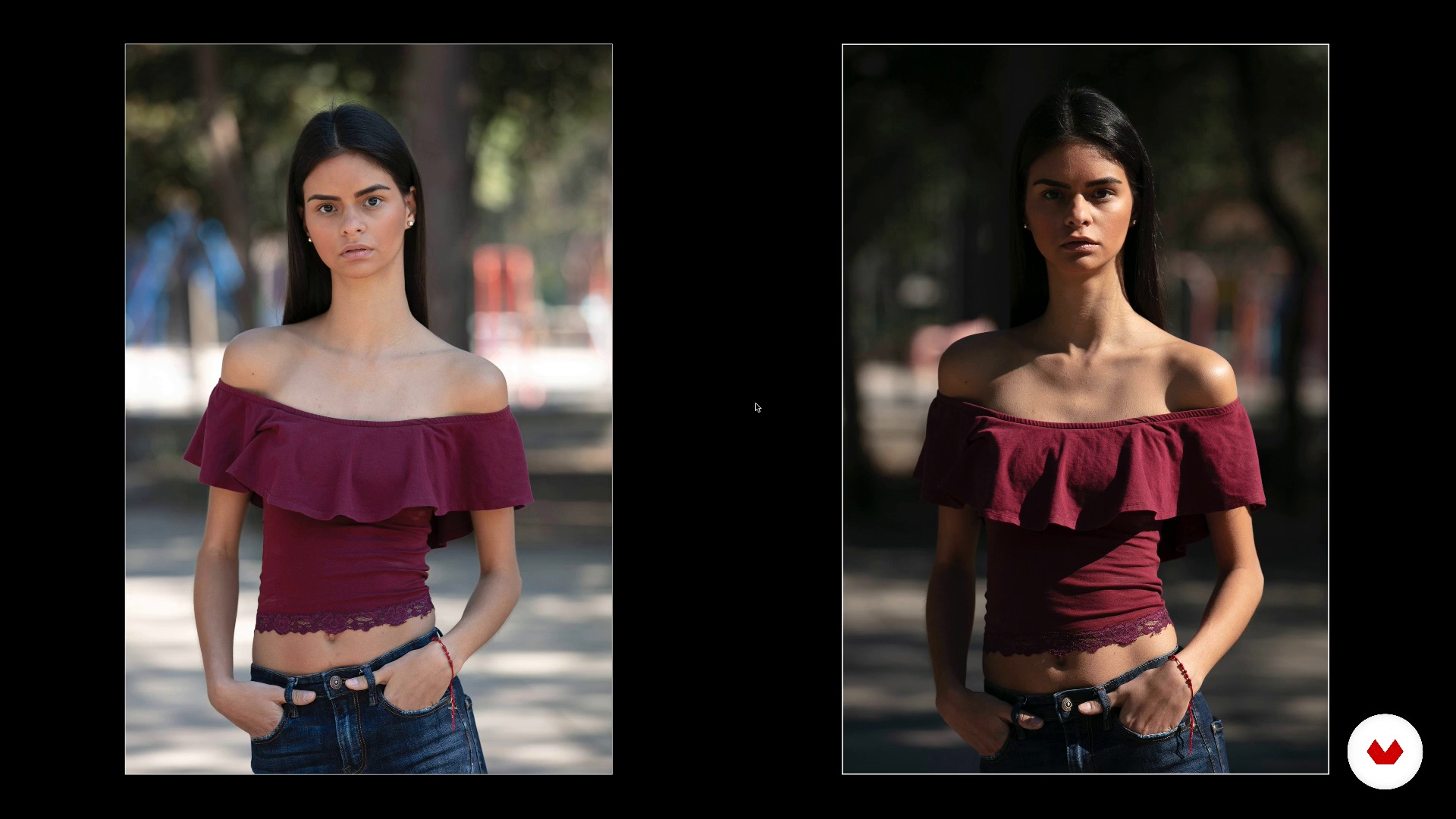
What is hard light and what is diffused light?
8 minutes, 29 seconds
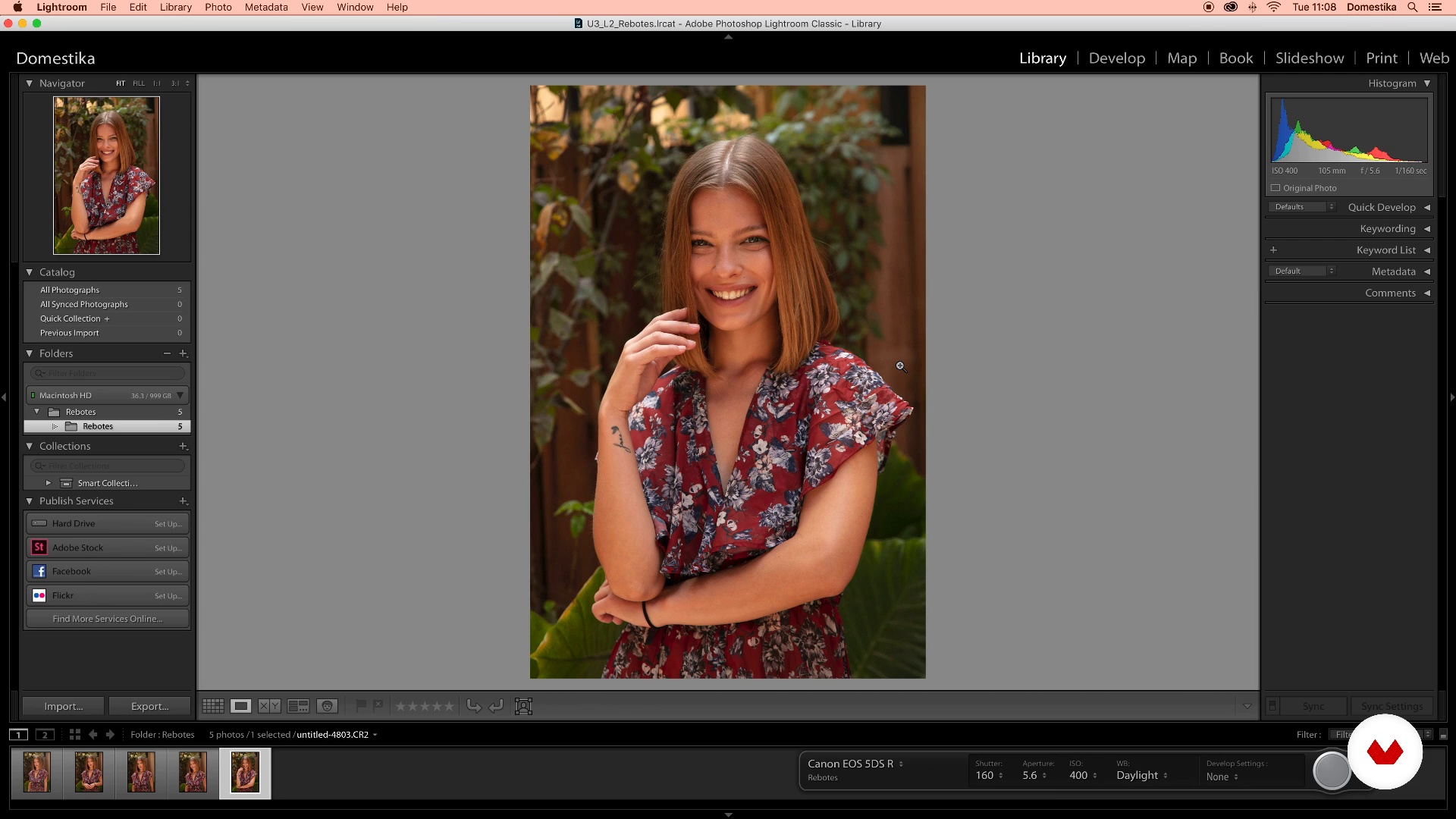
The bounces with natural light
16 minutes, 29 seconds
What's included in this course?
Start by getting to know Zony Maya and his most outstanding works. He also shares his main influences within the world of natural-light photography.
Briefly review the theory of what continuous light is and how white light breaks down into the seven colors of the rainbow.
Then learn about color temperature and how to identify the different light sources and the colors they emit, depending on the time of day. Then get to know what white balance is and how to control it manually from your camera settings, to achieve a pure white, without color trends whenever you want.
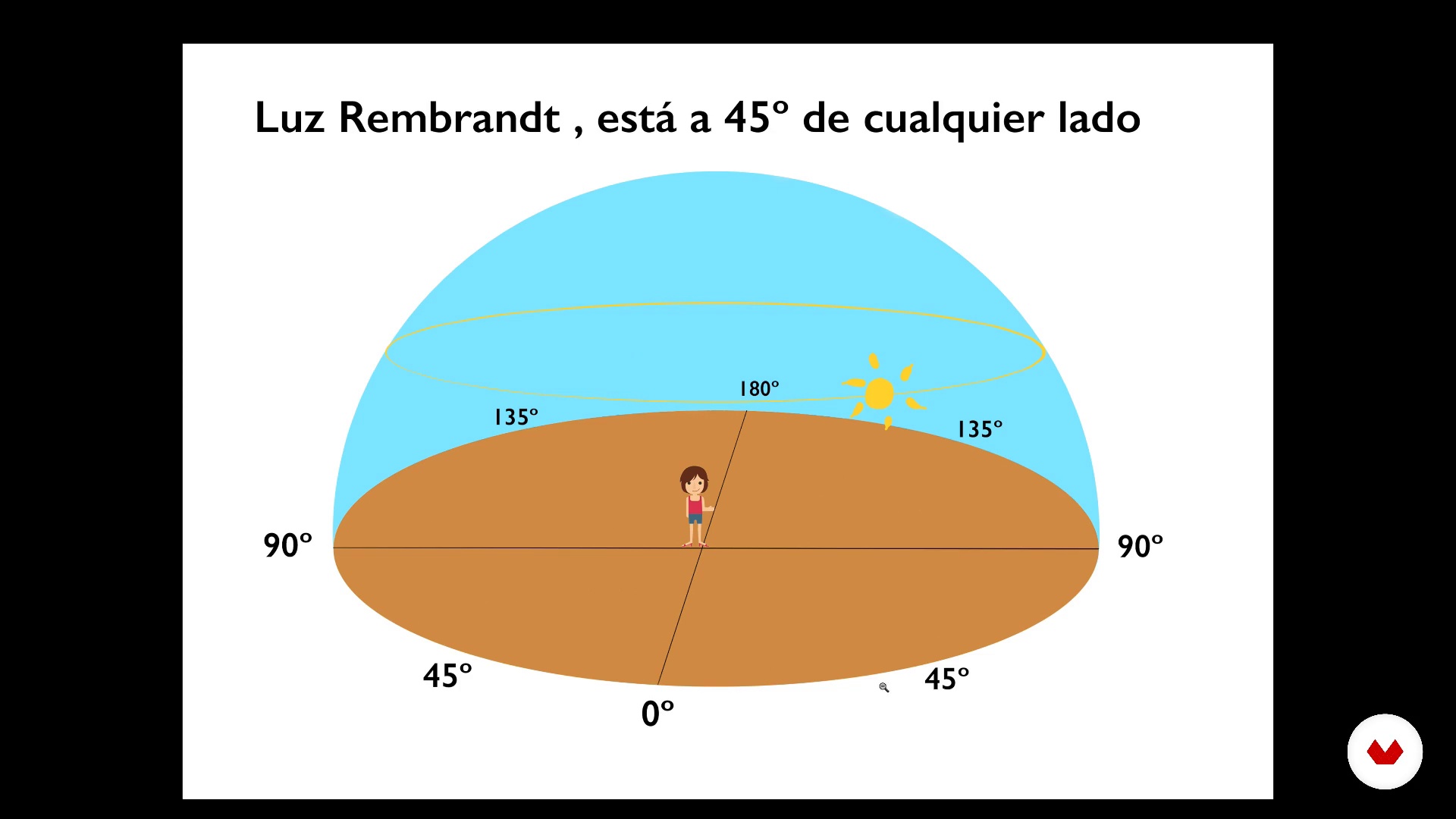
Zony explains the seven ways to illuminate with sunlight: frontal lighting, side lighting, cut lighting, backlighting, Rembrandt lighting, overhead lighting, and low lighting. In addition, see what hard light and diffuse light are, to later learn the differences and identify when to use each one.
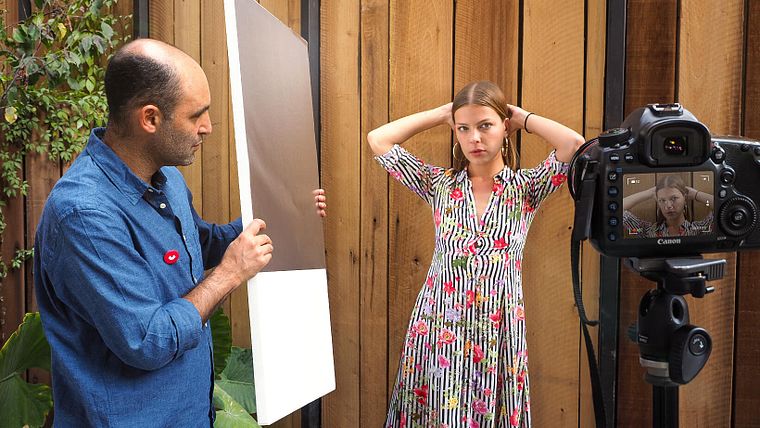
Next, learn to use rebounds, diffusers, and flags, and later create them yourself with materials found in any stationery store. Discover how to control the contrast in your photos with the use of these tools.
Zony tells you about the 360º rule and how to always apply it to your portrait photographs. He also explains the details of the window light, its characteristics, advantages, and disadvantages when taking pictures.
To wrap things up, do an exercise to learn to transform the most complicated natural lighting—midday sun—into an ally.
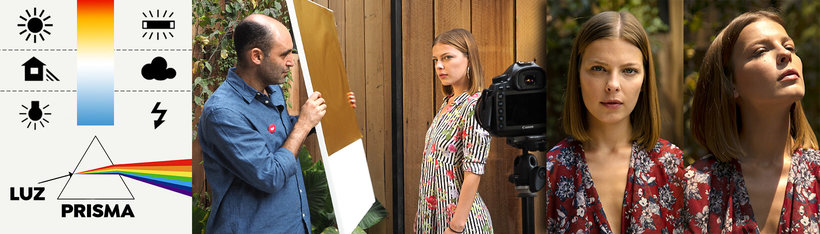
What is this course's project?
Take a series of photographs of people or objects making the most of natural light, and applying everything you've learned in the course.
Projects by course students


Who is this online course for?
Photography beginners who want to learn how to use sunlight, to illuminate well on a low budget.
Requirements and materials
You need an SLR camera and to know how to use it in manual mode, as well as a series of materials that you can find in any stationery store.
Reviews
- daniel_e3PLUS1 day ago
practico y entretenido
- beata_22PLUS4 months ago
muy bien
- 4 months ago
Muy práctico, claro y entretenido. Me sirvió mucho.
- 7 months ago
Es un curso increíble
- 1 year ago
Me gustó mucho el curso, con explicaciones muy directas

He received a FONCA grant and a Fulbright-García Robles Scholarship as well as a master's degree in photography, video, and media from the School of Visual Arts New York. His work has been exhibited at the Solomon R. Guggenheim Museum in New York, the Manifesta 11 European Biennial of Contemporary Art in Switzerland, and the XIII Bienal de Fotografía at the Centro de la Imagen in Mexico.
He has collaborated with brands such as Nestlé, Bimbo, Puma, GNP, and Palacio de Hierro, along with publications such as National Geographic, New York Magazine, Vanity Fair, Glamour, and Gatopardo. He currently shares his knowledge through workshops and conferences in different countries across America, Asia, and the Middle East. He is also an ambassador for Canon and founder of the Maya-Barrón Scholarship.
Content
- U1
Introduction
- Presentation
- Influences
- U2
The light
- How do our eyes see natural light?
- The color temperature of the light
- White balance
- 7 ways to illuminate with sunlight
- U3
Transforming natural light
- What is hard light and what is diffused light?
- The bounces with natural light
- The diffusers with daylight
- The importance of flags
- U4
Control of lighting
- The contrast of light
- The 360 ° rule
- Window light
- How to control the light at noon?
- FP
Final project
- Lighting with natural light for beginners
What to expect from a Domestika course
Learn at your own pace
Enjoy learning from home without a set schedule and with an easy-to-follow method. You set your own pace.
Learn from the best professionals
Learn valuable methods and techniques explained by top experts in the creative sector.
Meet expert teachers
Each expert teaches what they do best, with clear guidelines, true passion, and professional insight in every lesson.
Certificates
PLUSIf you're a Plus member, get a custom certificate signed by your teacher for every course. Share it on your portfolio, social media, or wherever you like.
Get front-row seats
Videos of the highest quality, so you don't miss a single detail. With unlimited access, you can watch them as many times as you need to perfect your technique.
Share knowledge and ideas
Ask questions, request feedback, or offer solutions. Share your learning experience with other students in the community who are as passionate about creativity as you are.
Connect with a global creative community
The community is home to millions of people from around the world who are curious and passionate about exploring and expressing their creativity.
Watch professionally produced courses
Domestika curates its teacher roster and produces every course in-house to ensure a high-quality online learning experience.
FAQs
You’ll learn to observe, analyze, and control natural light, use bouncing and diffusion techniques, adjust color temperature and white balance, and apply creative compositions for portraits and artistic photography.
The course is designed for people with basic photography knowledge who want to deepen their understanding of natural light and advanced techniques to achieve professional results.
All you need is a digital camera (DSLR, mirrorless, or advanced compact), access to natural light, and simple tools like diffusers, reflectors, or even a plain white card. Professional gear isn’t required.
You can control natural light by using diffusers, reflectors, changing your subject’s position, and adjusting camera settings like exposure and white balance to get the lighting you want.
The course teaches techniques such as bouncing light, using diffusers and flags, and strategically positioning your subject to soften shadows, reduce contrast, and enhance volume in natural light portraits.
Color temperature and white balance affect the tones and colors in your images. You’ll learn to recognize warm or cool light and adjust your camera for accurate colors depending on the time of day or environment.
Hard light creates sharp shadows and high contrast, great for dramatic effects. Diffused light produces soft shadows and a more even look, ideal for portraits and delicate scenes. The course shows you how to achieve both.