Specialization

Podcasting Specialization From Concept to Audience

Master podcasting from concept to audience engagement, covering narrative writing, technical production, and marketing strategies

Specialization · 6 modules

Embark on a transformative journey into the world of professional podcasting. This specialization is your guide to mastering both the art and technique of podcast creation. From conceptual foundations to advanced marketing strategies, gain insights into every aspect of podcasting. Explore narrative writing, technical production, audience engagement, and impactful storytelling. Develop the skills to create audio content that resonates with listeners and leaves a lasting impression.

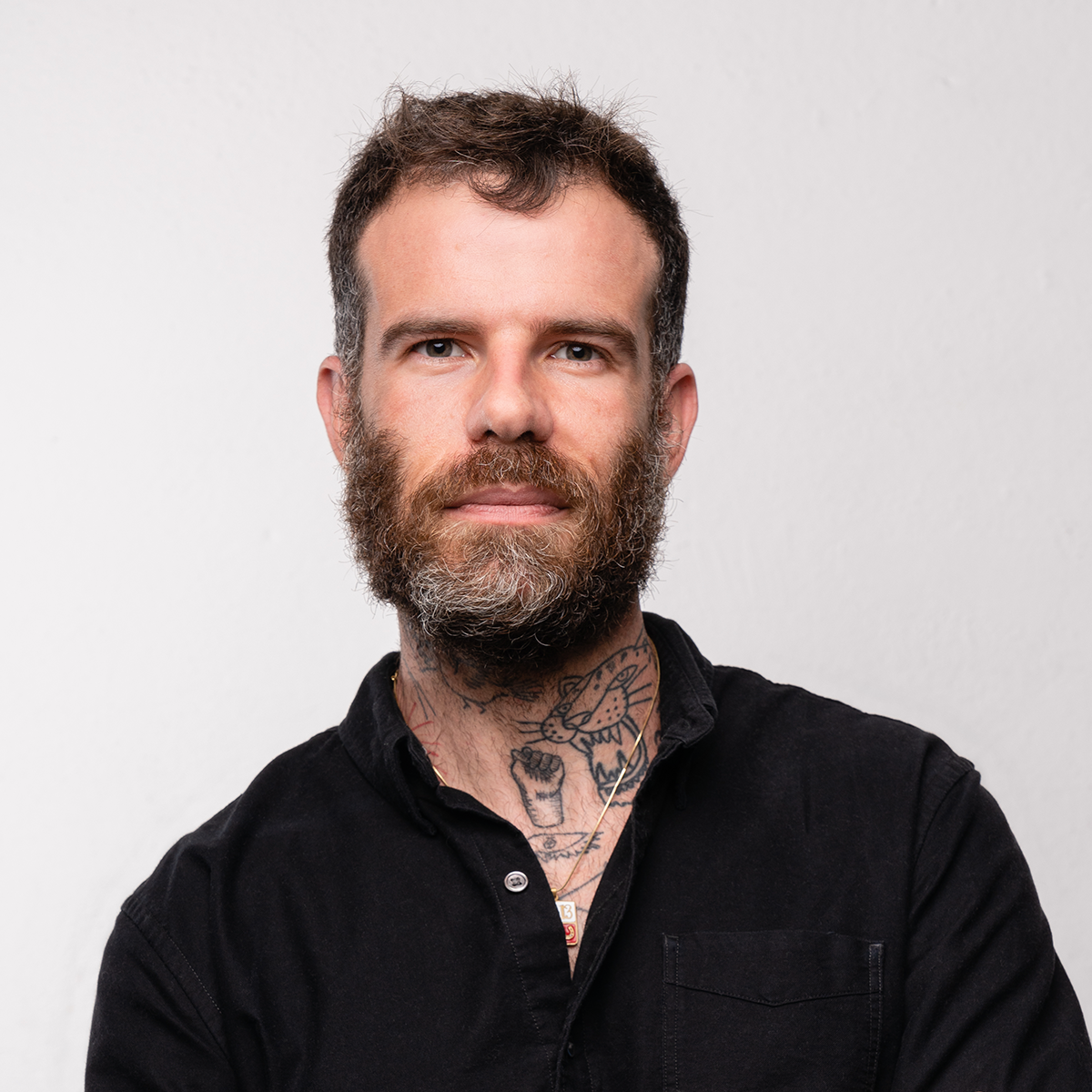
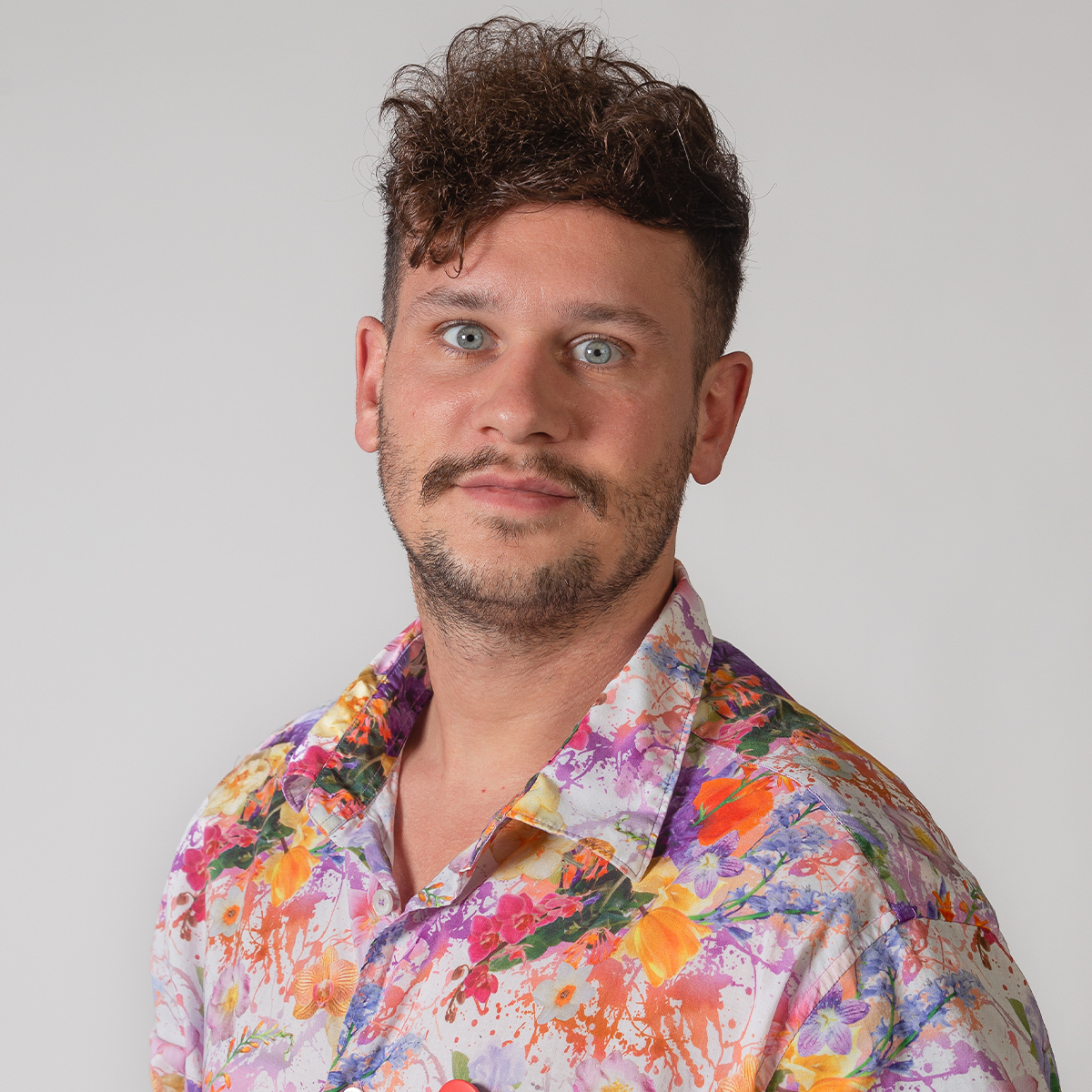
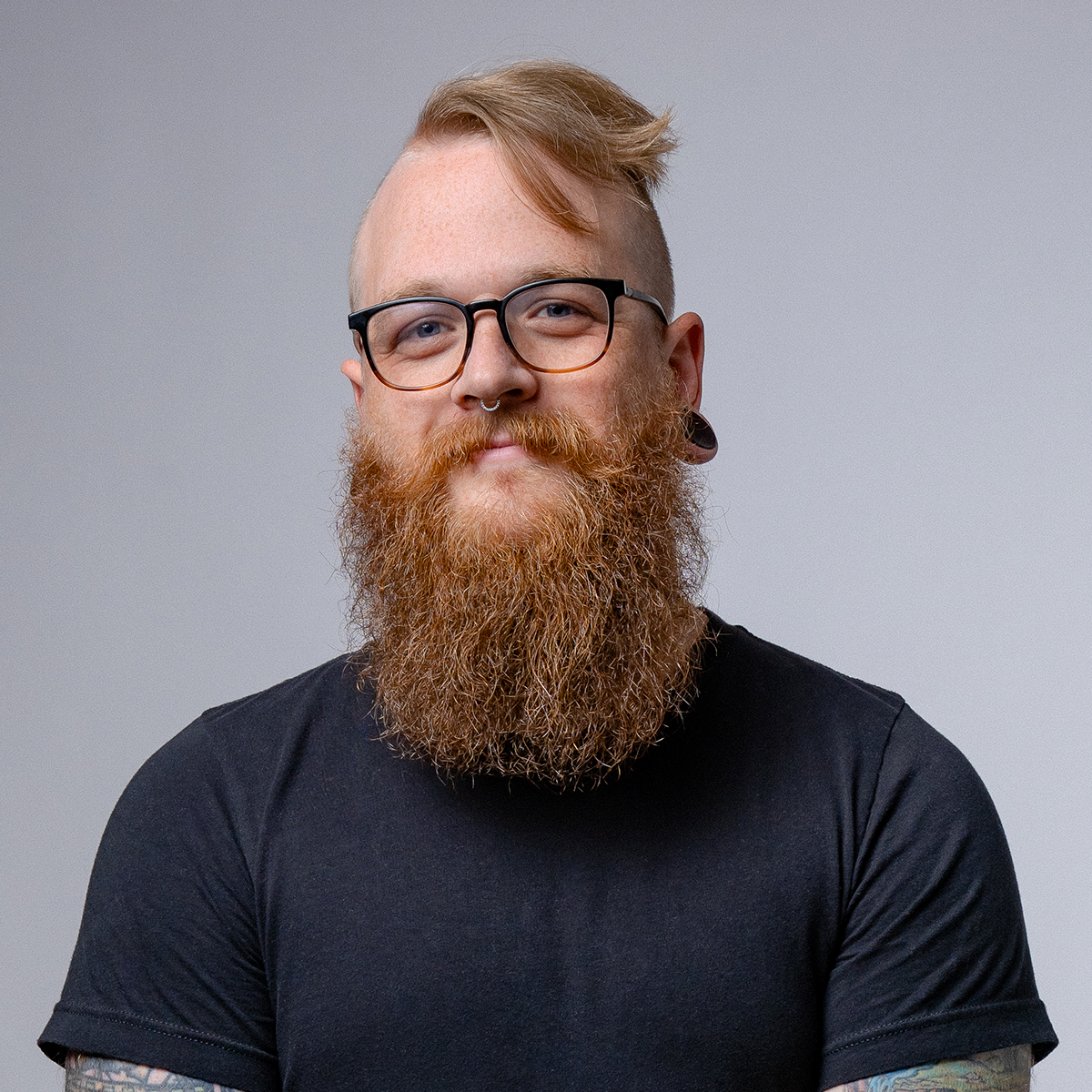
The program features a diverse group of experts, including David Mulé, Chico Felitti, Tom Kelly, Quentin Bresson, and Nicola-André Hagmann. Each brings unique expertise, covering everything from crafting compelling scripts and setting up a home studio to mastering audio engineering and executing effective marketing campaigns. Upon completion, you'll have the confidence and knowledge to produce and launch a professional podcast, equipped to grow and maintain an engaged audience. Whether you're a seasoned creator or just starting out, this specialization offers the tools and inspiration to elevate your podcasting journey.

Read more ↓

What will you learn in this specialization?
A total of 6 modules and 85 lessons
A total of 14h 39m of vídeo lessons
Taught by 5 selected expert teachers
image
1
Introduction
Step into the world of podcasting—a medium that blends creative freedom with deep connection. You’ll discover how sound becomes a powerful tool for storytelling, self-expression, and reaching listeners across the globe. With just a mic and your voice, you're ready to explore endless possibilities and shape a space that’s entirely your own.
1m
image
2
Influences | David Mulé Rebecchi
Next, I am going to tell you about the main people who have influenced my work and serve as inspiration.
3m
image
3
Influences | Chico Felitti
In this class we are going to travel by references. You will learn a little about podcasts and books that influenced me and can influence you too.
5m
image
4
Influences | Tom Kelly
I can find inspiration in pretty much anything, from a blacksmith YouTuber to former coworkers at a commercial woodshop and, of course, some of my favorite audio engineers. I would like to introduce you to some of my main influences, who always encourage me to explore my passions at the deepest level.
8m
image
5
My Sources of Inspiration | Quentin Bresson
Now, I'm going to share my sources of inspiration with you, especially those that inspire me soundly and musically.
17m
image
6
Influences | Nicola-André Hagmann
In this lesson, I'll give you an insight into the people who have influenced me and my work the most. As a creative strategist, I'm most influenced by people who have achieved great things in their fields and have positively influenced millions of people. That's why they would probably be the most interesting guests for a podcast interview.
2m
image
4
The Birth of Podcasting and Its Evolution to This Day
First, a little history. In this lesson, I will tell you about the birth of podcasting and how it has developed to this day.
7m
image
5
The Podcast and The Radio, Are They The Same?
Now that you know the beginnings and evolution of the podcast, let's learn about the differences between podcast and radio.
3m
image
6
The Functions of Podcasting and What I Need to Start One
In this lesson we are going to discover what things we can do with podcasting and what equipment we need to make our podcast. We will also see what the functions of the podcast are.
7m
image
7
Choice of Theme
We are going to know what are the factors that can influence the theme of our podcast and what factor to take into account when deciding which audience to target.
4m
image
8
Format Creation
We come to one of the most important parts of creating the podcast; we are going to format it taking into account concepts such as duration and structure.
5m
image
9
How to Write a Script
Now that our podcast is in format, we are going to learn how to develop a script, a guide that will help you never get lost in your recording.
1m
image
10
Improvisation vs. Preparation
Now that we know how to create a script, let's look at the differences between preparation and improvisation and the advantages that each model has.
3m
image
11
Setting the Gear
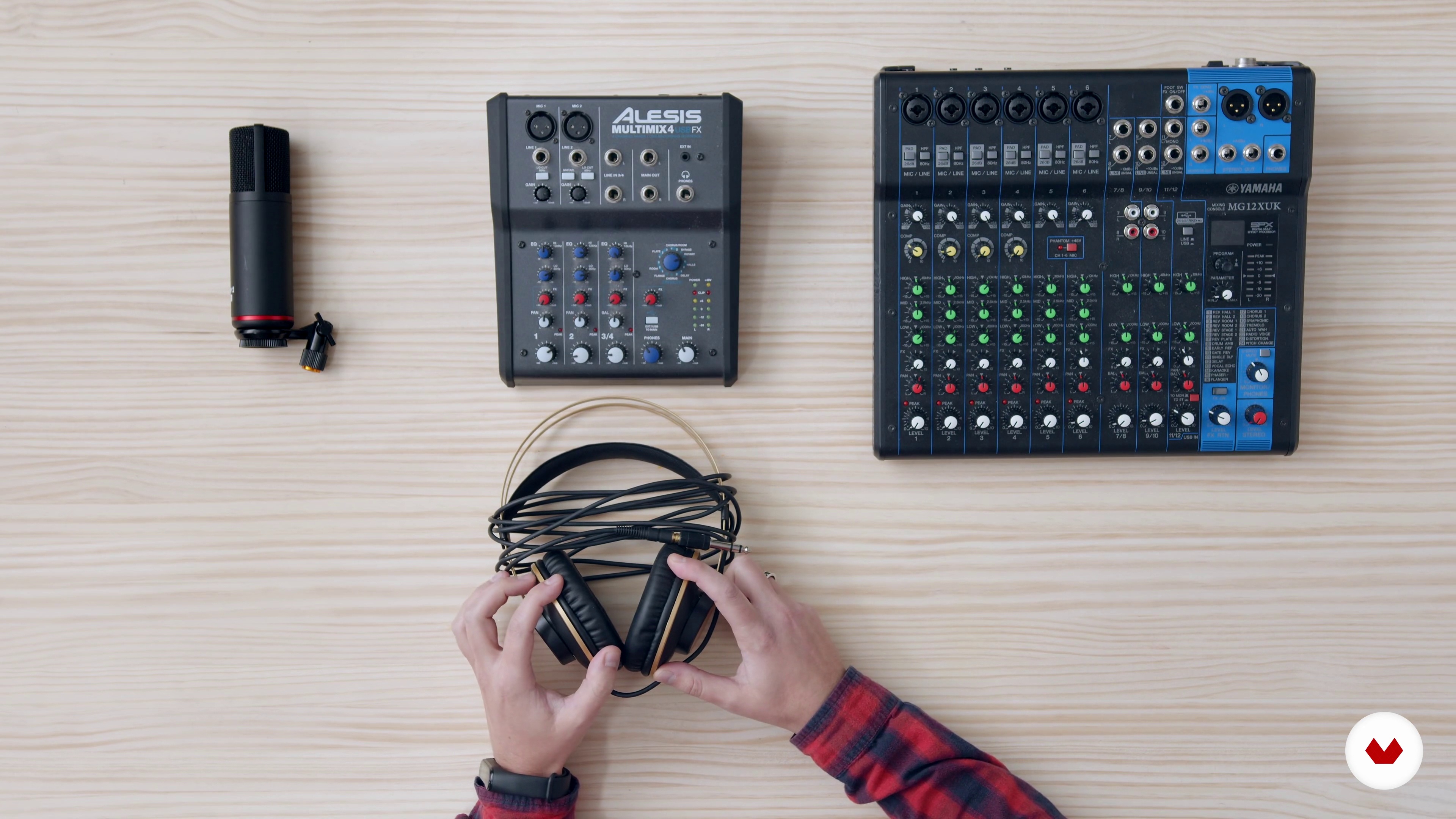
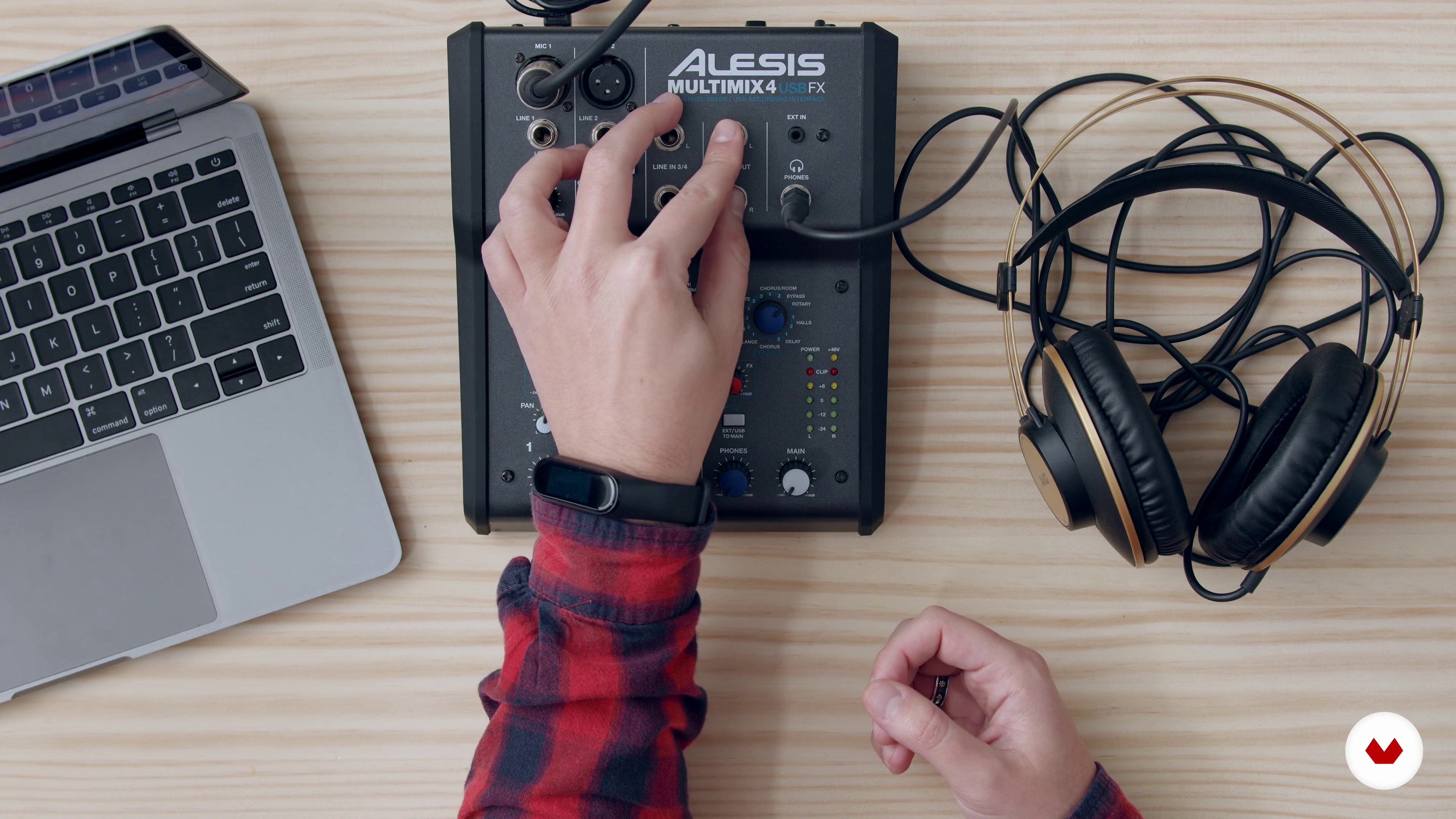
Now we are going to prepare the recording equipment for our podcast.
12m
image
12
Silence... Action!
In this lesson I will teach you the importance of recording in a good environment and that we know how to correctly transmit the message through our voice.
6m
image
13
Editing and Finalizing The Podcast
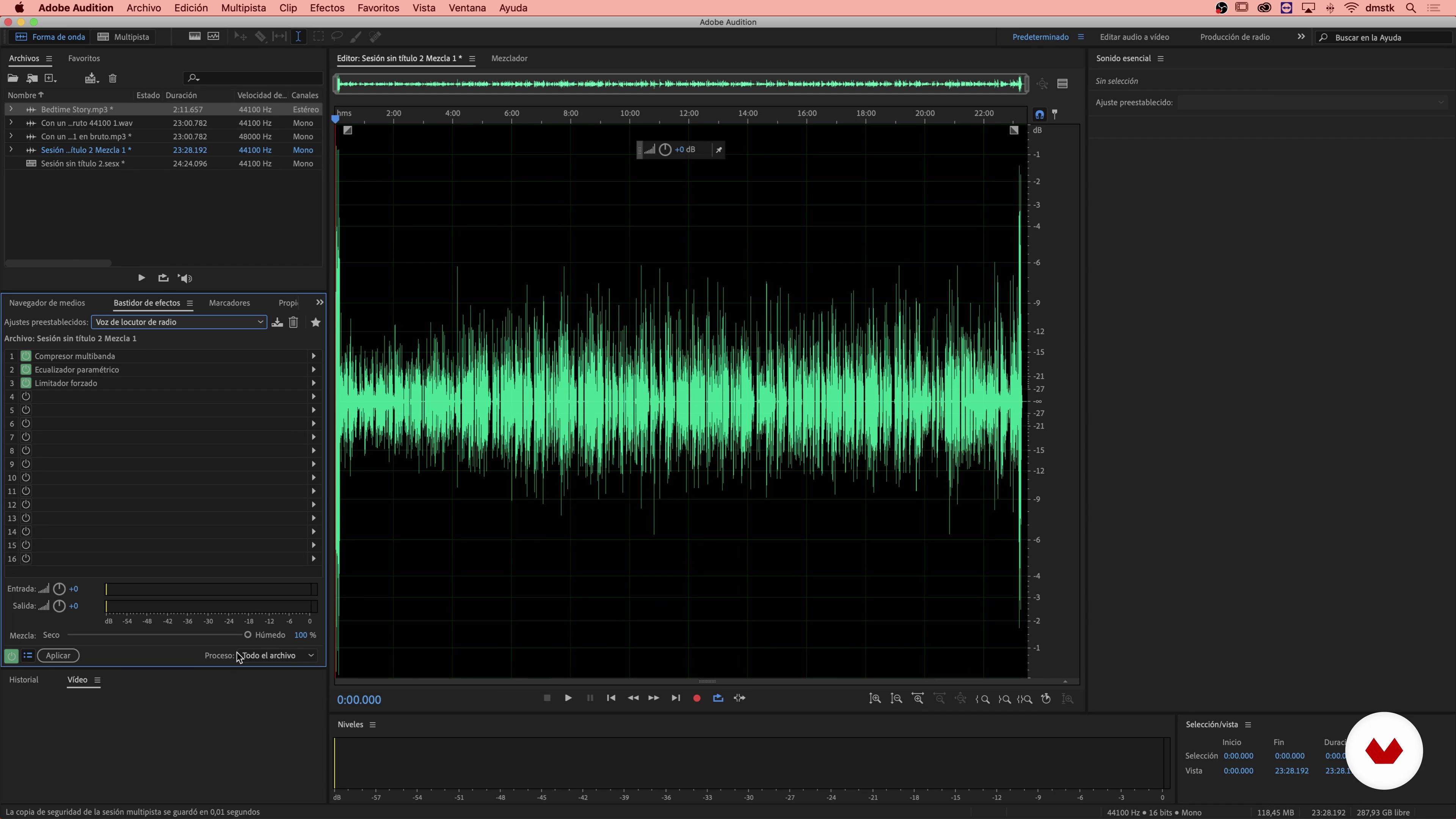
Once we have our podcast recorded, it is time to edit it so that it sounds its best. Let's go there!
13m
image
14
Hosting and Podcasting Platforms
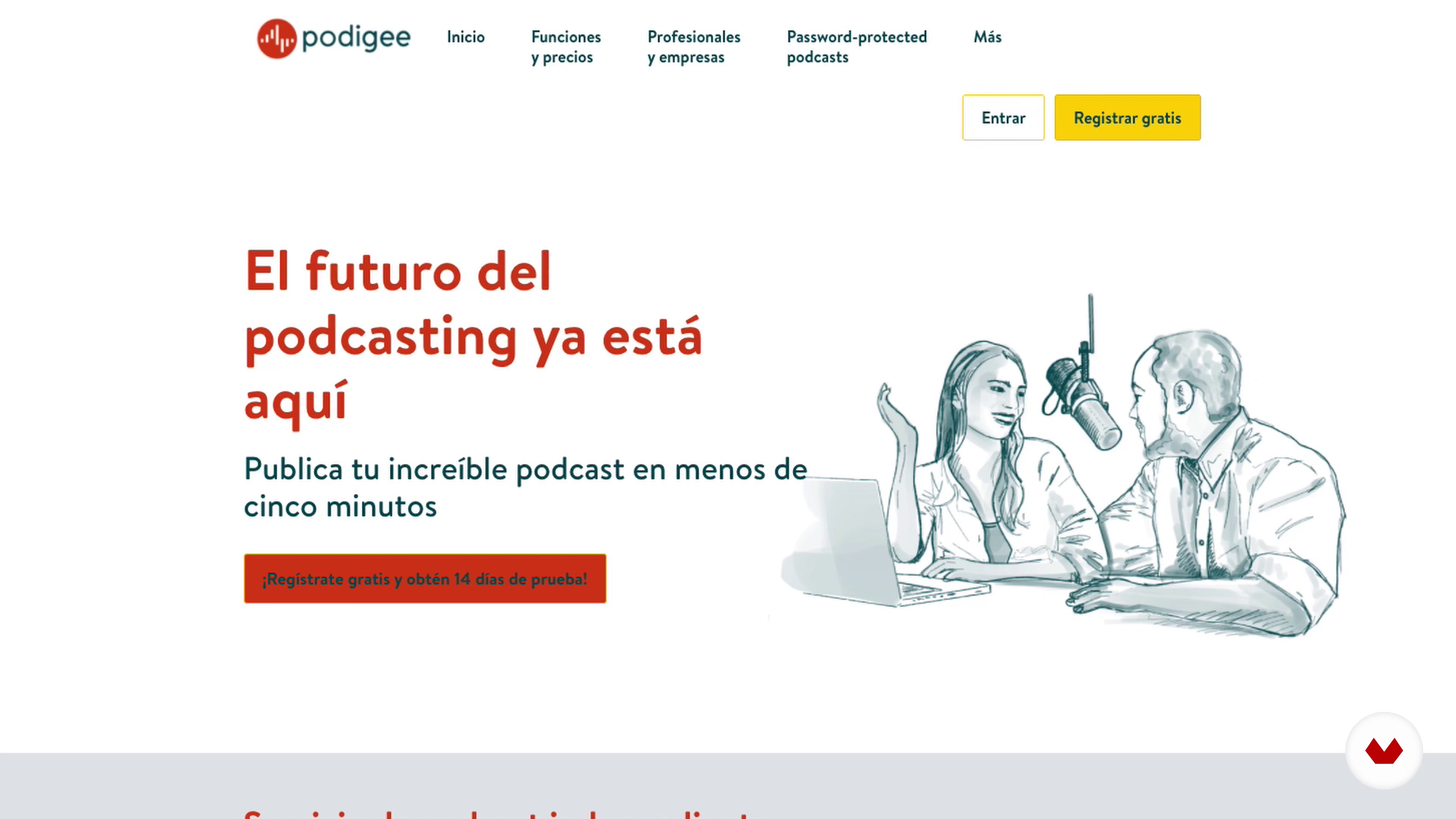
In this lesson, I am going to explain to you what characteristics the perfect hosting platform should have, and how we can spread our podcasts through aggregators.
4m
image
15
Social Networks
Now we are going to see how social networks can be one of our great allies when it comes to making ourselves known.
6m
image
16
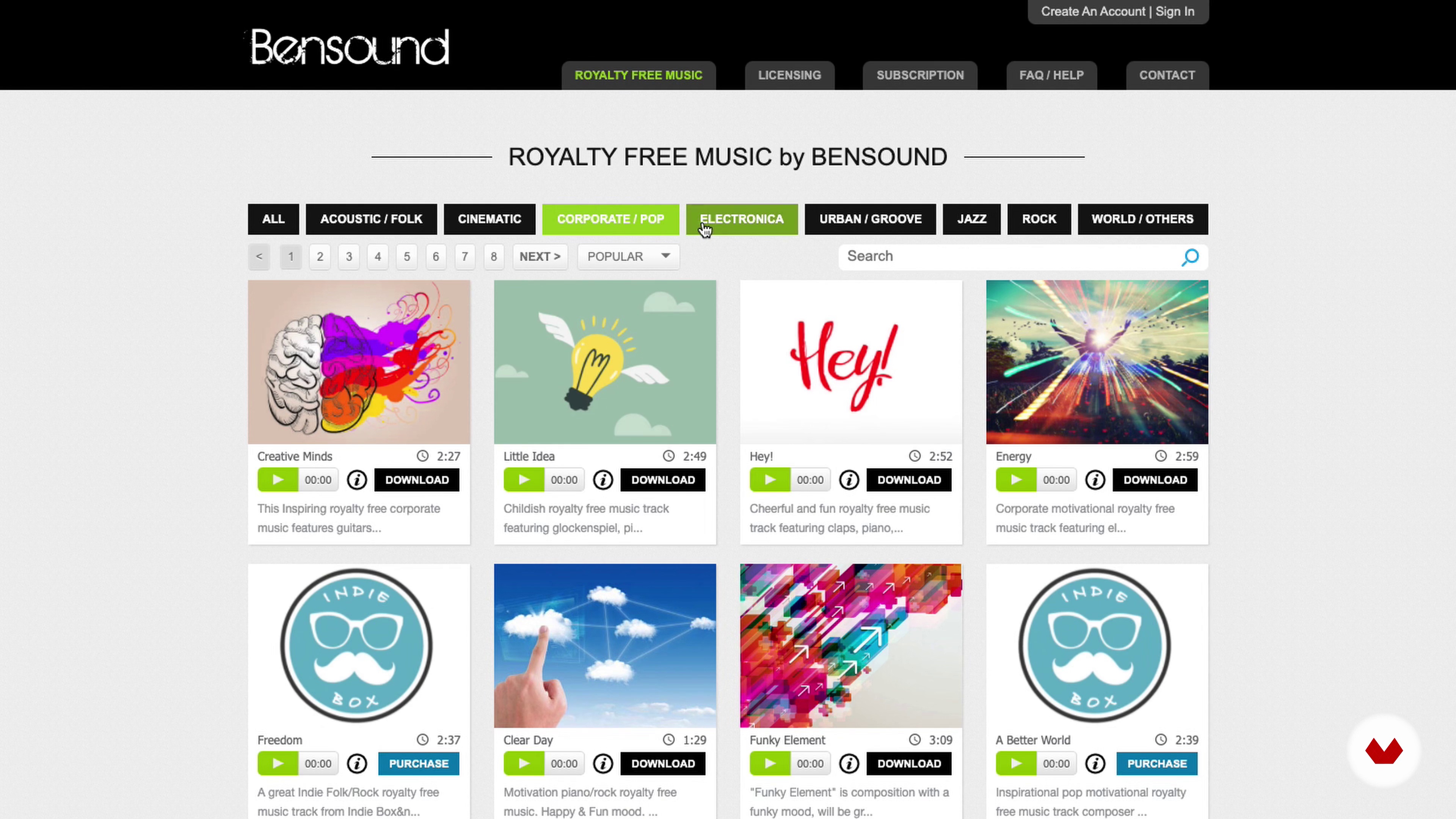
Sound Library
Music is, for me, something very important when creating a podcast. Let's get to know some royalty-free sound libraries.
2m
image
17
Final Advice
Finally, I'm going to give you some final tips so that you can continue to perfect your podcasts and reach the top.
5m
image
3
What is my story?
What is the heart of your podcast? What will he be about? Does your idea deserve a narrative of minutes or hours? In this class I will look at what makes a good story.
10m
image
4
How will I tell my story?
We already know what we're going to tell. Now it's time to know how we're going to narrate our story and think about the format and voice of the podcast.
13m
image
5
What already exists in my story?
You won't be the first person to tell this story, so this class is dedicated to researching what already exists on your topic and using that material to strengthen your narrative podcast.
6m
image
6
Before going to the street: equipment
In this class I will review the equipment needed to record in the street. Rest assured, they are few and it is quite possible that you already have them.
5m
image
7
on the street (outside)
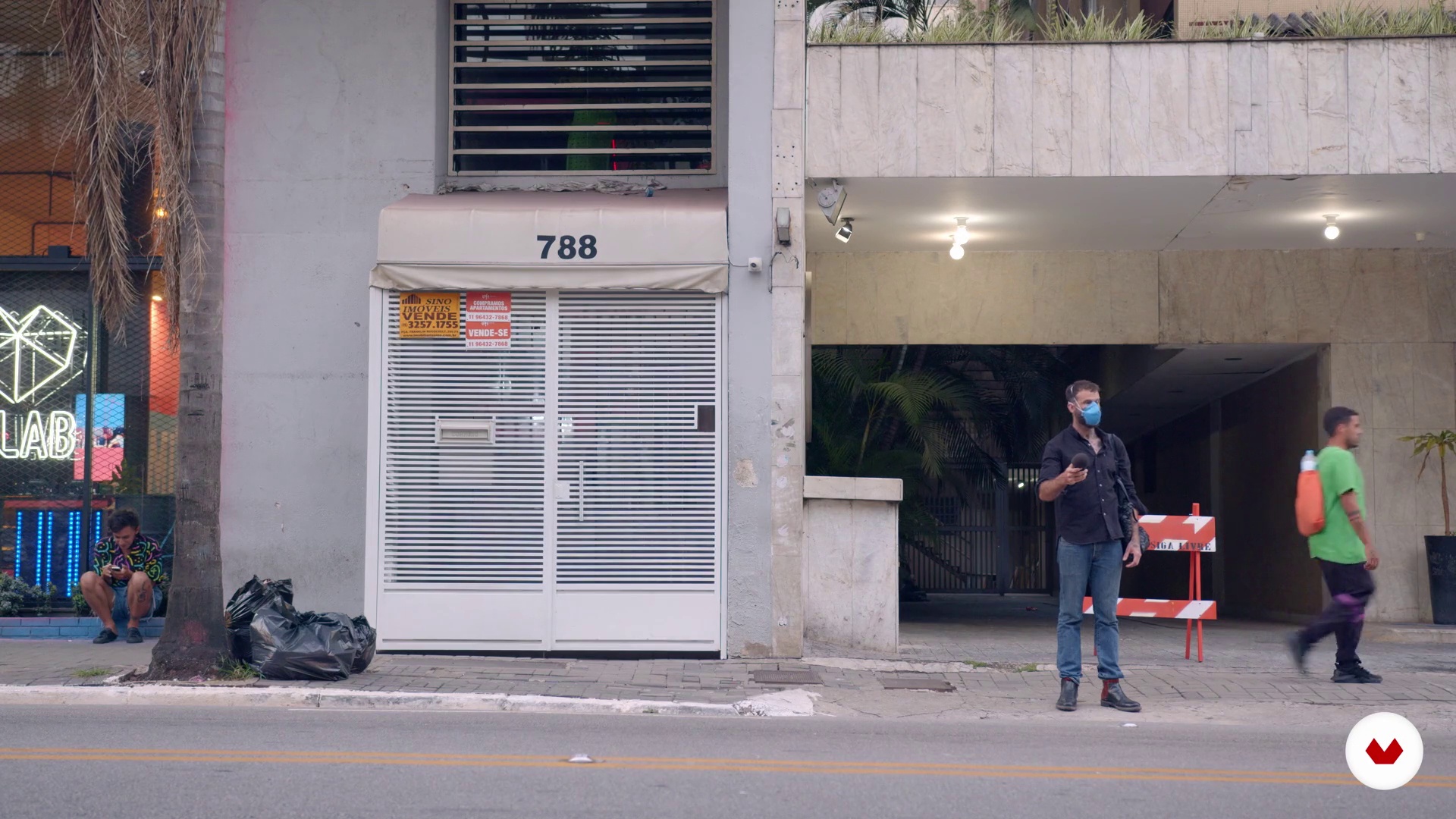
Recording! In this class, we'll discuss techniques on how to get a recording on the street, despite all the problems that can (and will) happen.
12m
image
8
How to order an interview
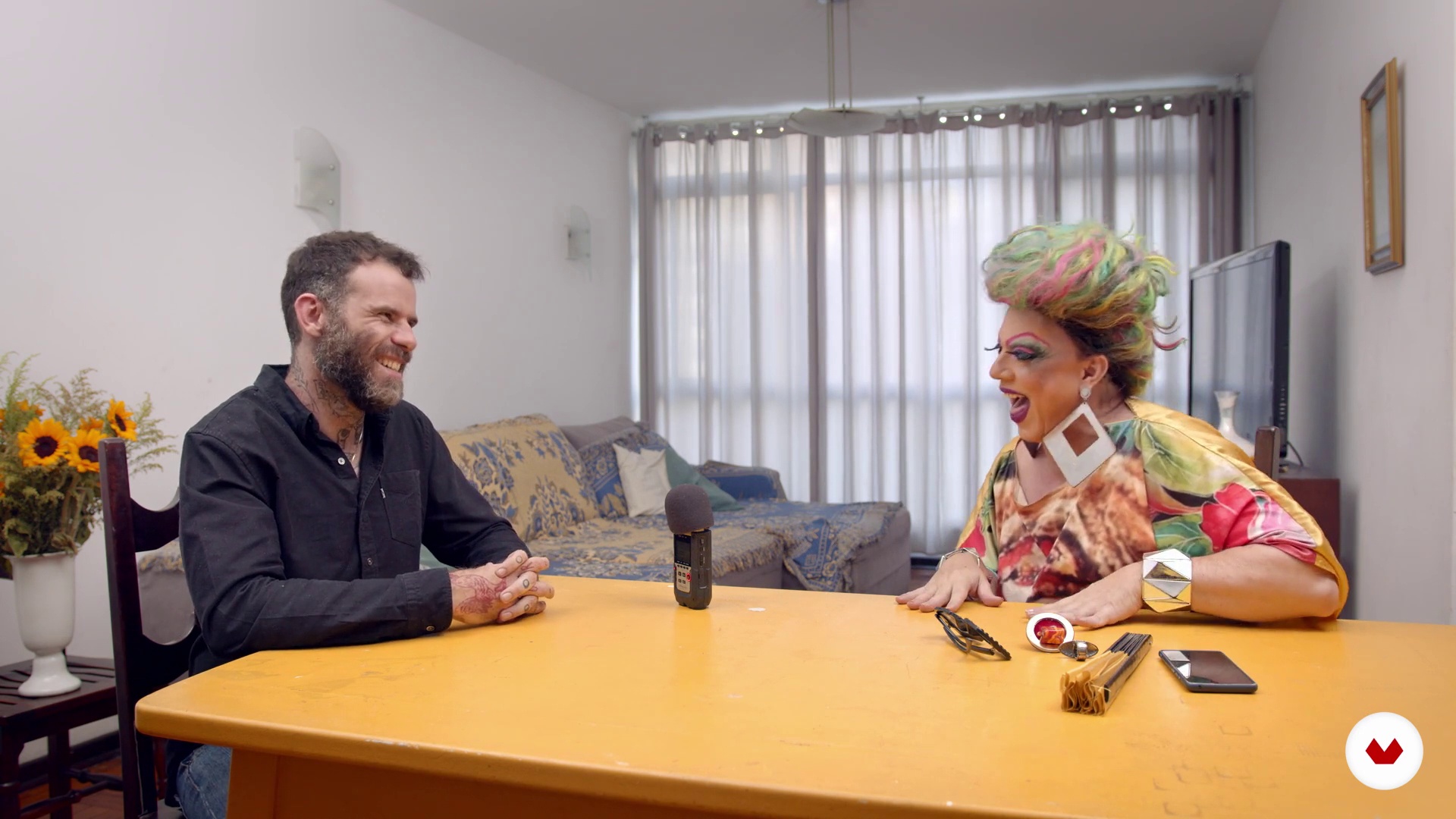
Let's learn in practice how to do a good interview, make your character comfortable and lead him to speak in the best way for your podcast.
17m
image
9
Putting reality on paper 1
It's script time! With the interviews done, let's sit down and think about the text that will guide the podcast. Writing is like putting together a puzzle.
13m
image
10
Putting reality on paper 2
With the interviews transcribed and all the links and information gathered, it's time to write the script.
7m
image
11
Recording!
Raise your voice. It's time to record the voiceover that will stitch the interview excerpts into a single story: a narrative podcast episode.
4m
image
12
Is this story an only child?
Can your podcast episode yield even more? It's time to think about other episodes and maybe design a series.
4m
image
13
A podcast is a product
In this class, let's put a face to your podcast and think of it as a product: where should it be available?
4m
image
14
putting on the air
Now that your work is done, in this class we will learn how to get it on the air. It's easy and free. Or almost.
5m
image
3
The Necessary Tools and How to Use Them
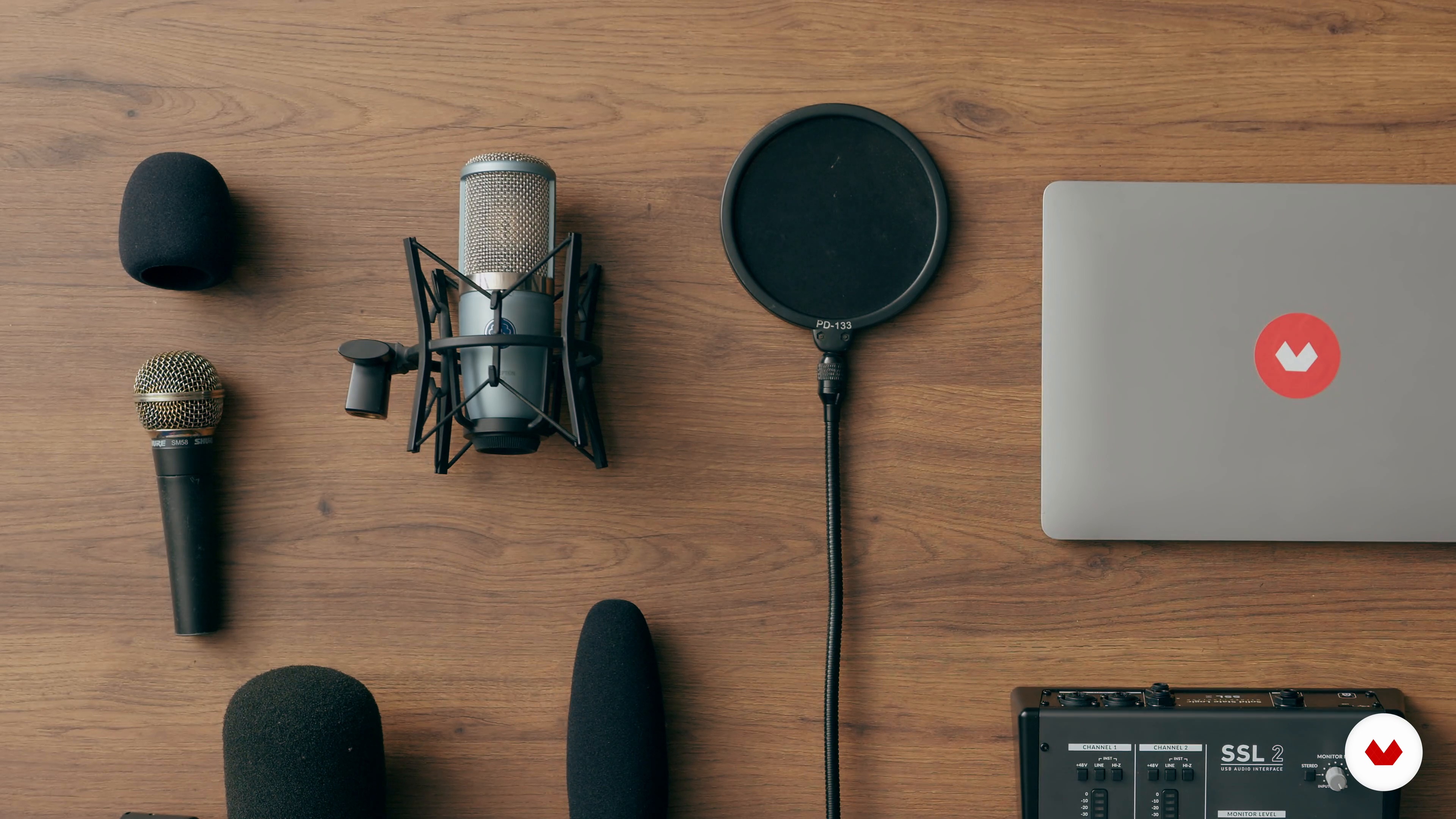
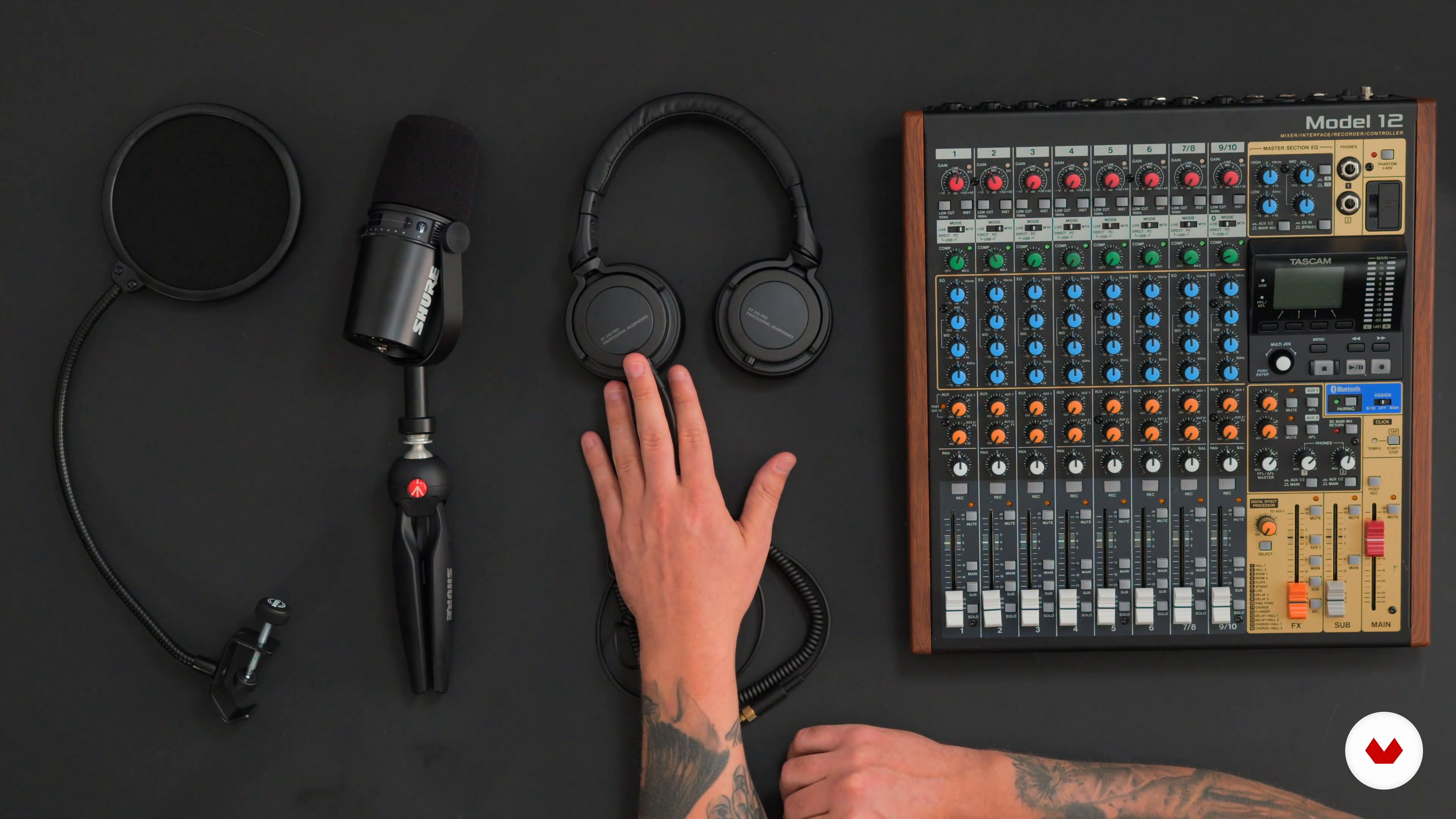
While a podcast can be done with or without a variety of professional tools, you will learn about some of the most common tools used in voice recordings, how they work, how to use them properly, and how to get ready for recording.
13m
image
4
The Acoustic of a Room
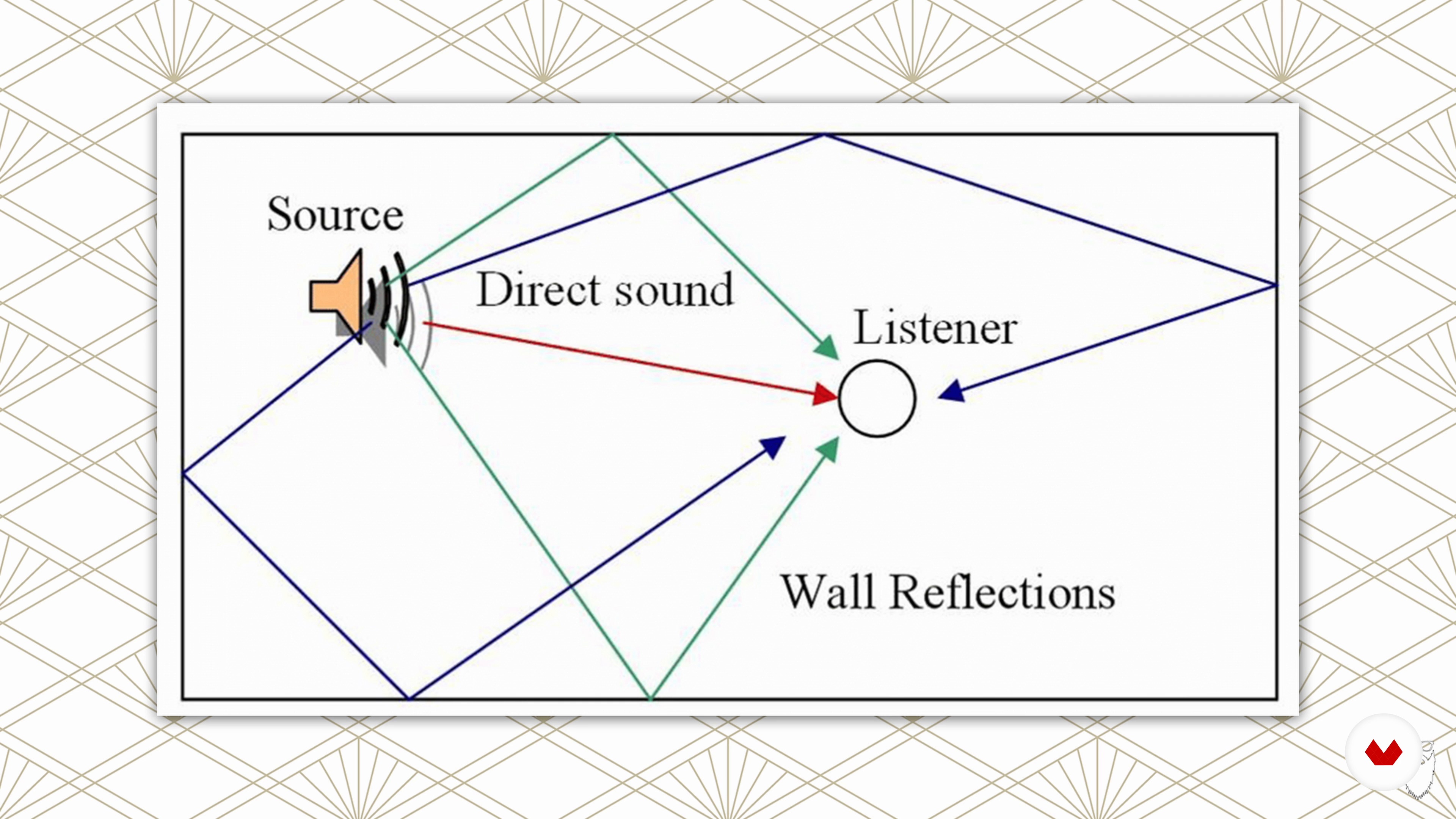
A great-sounding recording is dependent on a great-sounding environment. In this lesson, I will explain how the room you record in impacts the quality of your recording.
7m
image
5
Setting up the Space for Recording
As mentioned before, the quality of a recording is largely determined by the quality of the room or environment in which the recording takes place. Here you will learn how to determine the best way to set up our space for a recording, mostly utilizing materials that we have on hand.
7m
image
6
Setting up the Gear
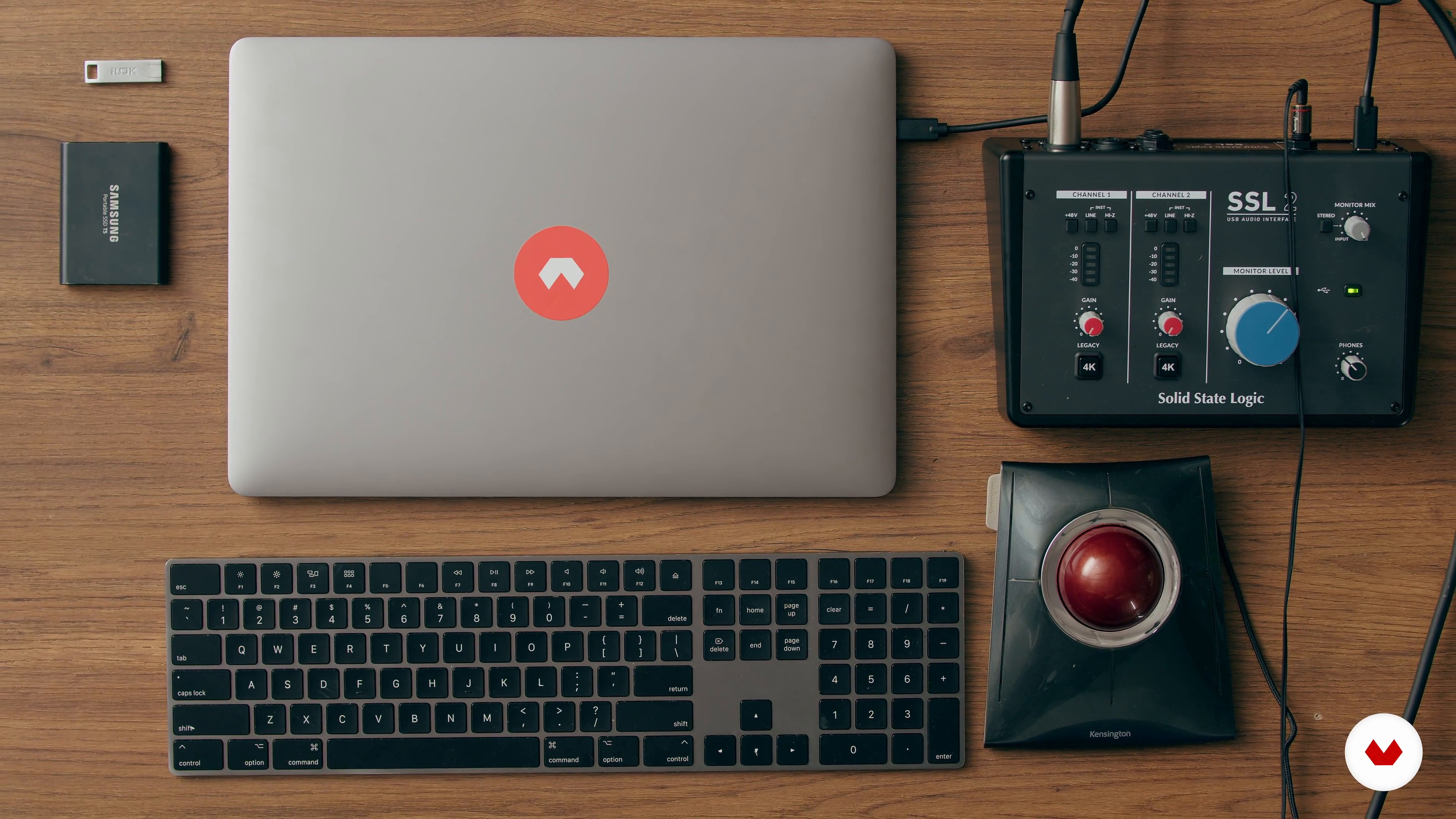
Once our space is set up for recording, let's get set up for recording in our space! We will take all the gear we learned about in the previous lessons and make sure it's all set up properly to record a great-sounding podcast.
5m
image
7
Introduction to Pro Tools and Other Software 1
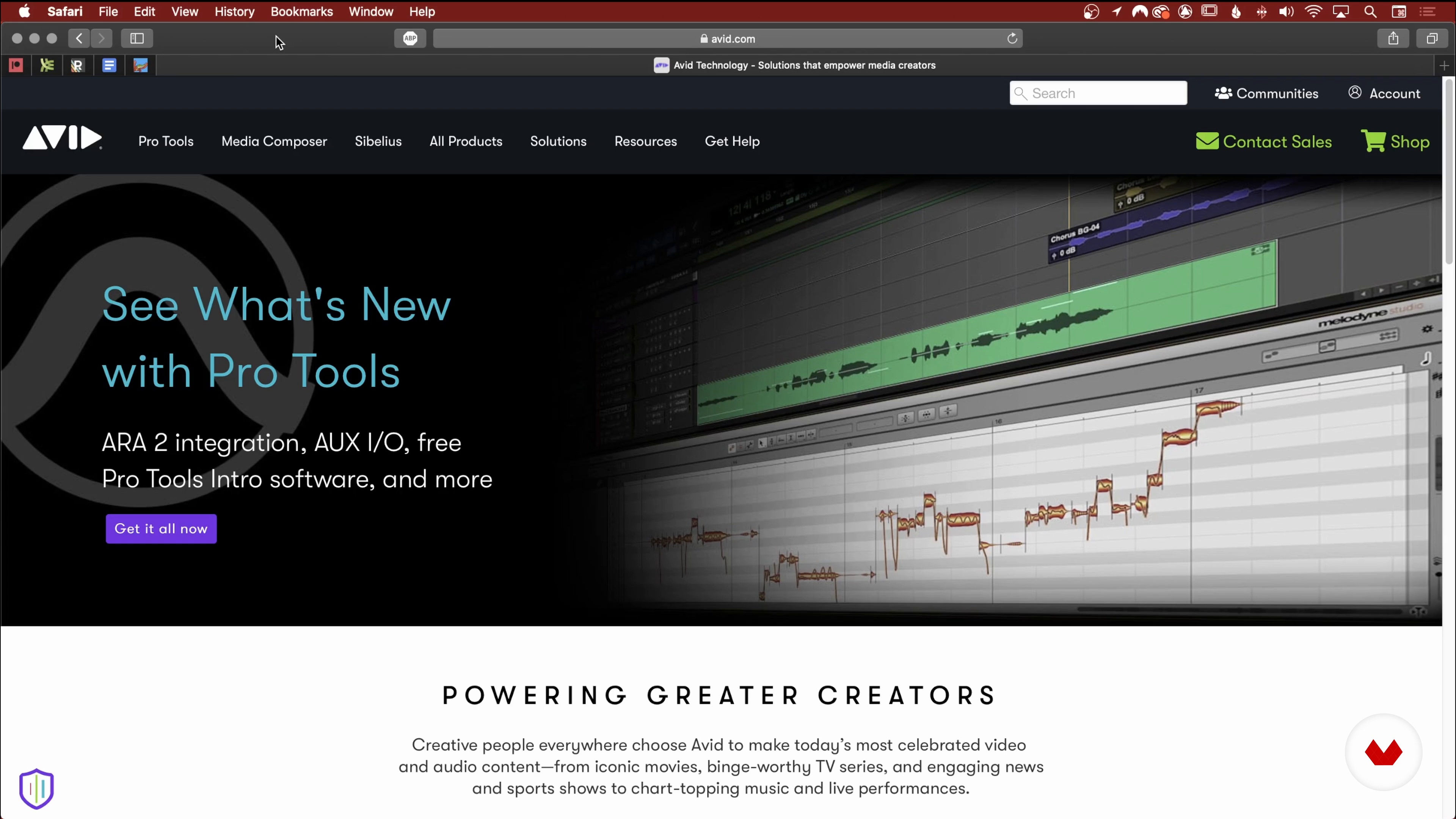
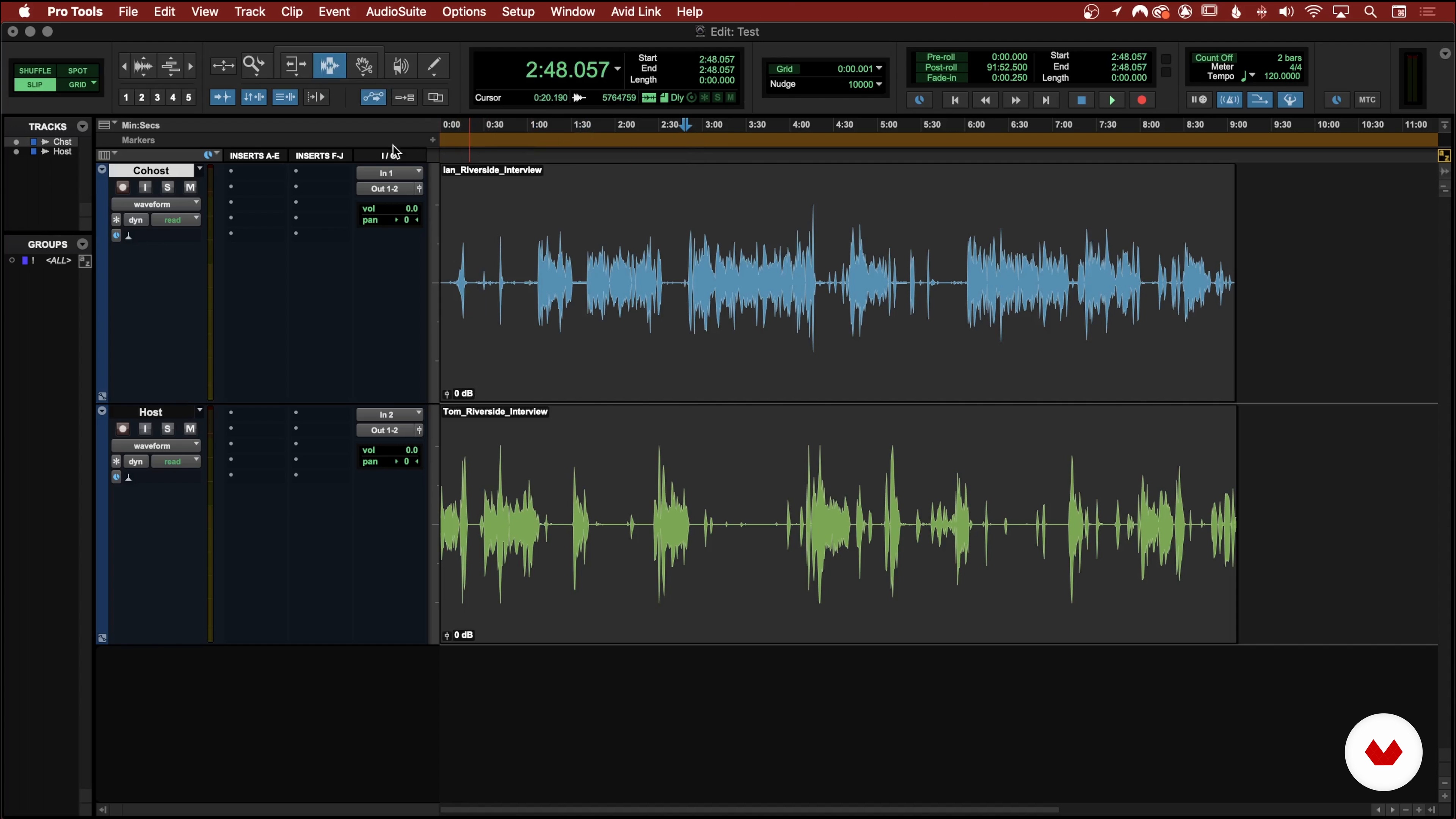
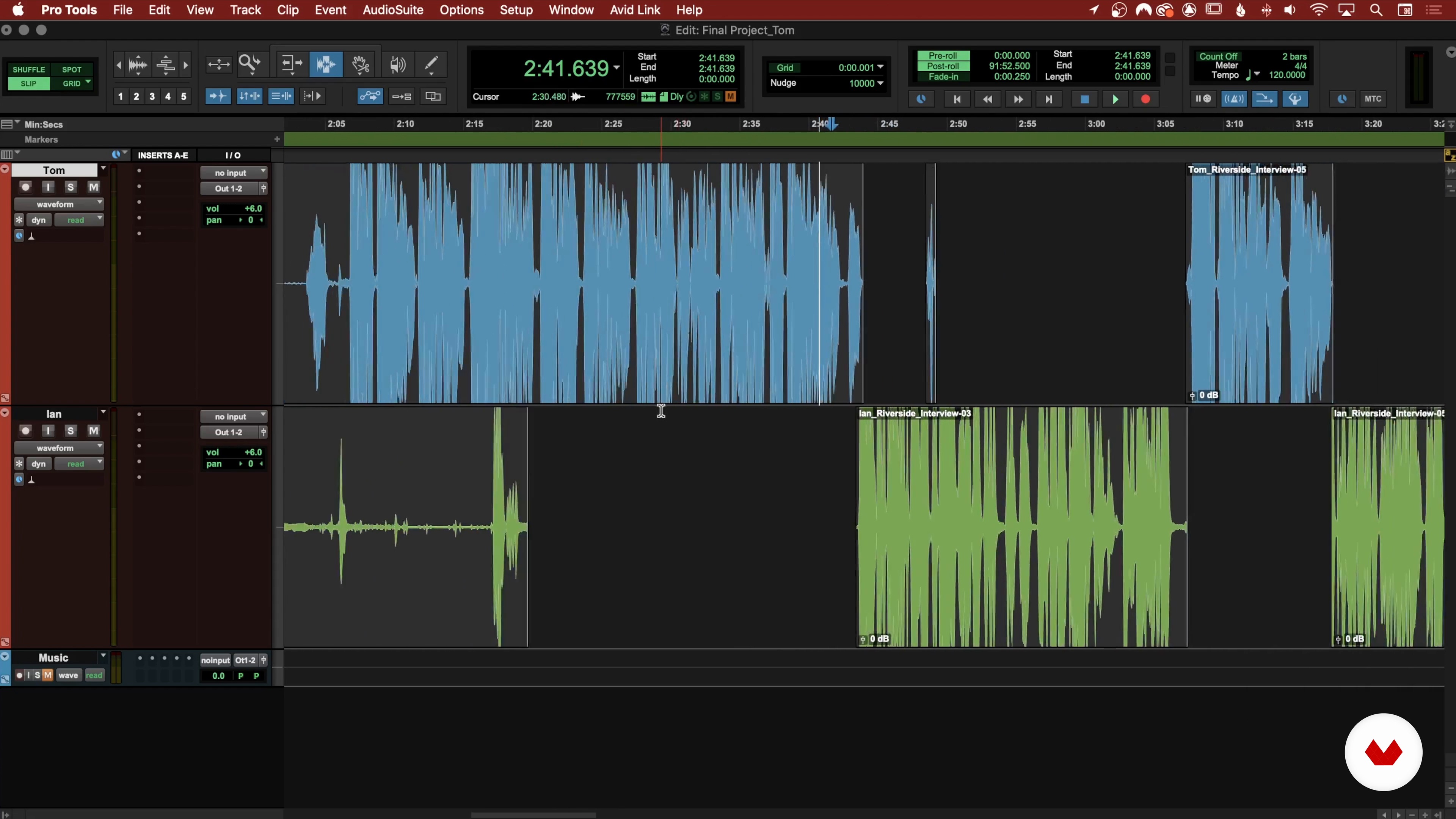
This lesson will not only be a great resource if you have never seen the Pro Tools interface in your life, but it can also be a great refresher if you have worked in Pro Tools before. You will learn how Pro Tools handles file management, a few tricks for getting set up more efficiently, and recording your first vocal take!
10m
image
8
Introduction to Pro Tools and Other Software 2
If you're familiar with a different DAW or don't wish to use Pro Tools, that's also totally an option! Just make sure the DAW you choose is non-destructive. The software Audacity is not a compatible DAW with what we will be learning in this course.
11m
image
9
Recording Yourself
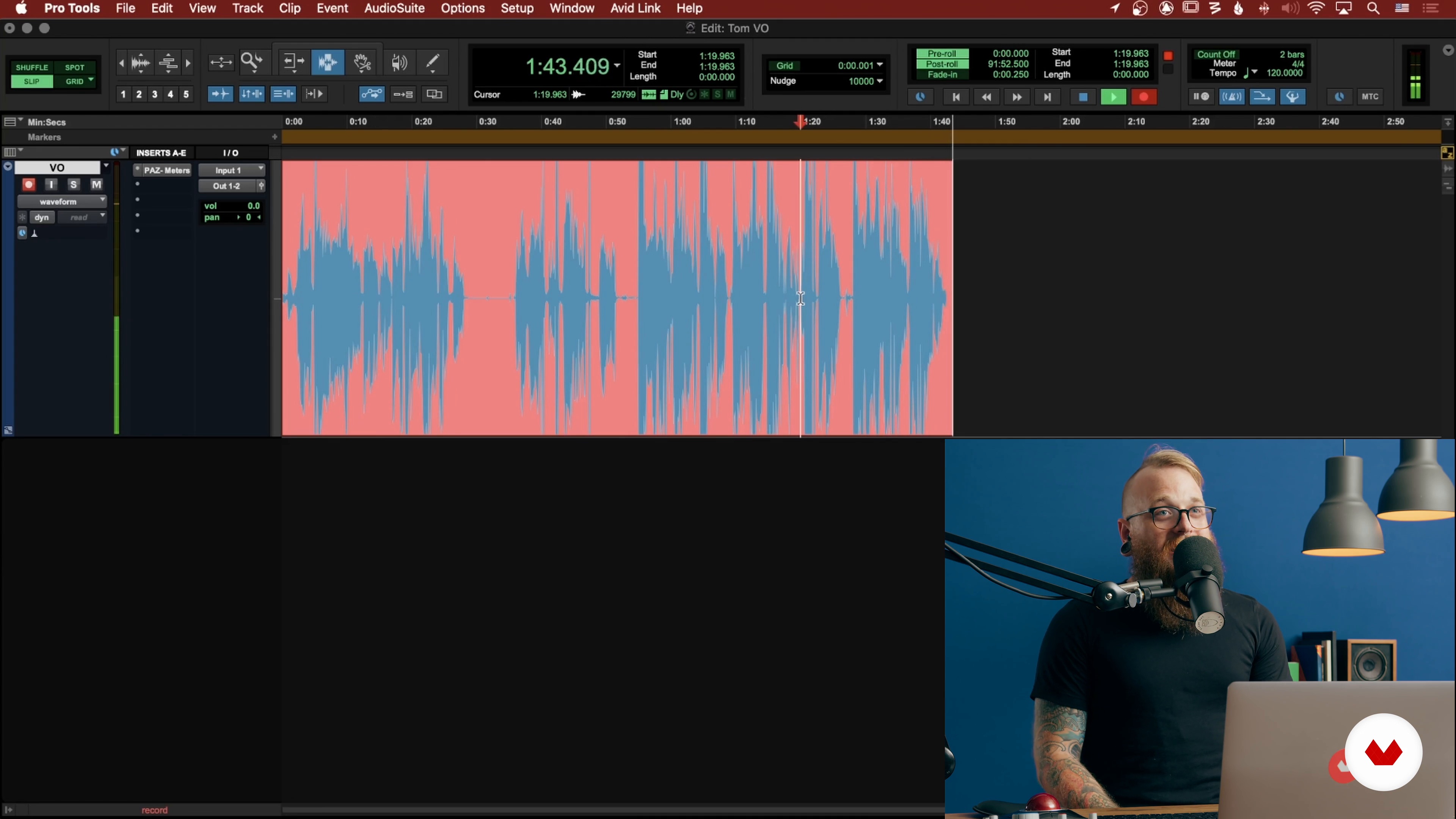
Let's get to work! You will see how I record the intro and outro for the podcast! We will focus more on microphone technique, setting the gain on the audio interface, and how to capture the best vocal recording.
11m
image
10
Recording with a Remote Guest
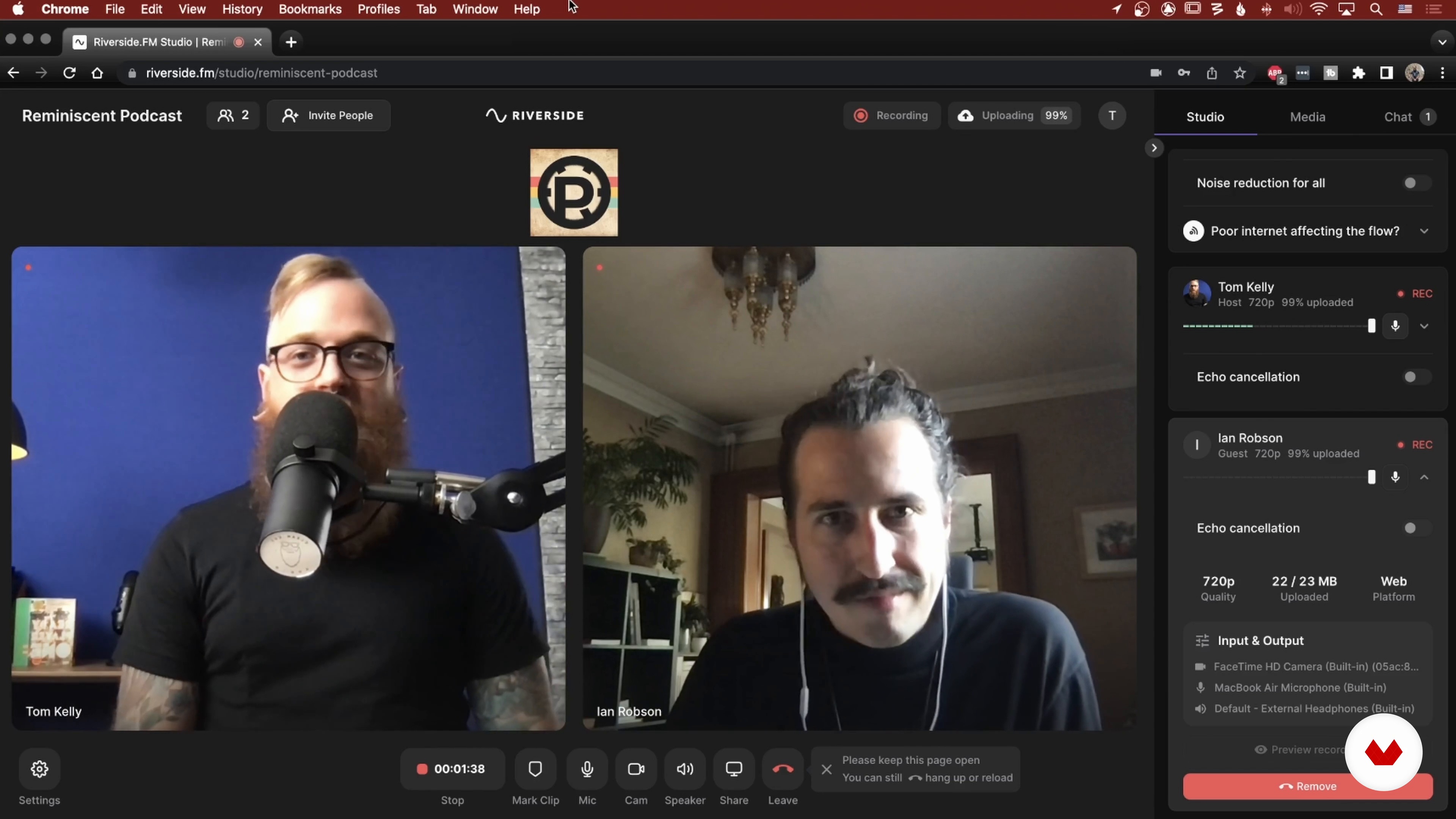
In this lesson, I will show you how a remote recording session using Riverside works. You will learn about backup/redundant recordings and how to record a conversation with the final product in mind properly.
17m
image
11
Setting up the Session
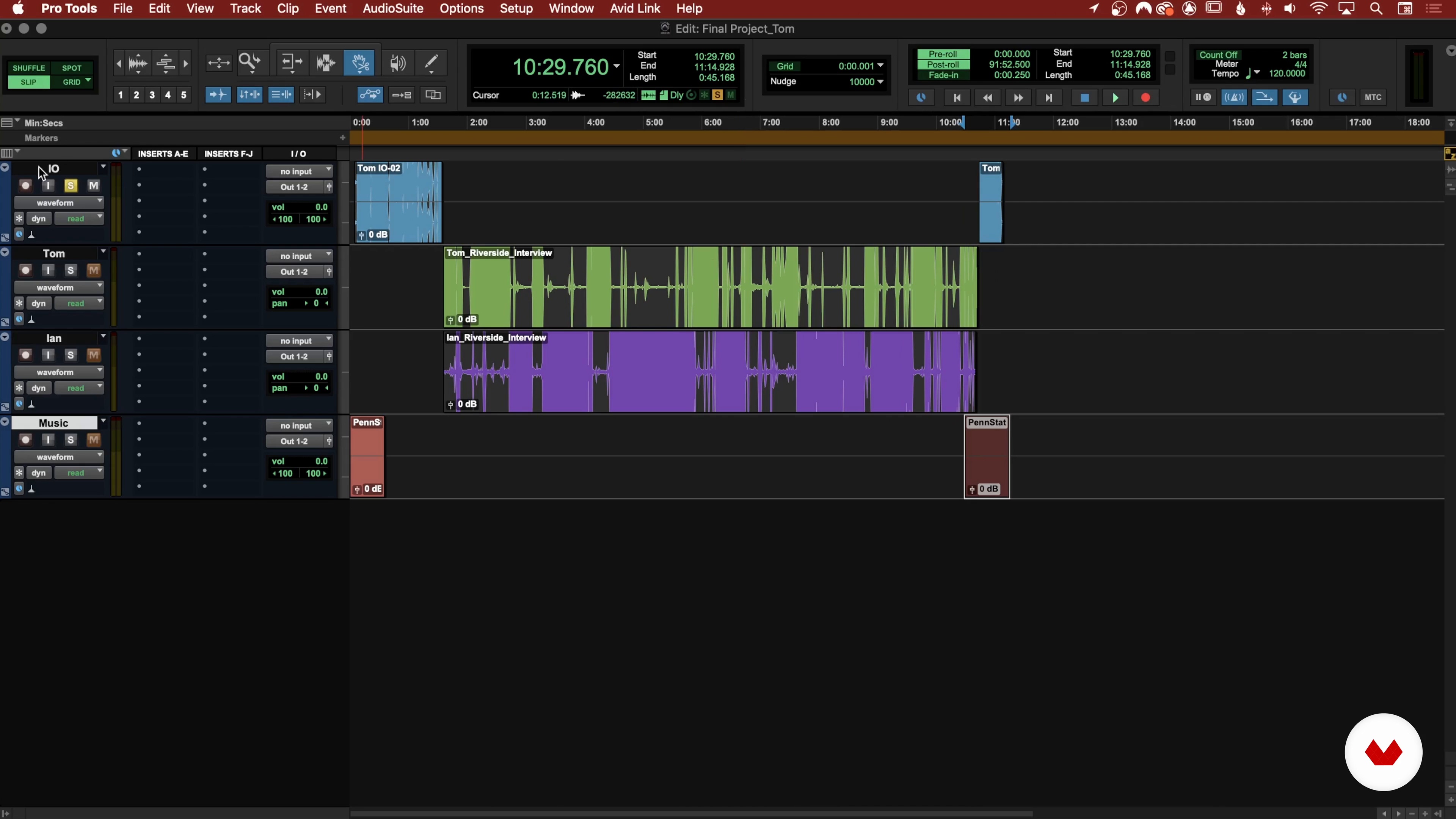
In this lesson, I will do the not very fun but still very important tasks of prepping the session for editing. You will learn how to import audio into Pro Tools and how Pro Tools handles external audio, how to organize your tracks and create folders, and I will rough out the layout of my episode!
14m
image
12
Cleaning up the Noise
This lesson will cover a crucial part of my editing process. It's a process that I don't see many folks doing, but I think it makes the process of editing much easier later on and makes the overall podcast sound much better!
13m
image
13
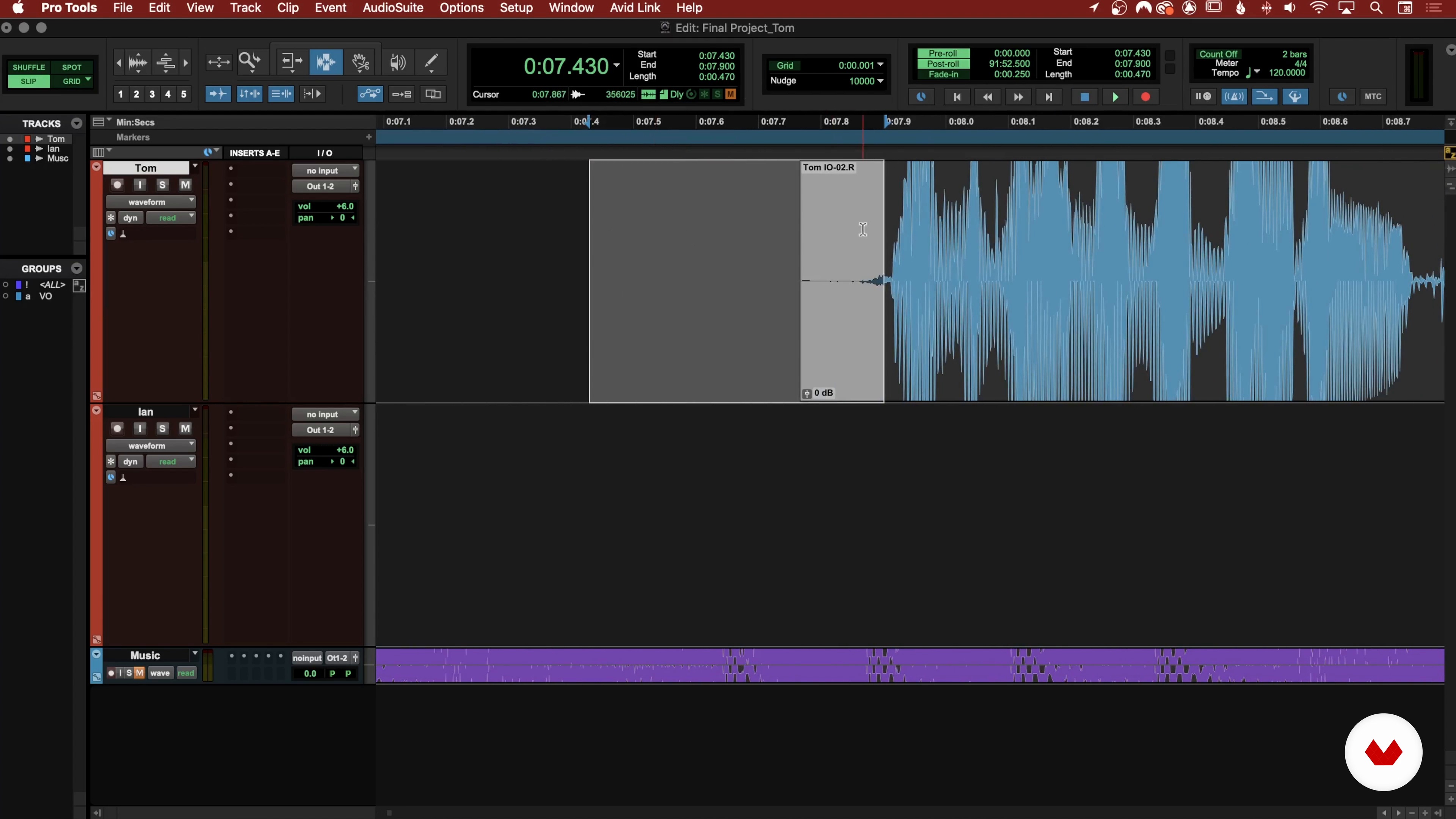
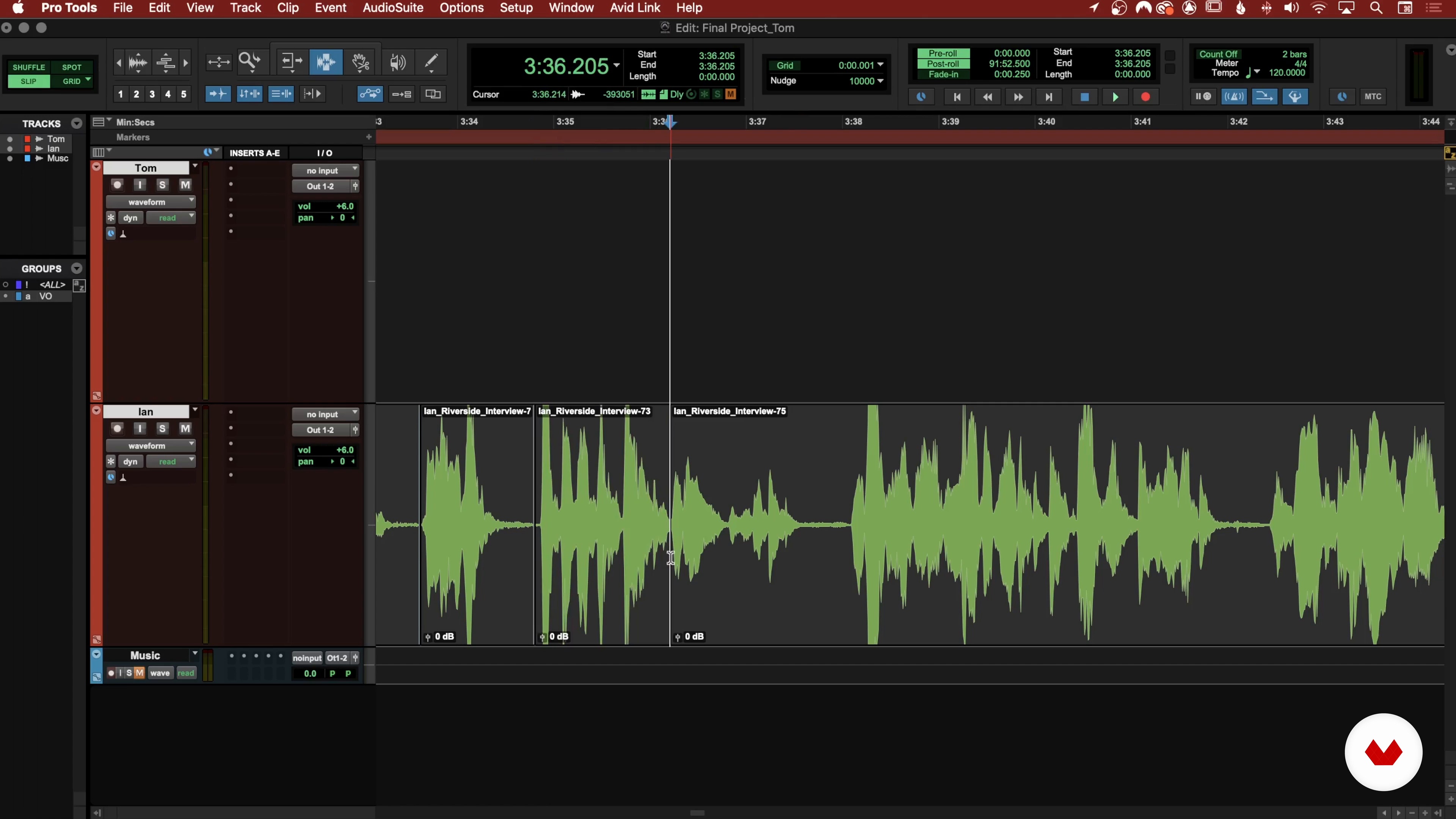
Making Hard Cuts 1
This is where the conversation starts coming together! Once we have our session organized and set up, we will start focusing on the dialogue and cleaning up the conversation in order to make it the best possible version of itself.
13m
image
14
Making Hard Cuts 2
In this lesson, I will also discuss the ethics of cleaning a conversion too much and how sometimes doing less is more. We will touch on some more cool and unique features of Pro Tools and how it can make editing much easier and faster. Going above and beyond, you will learn some amazing editing hacks that will increase efficiency and make your edits sound better.
20m
image
15
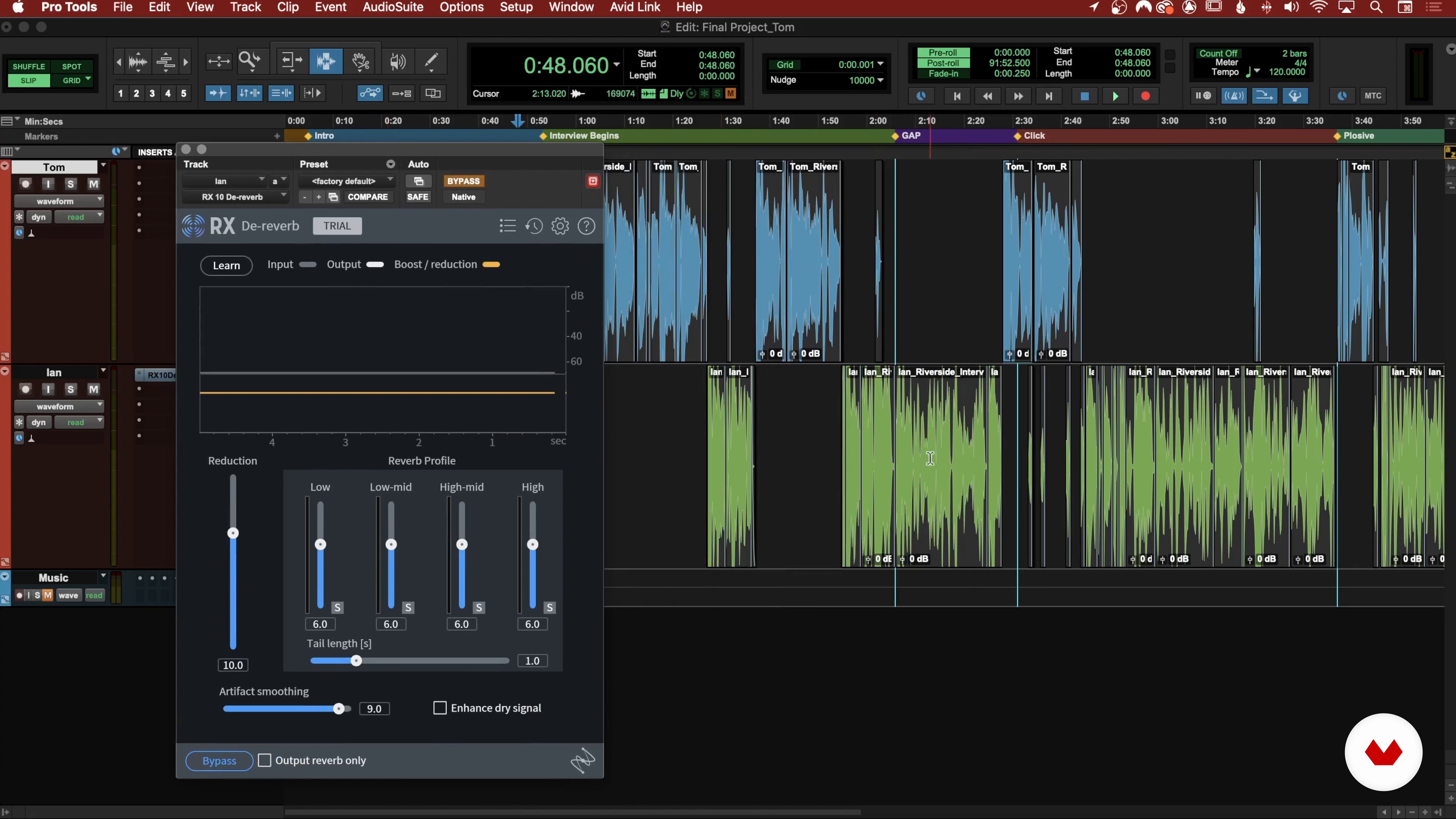
Restoration
In a perfect world, this lesson wouldn't exist. We would capture perfect audio with no flaws in it whatsoever. However, that world does not exist, and in the world of podcasting, restoration plays a massive role. We will discuss a few of the most common issues that arise in podcasting, and we will explore some very simple but very powerful tools that were designed specifically to restore dialogue.
19m
image
16
Equalization 1
Equalization is probably the most difficult skill to master, but we will have a much easier time if we understand the physics of frequency. I will keep it light with plenty of simple listening exercises that will help you better hear a voice as more than just "a voice" but rather as several distinct parts that make up the whole. We will also take some time to explore the parts of an equalizer, see how they work, and why some equalizers are better/different than others. Let the fun begin!
14m
image
17
Equalization 2
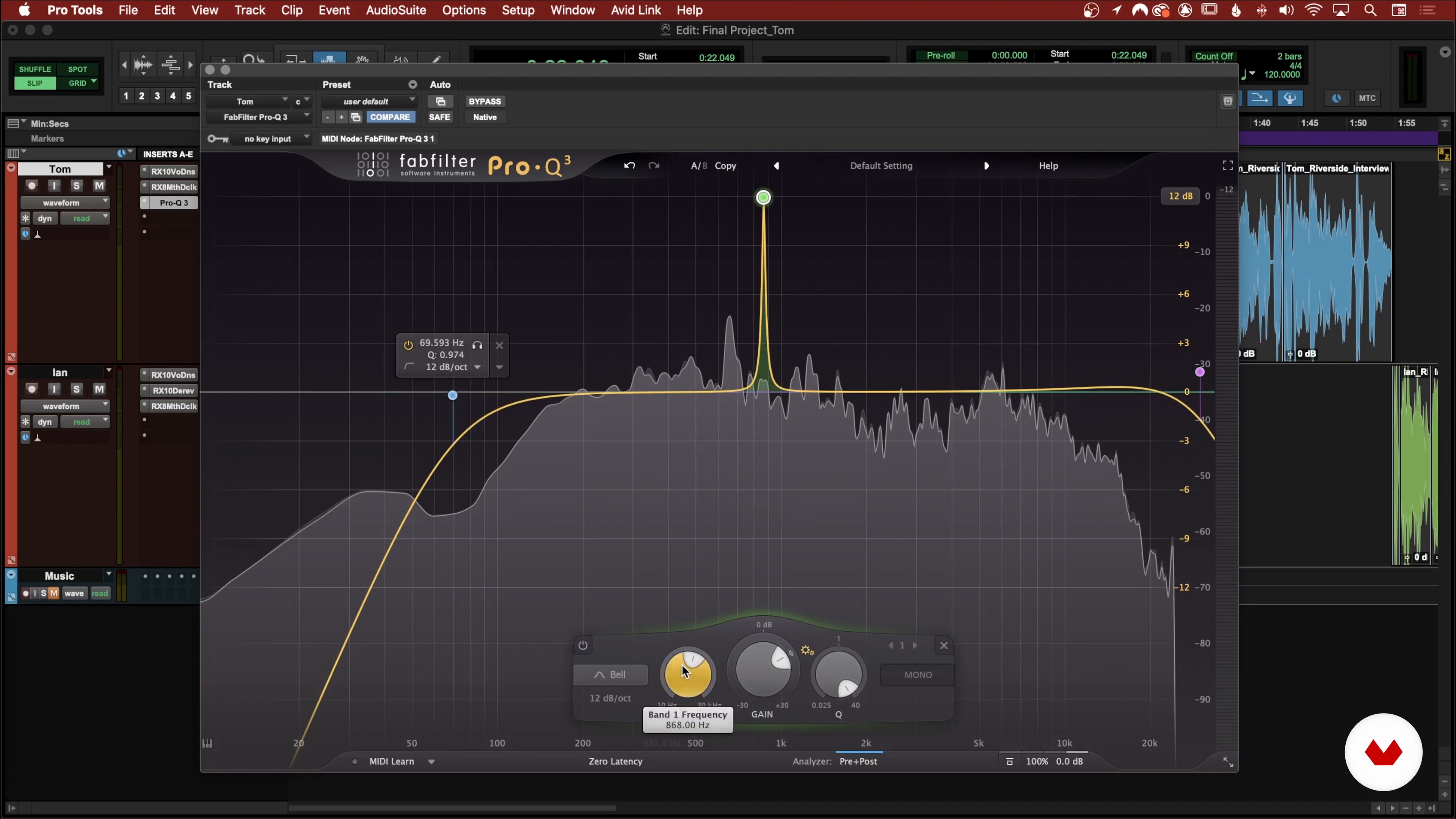
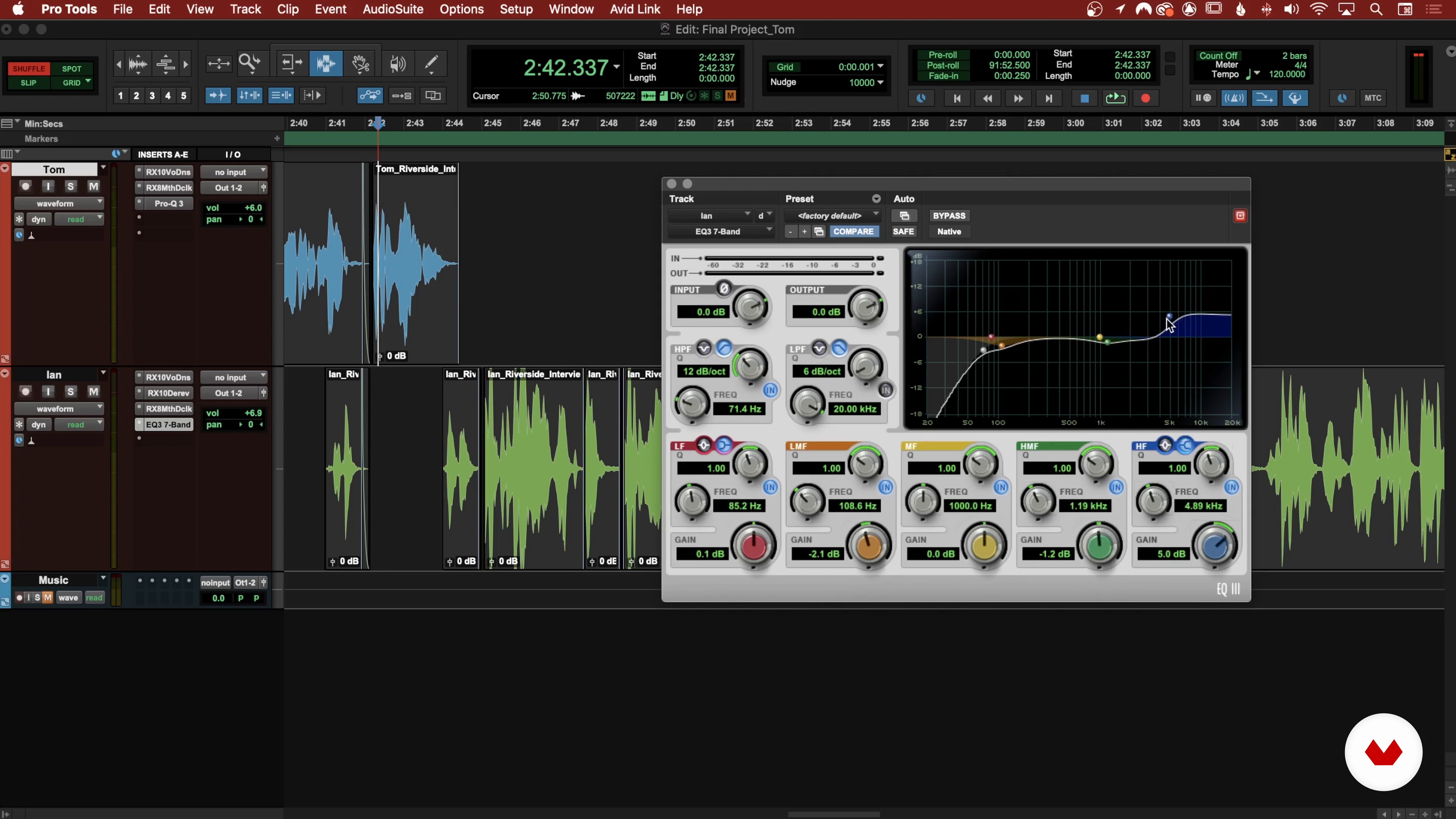
We will finally dig into our recordings and start sculpting the tone for clarity and intimacy. We will do plenty of listening while searching for annoying resonant frequencies, cleaning up any unnecessary or harsh tones, and massaging our voices into the best version of themselves. Then we will take it a step further and smooth both of the voices into a great partnership with each other.
8m
image
18
Loudness, Dynamics, and Compression
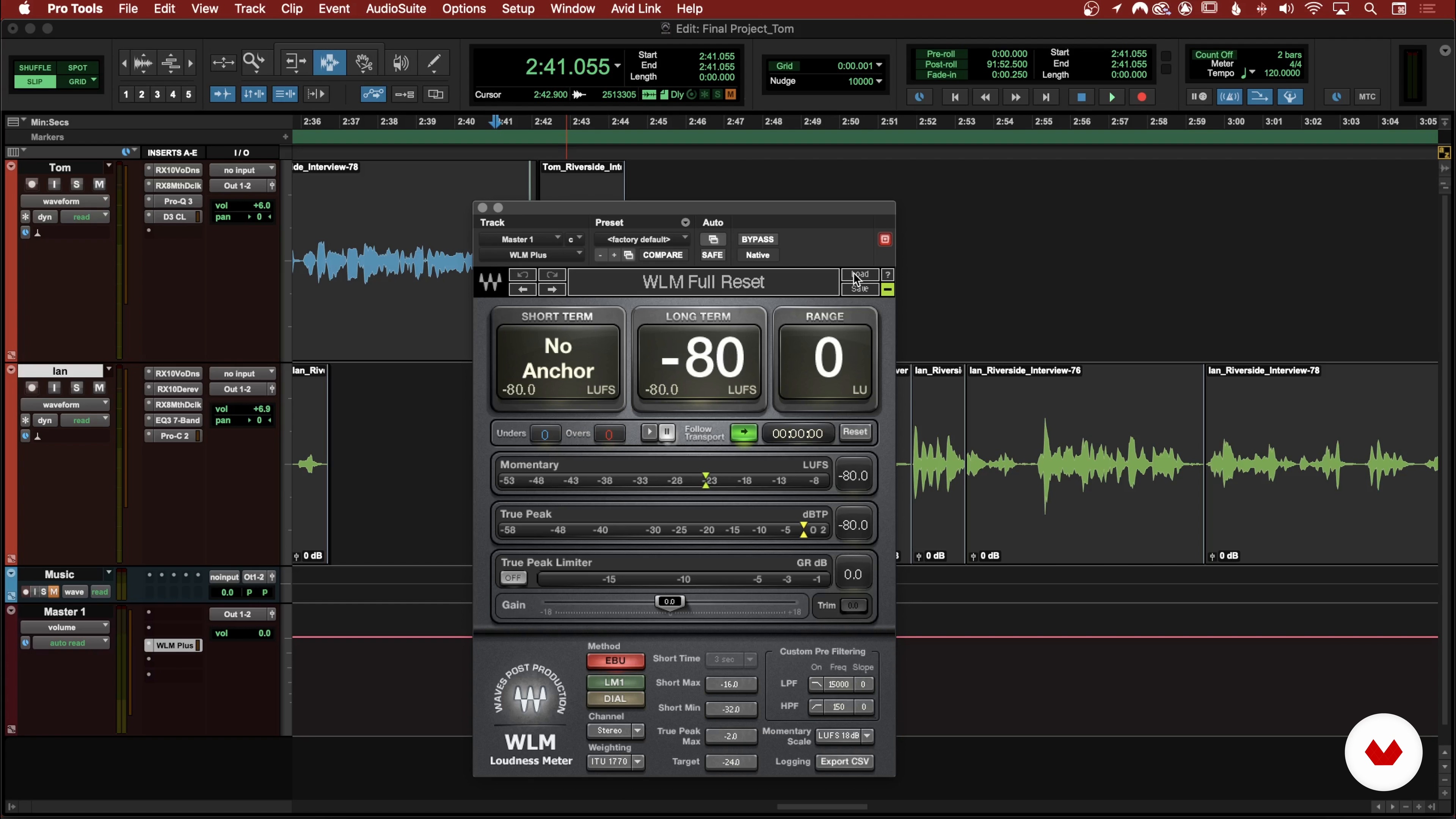
One of the most important contributing factors to a great listener experience (or lack thereof) is loudness. This is a widely misunderstood topic that comes with a lot of baggage. In this lesson, you will learn what loudness is and how it differs from volume and gain, and we will explore the importance of loudness range and monitoring. The tools used for loudness control are called compressors, and by the end of this lesson, you will understand why we need them, how they work, and how compression is different from automation, limiting, and normalizing. Once our audio sounds silky smooth, we want to make sure it's loud and that it stays loud. We will use some stock compressors, among other tools, to properly dial in and maintain our desired loudness range. You will learn the importance of being delicate with compressors and how to chain several together for a strong but natural-sounding effect. You will also learn how to check out loudness using a LUFS meter and make sure everything is ready for finalizing the podcast!
20m
image
19
Adding Music
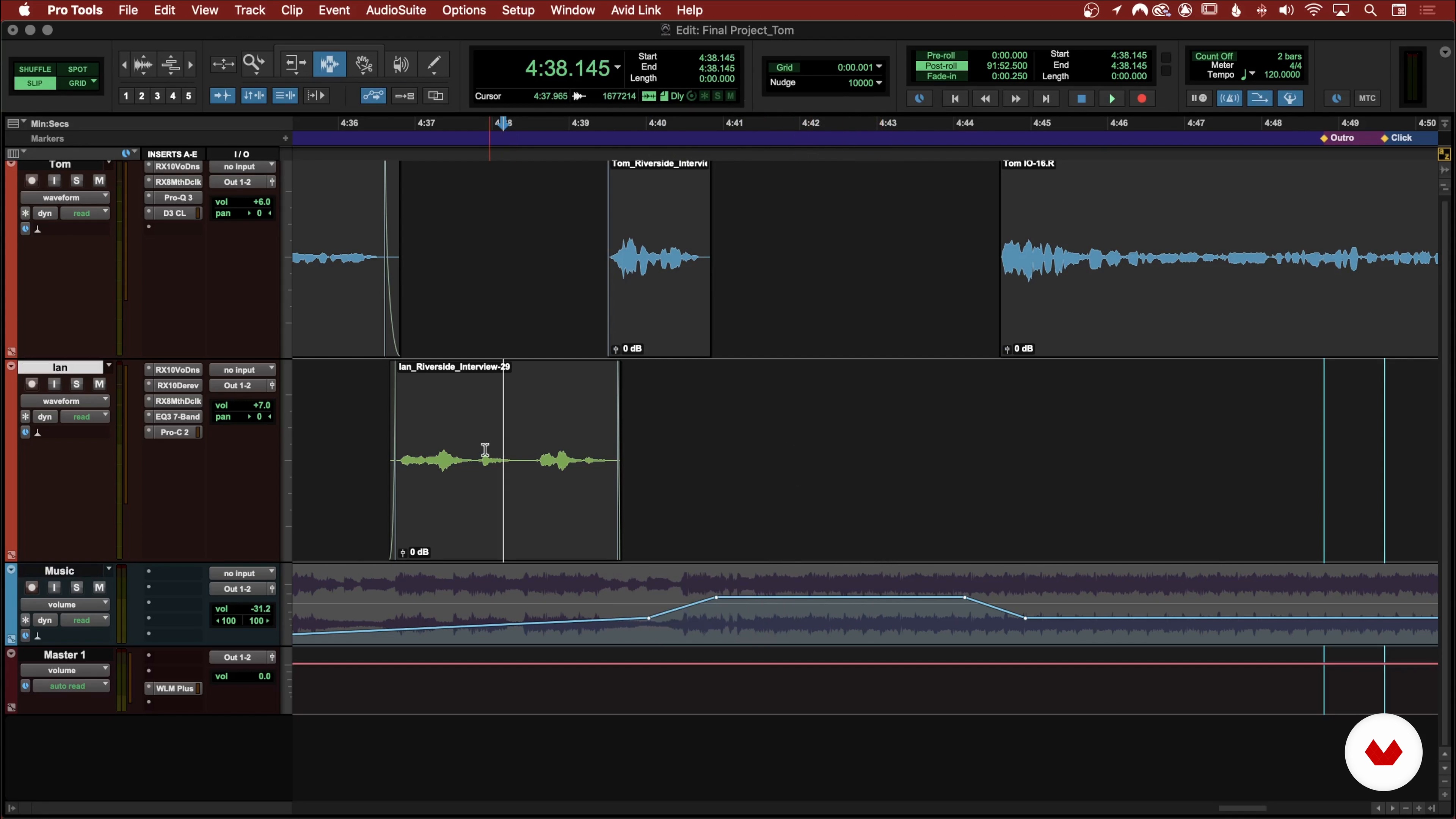
Most podcasts have some element of music within them, usually for intros, outros, and for adding breaks if any. It's common to be speaking over the top of the music, which can cause some intelligibility issues, so in this brief lesson, you will learn what's causing those issues and how to solve them.
13m
image
20
Exporting the Final MP3 File
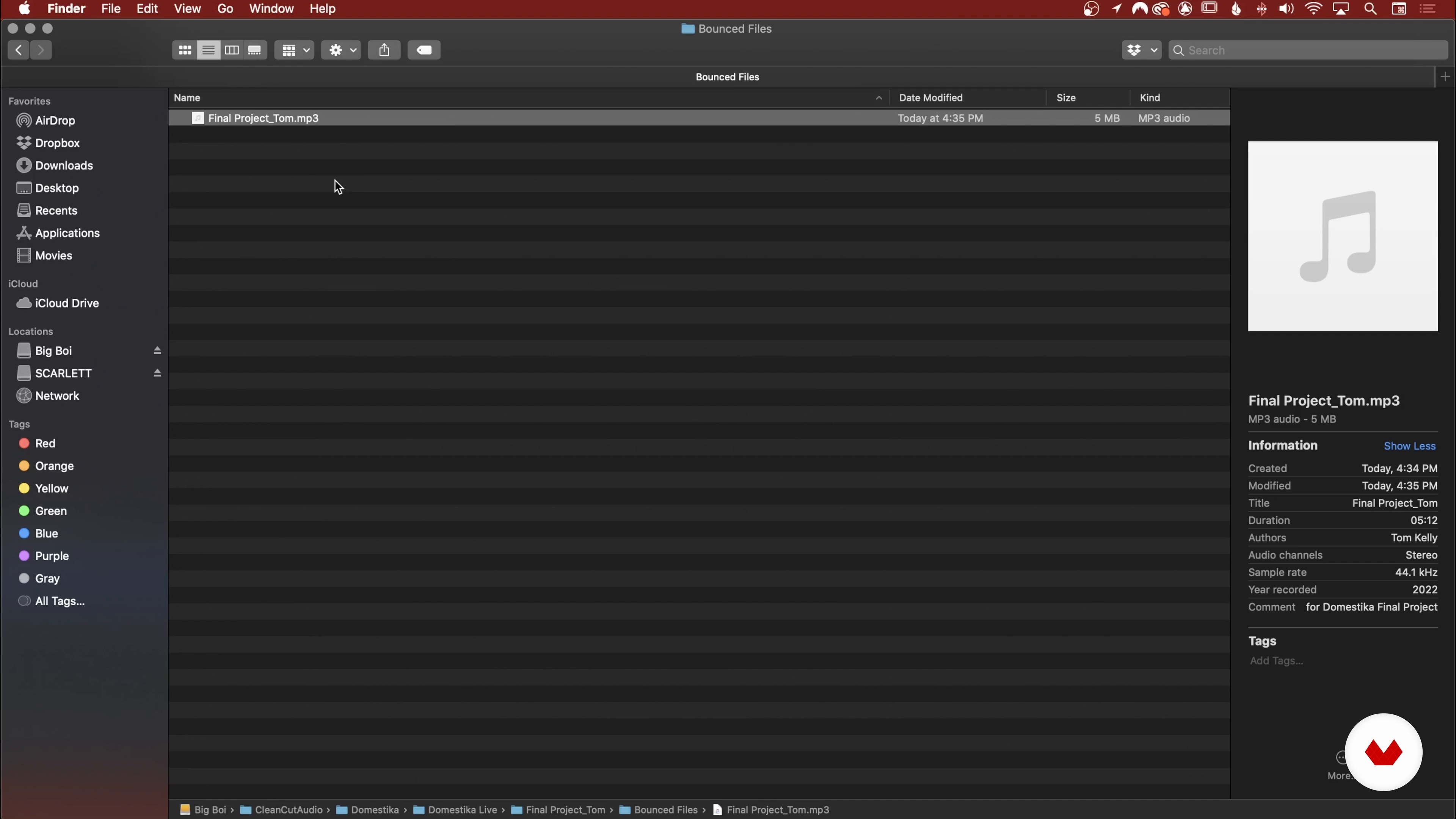
The podcast is now complete! All that's left to do is bounce all the tracks into a stereo file ready for uploading to your podcast hosting platform or the student forum. You will briefly learn about audio codecs, how to export in Pro Tools, and how MP3 compression works!
7m
image
3
Introduction to Sound
What is sound? How does it spread through the air? How do we perceive it? Before embarking on the realization, it is important to understand how sound works as a physical phenomenon. That's what I'm going to explain to you here.
6m
image
4
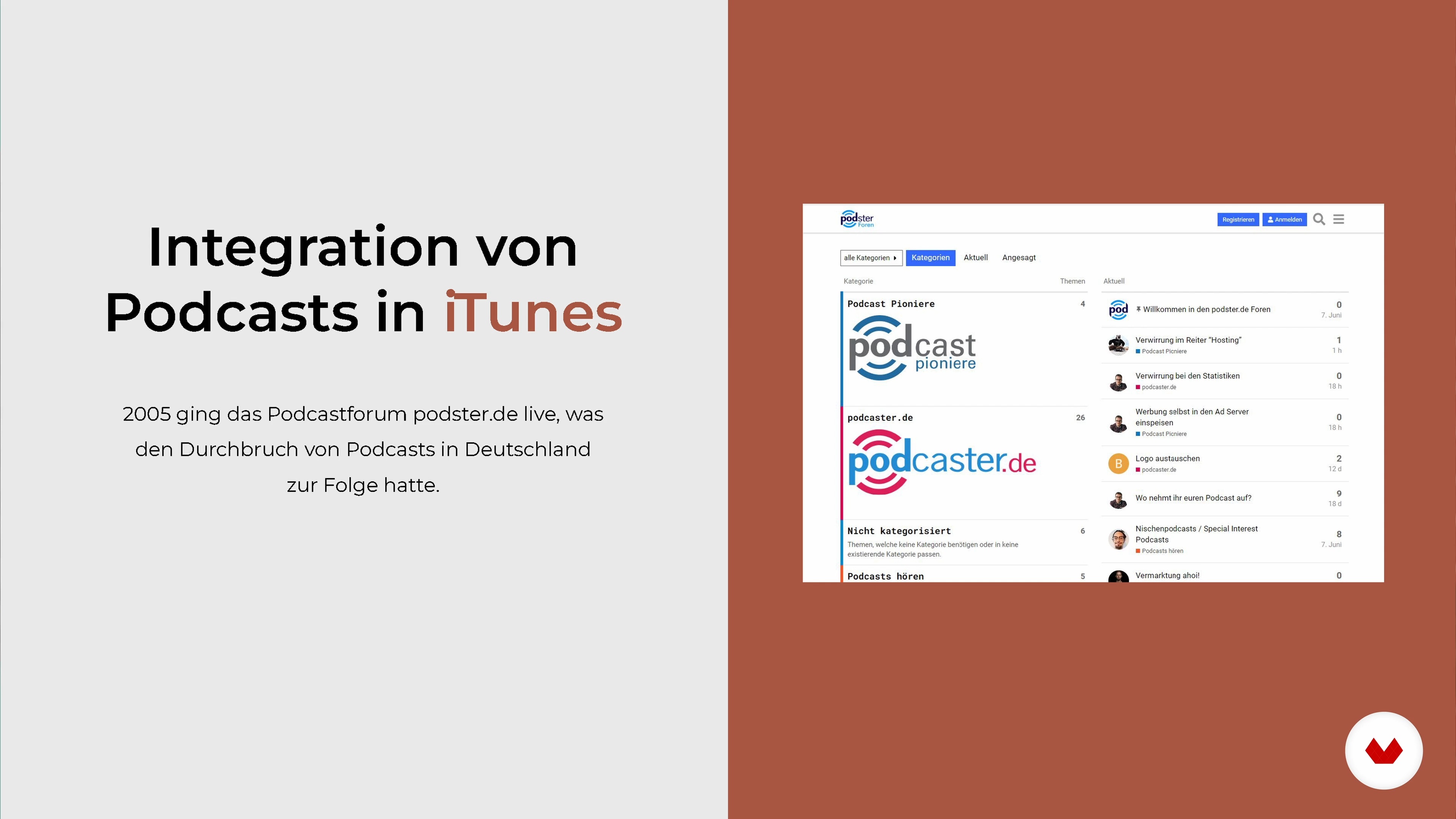
The Podcast Industry
I will now talk to you more specifically about the podcast sector: how it was born, these listeners, among others. I will also present the project to be carried out for this course.
6m
image
5
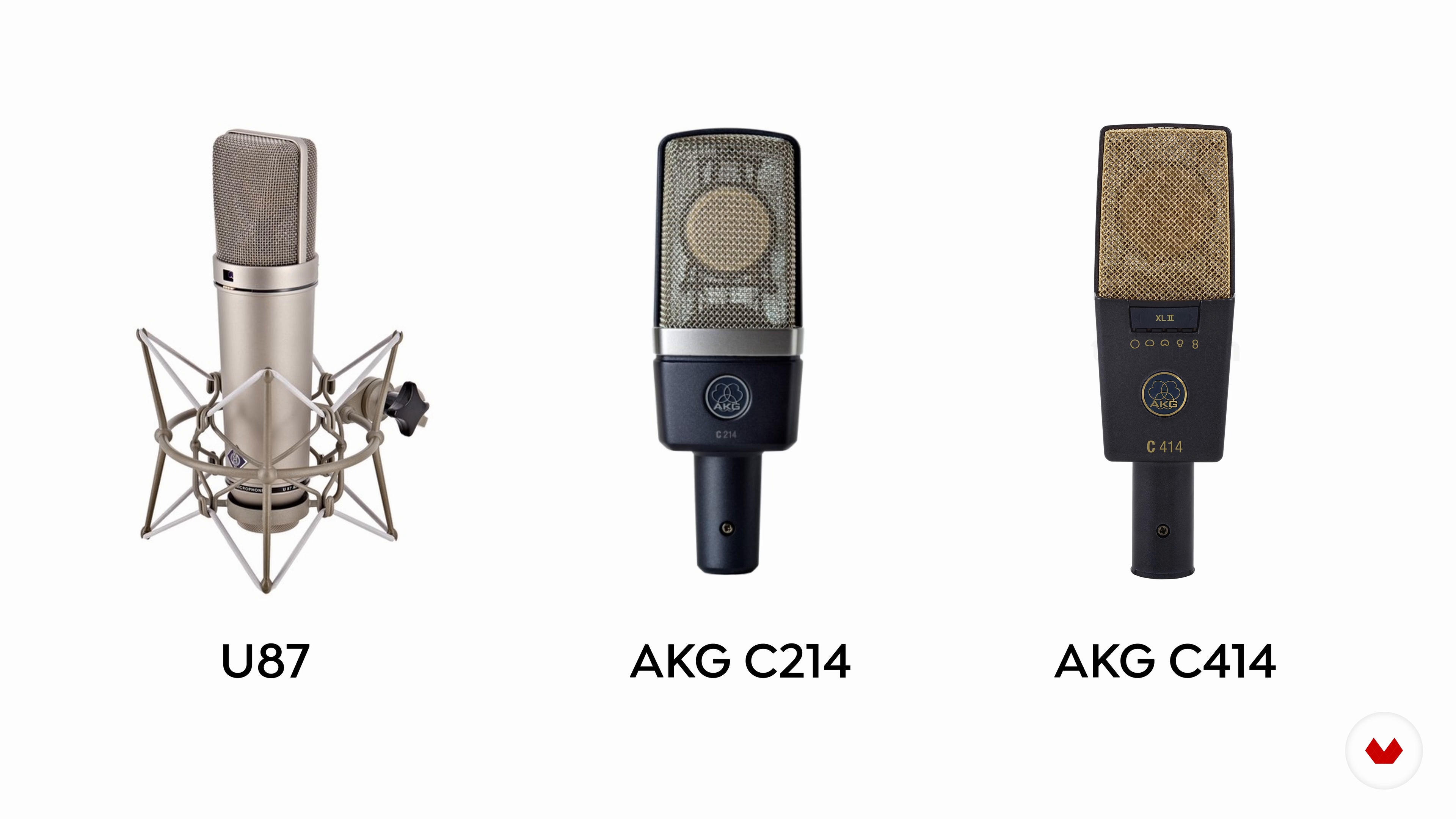
Microphones and Sound Recording
Who says sound recording, says microphones! In this lesson, I will introduce you to the different types of microphones that exist and that you can use. I will also discuss notions to keep in mind when recording sound.
18m
image
6
The Work of the Producer
What is the job of the sound designer? I will analyze the work of the director (or "sound designer") and his role throughout the production.
17m
image
7
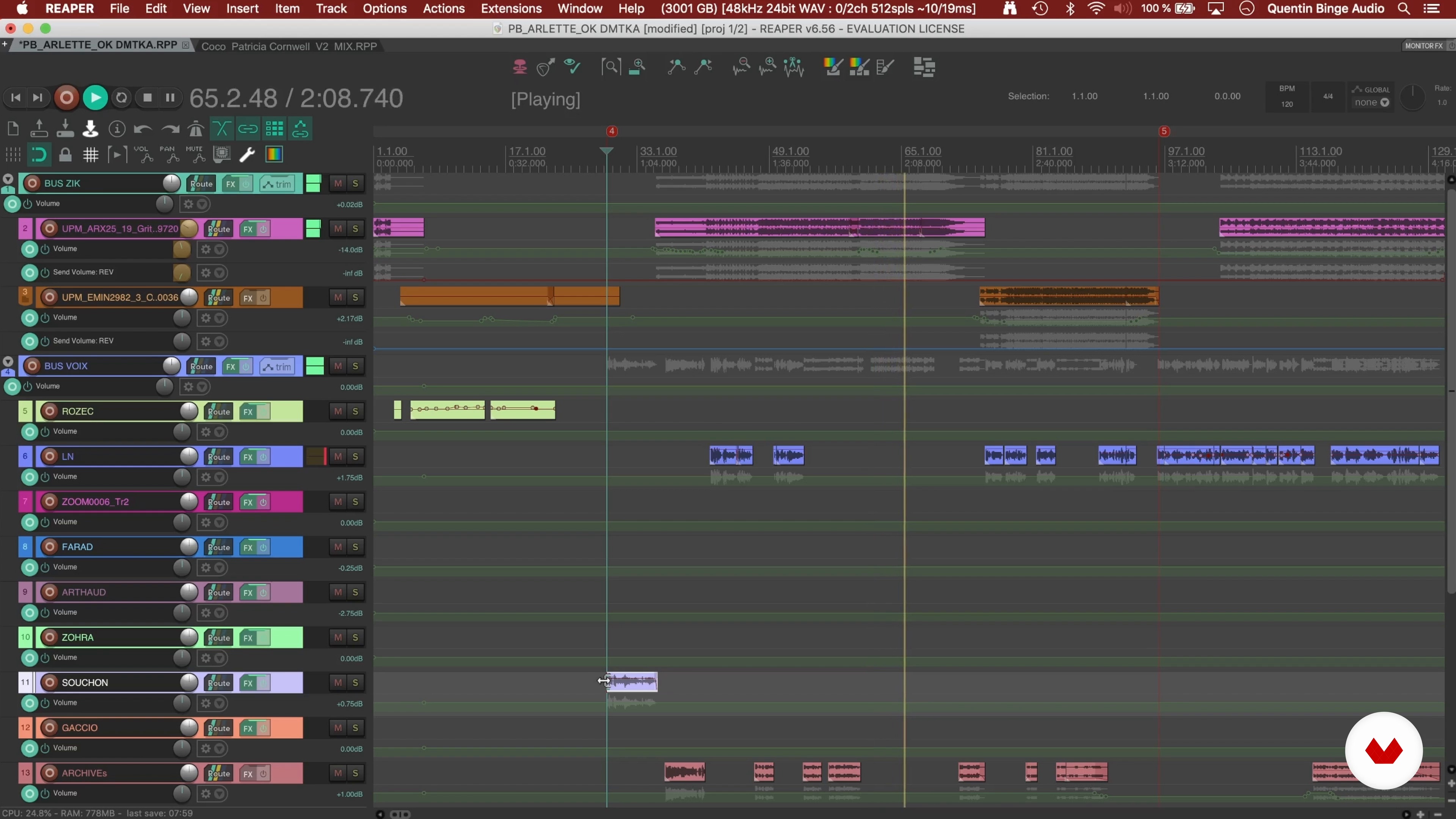
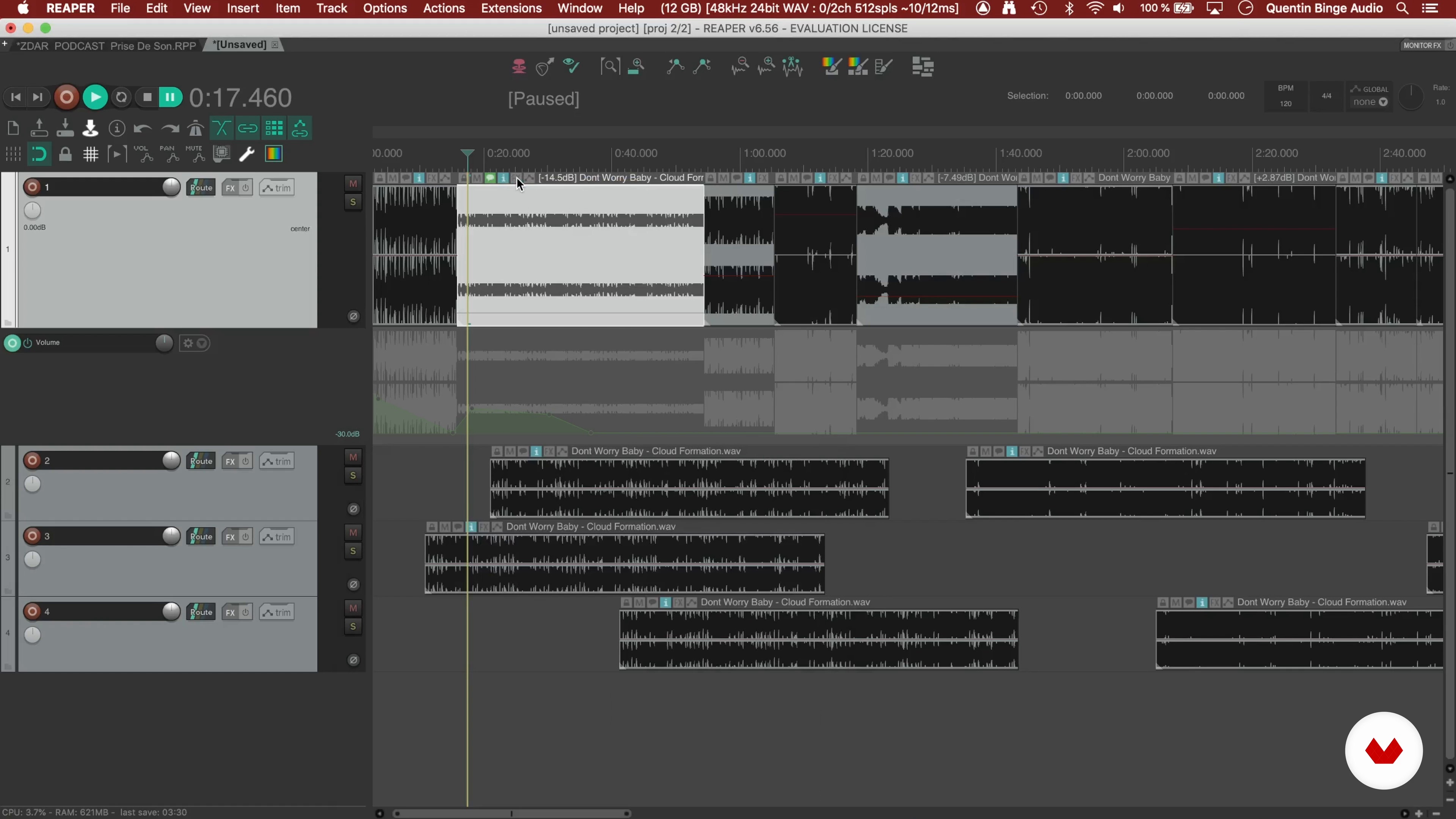
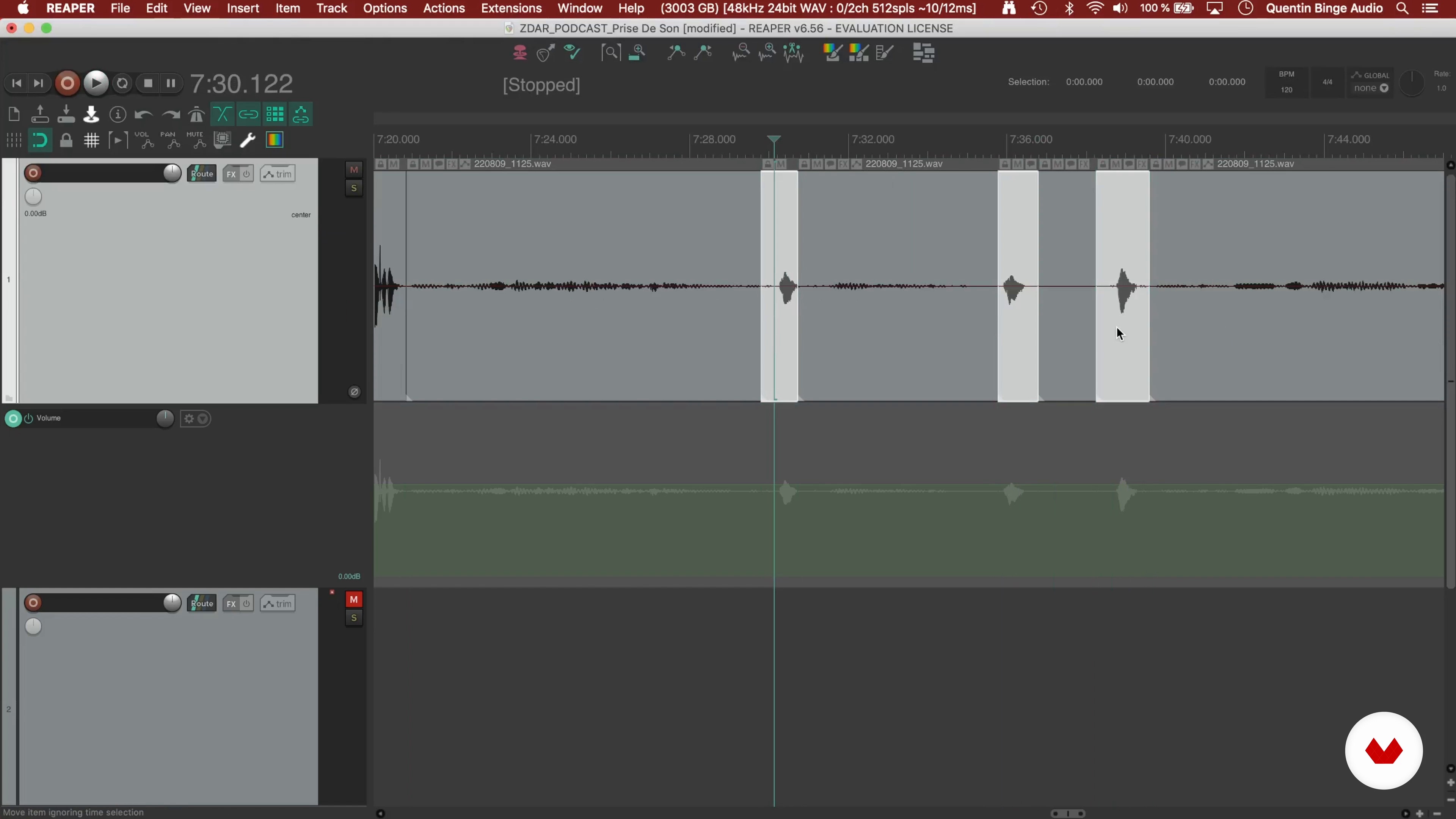
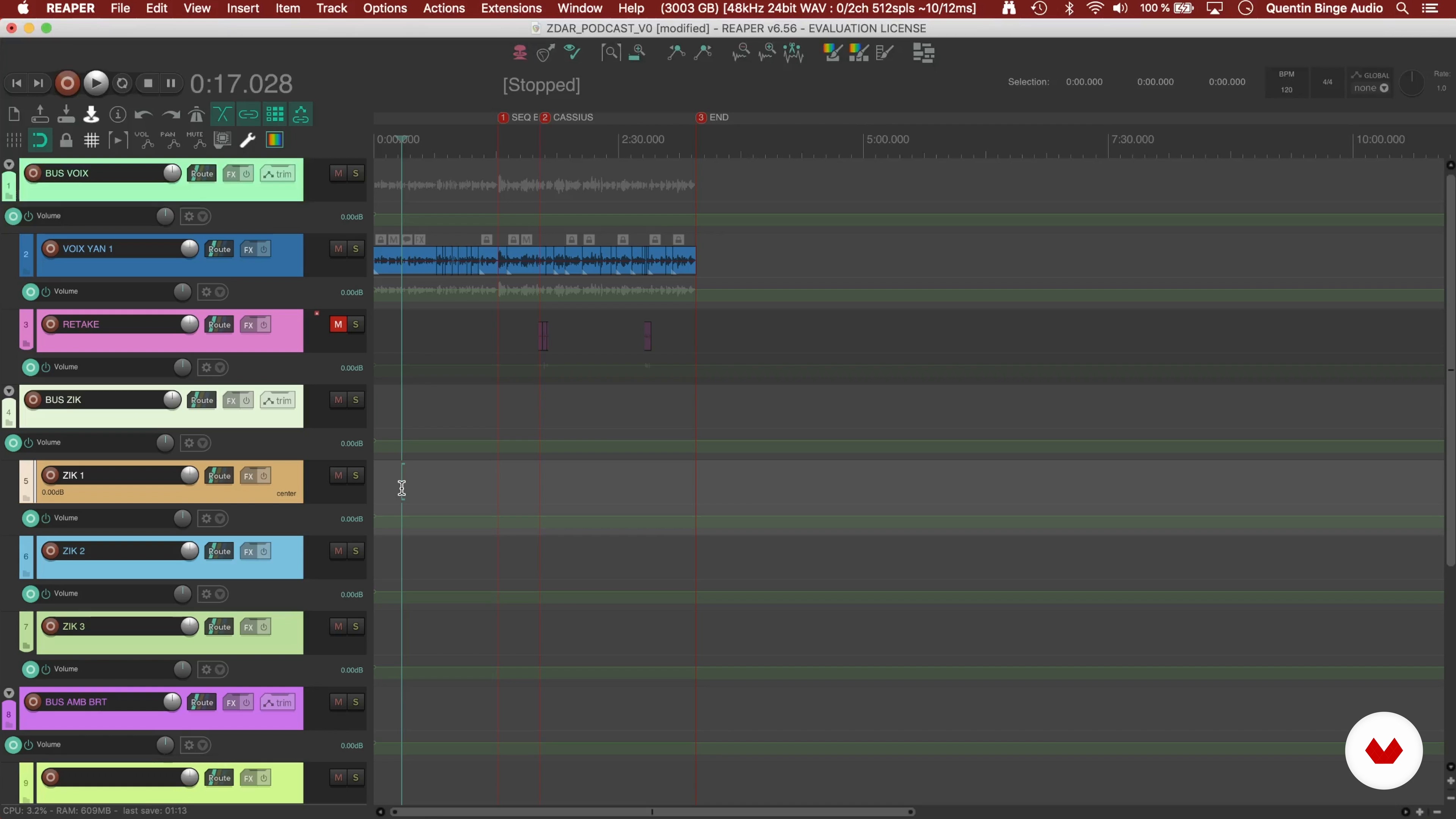
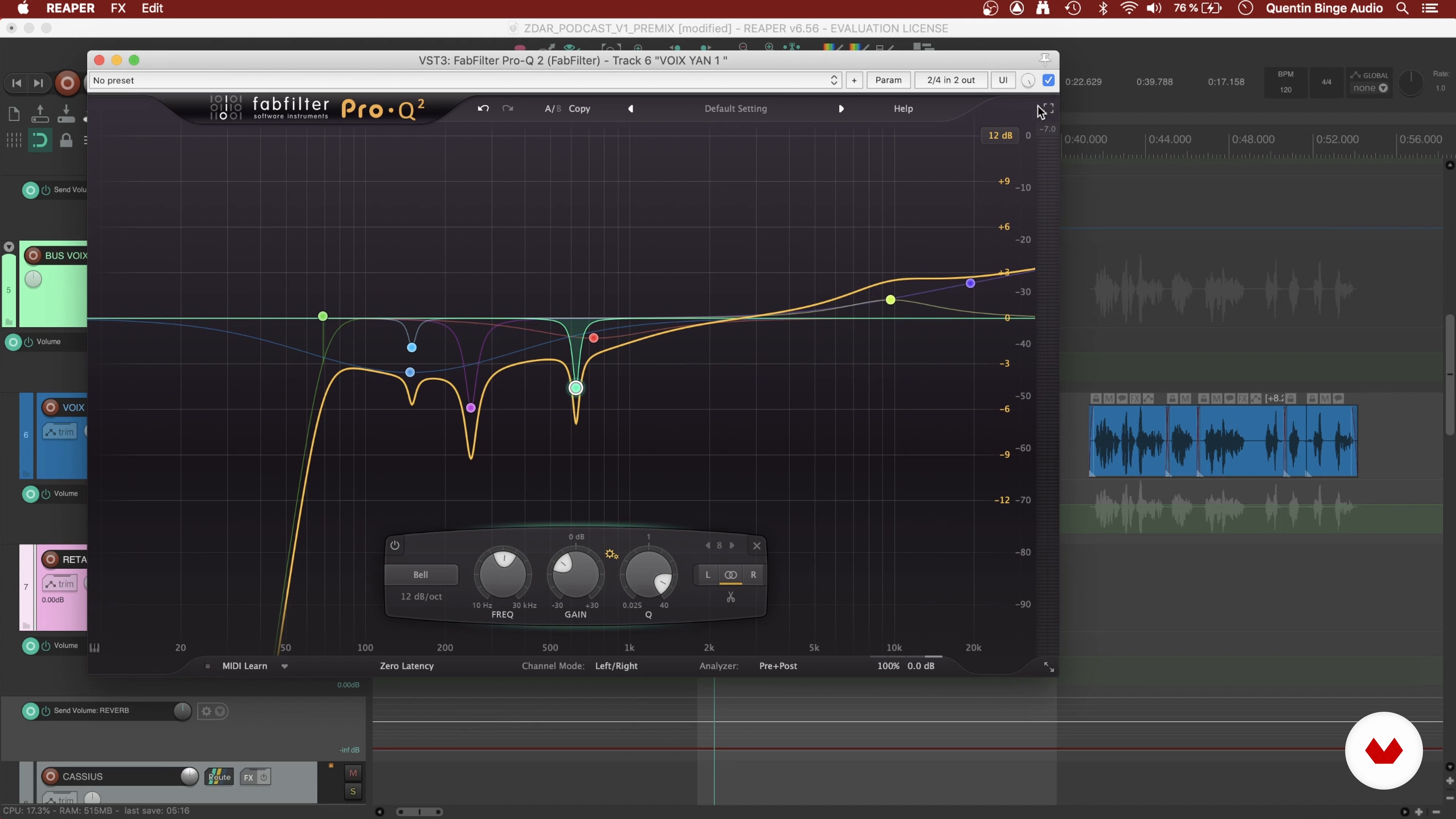
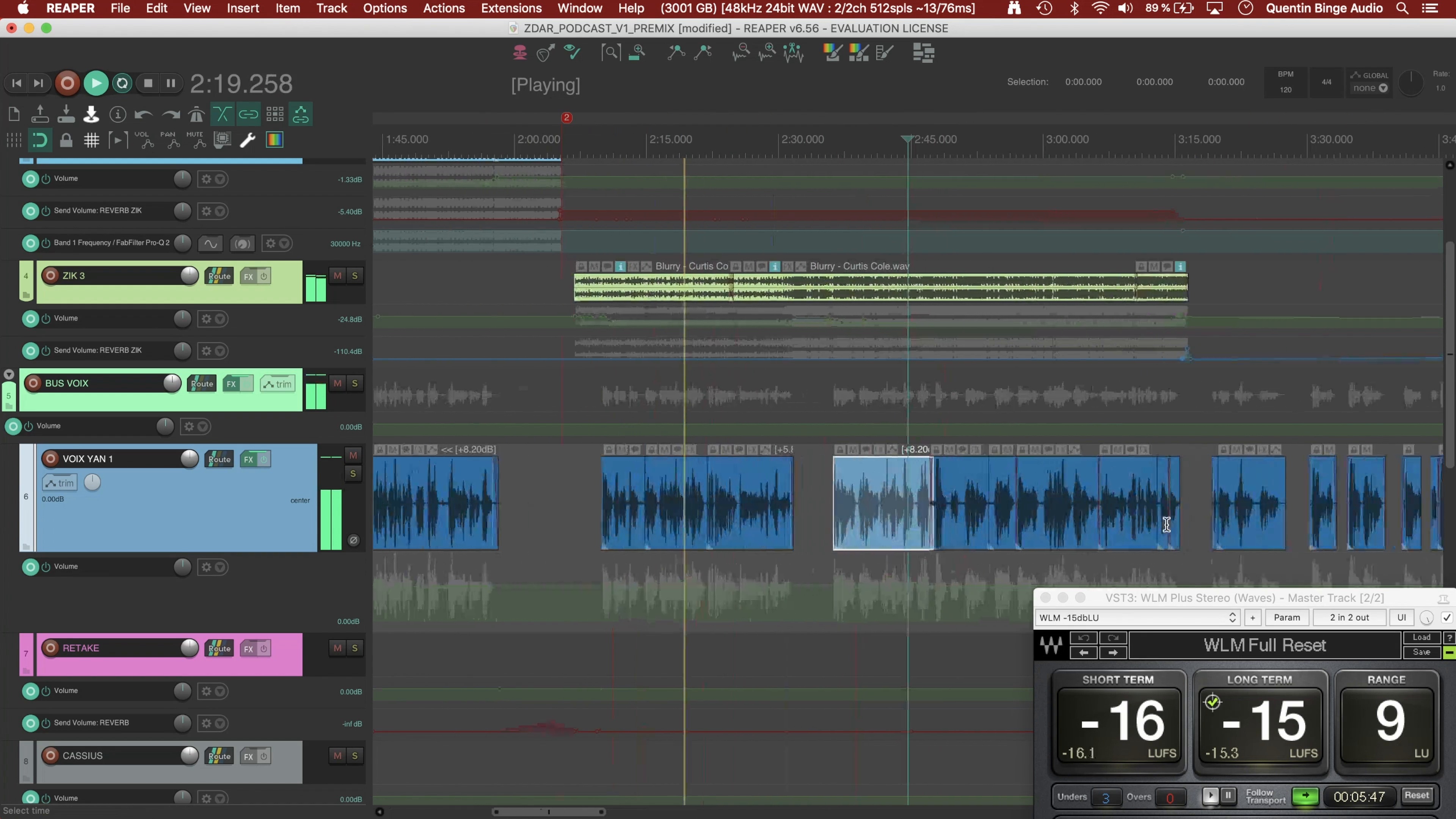
The REAPER Software 1
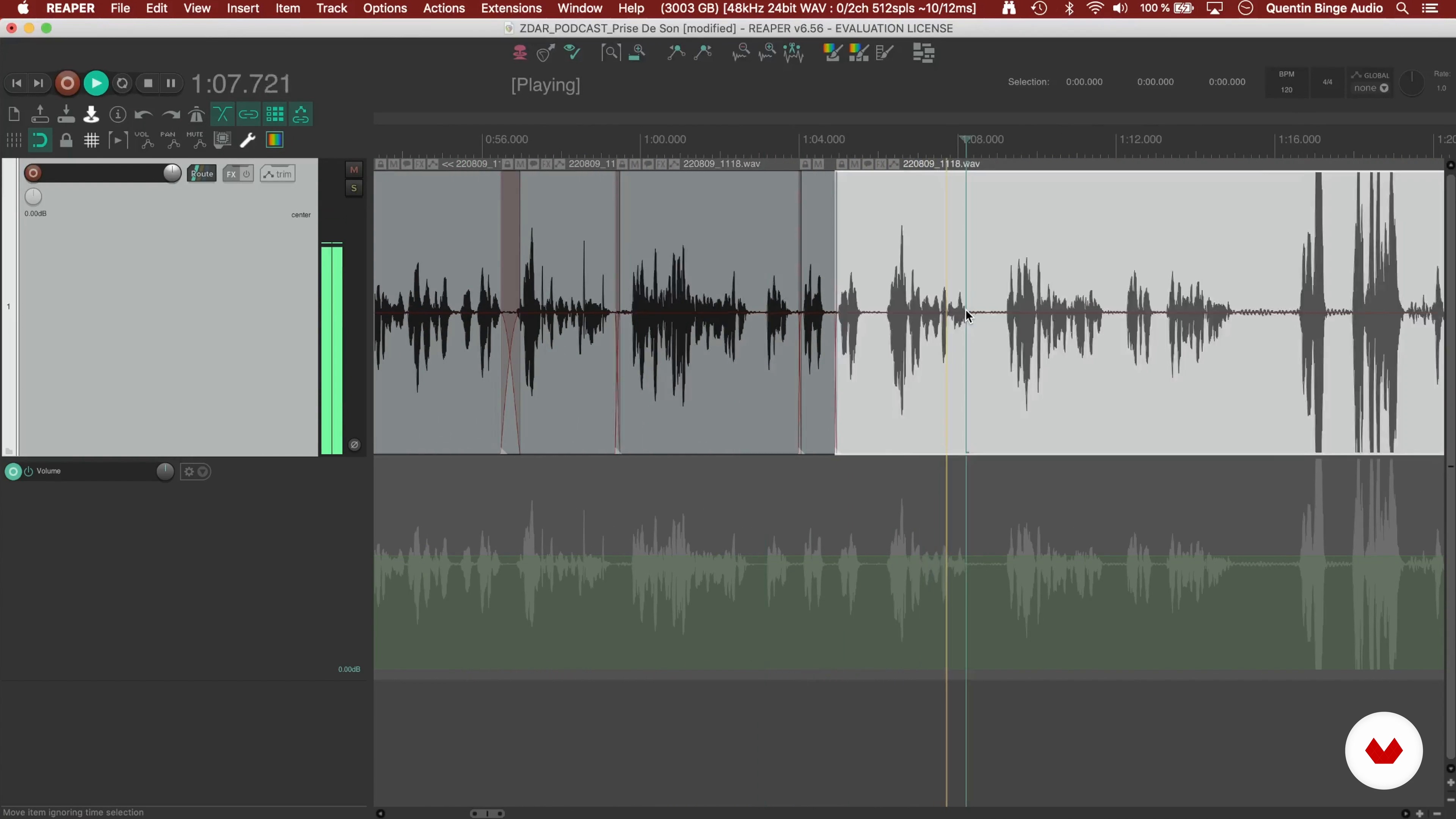
Let's move on to a more technical point. In this lesson, I will introduce you to the REAPER software, which is free for individuals. I will explain how to use it and show you the interface.
11m
image
8
The REAPER Software 2
Now that we have seen the main manipulations related to sound editing, I will show you how to mix and export sounds.
14m
image
9
Preproduction: The Music
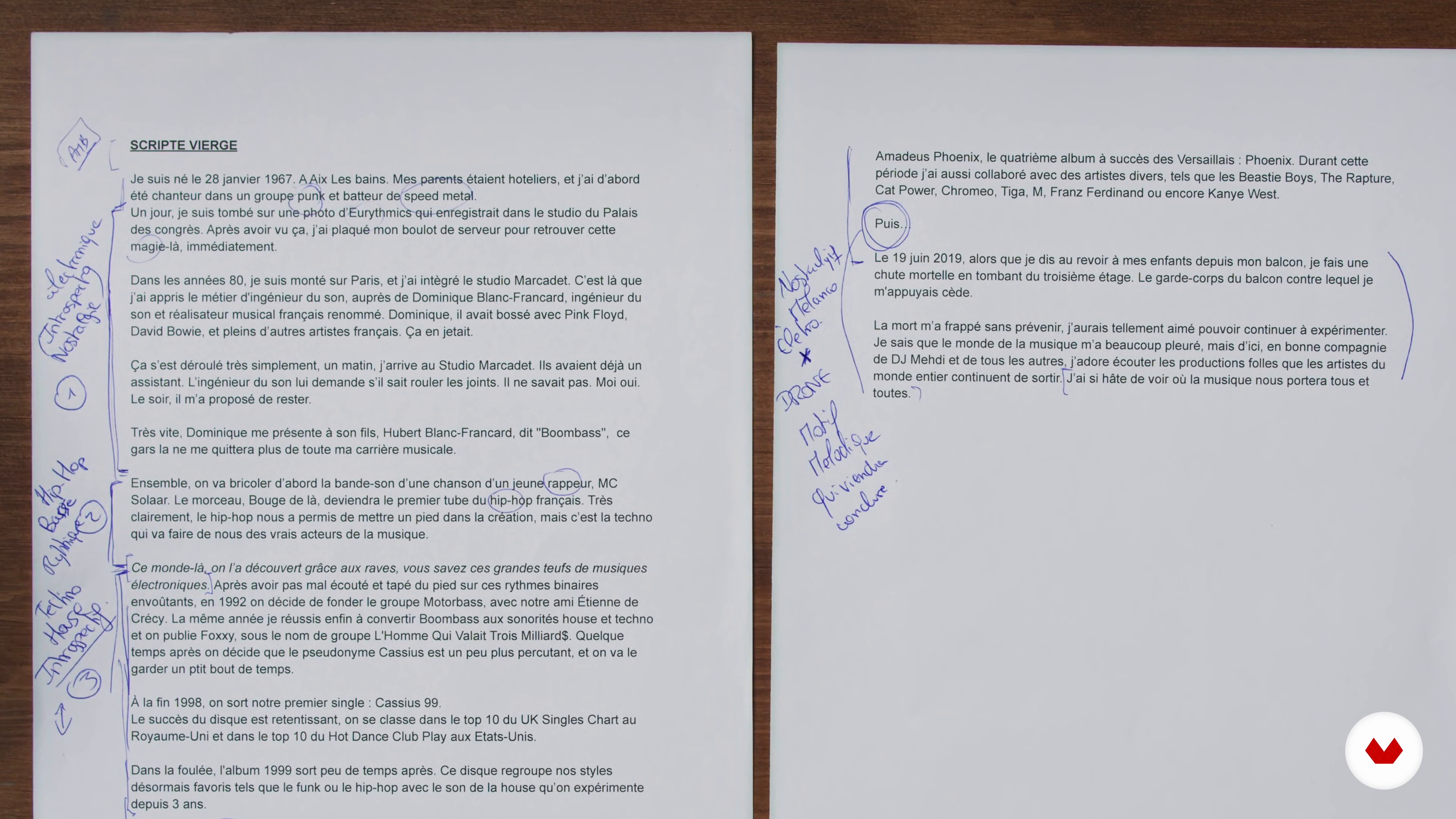
How to put words to music? How do I choose music that matches my project? I am going to start here from the text that will be read for my project and I will explain to you how to draw ideas of sounds from it.
15m
image
10
Preproduction: Ideas for Sound Effects and Preparation for the Reading
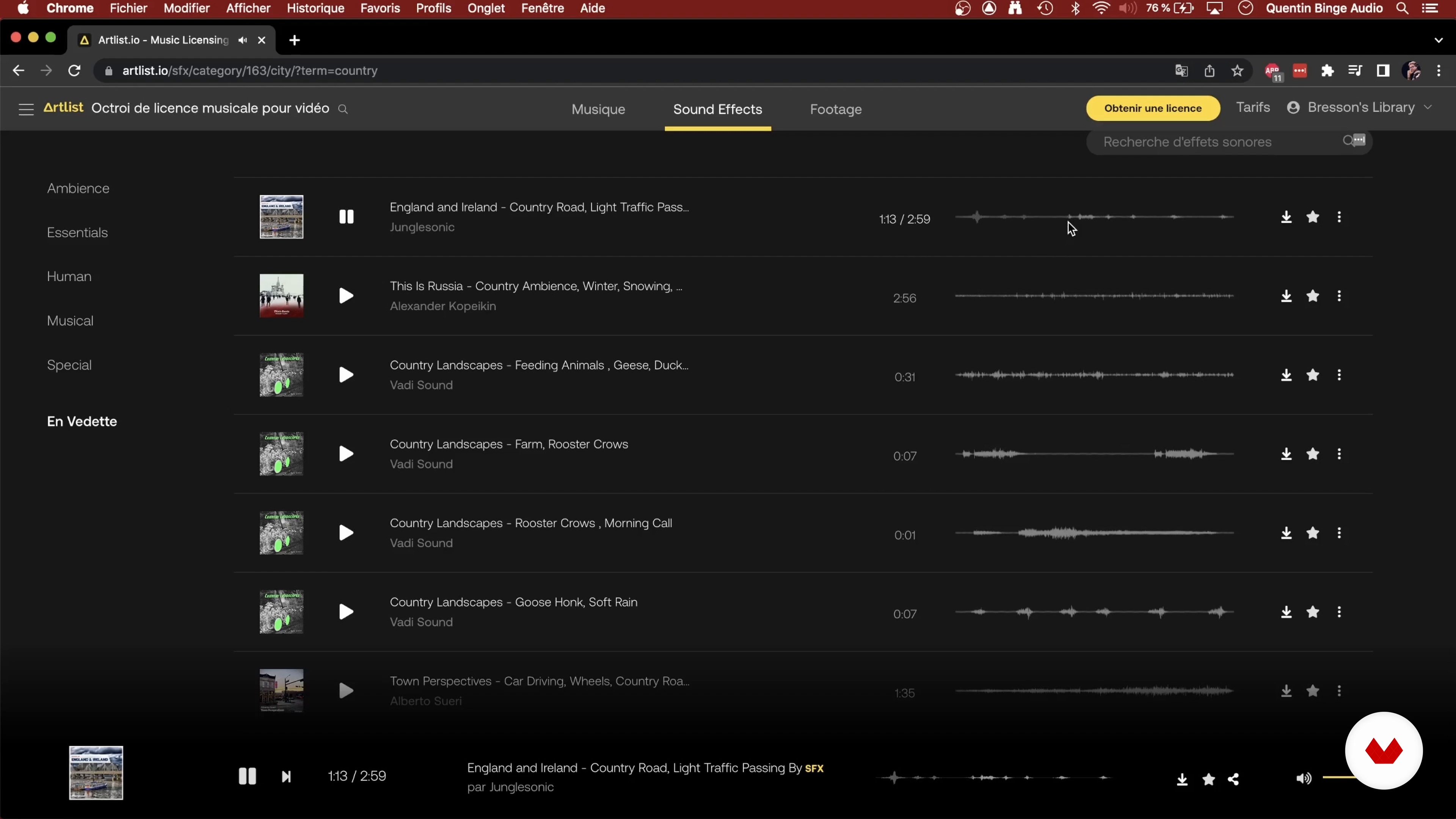
As a sound producer, it is important and useful to prepare the text before recording. For this, it will be necessary to look for the possibilities of sound effects and to refine the reading intentions.
18m
image
11
Recording and Sound Recording
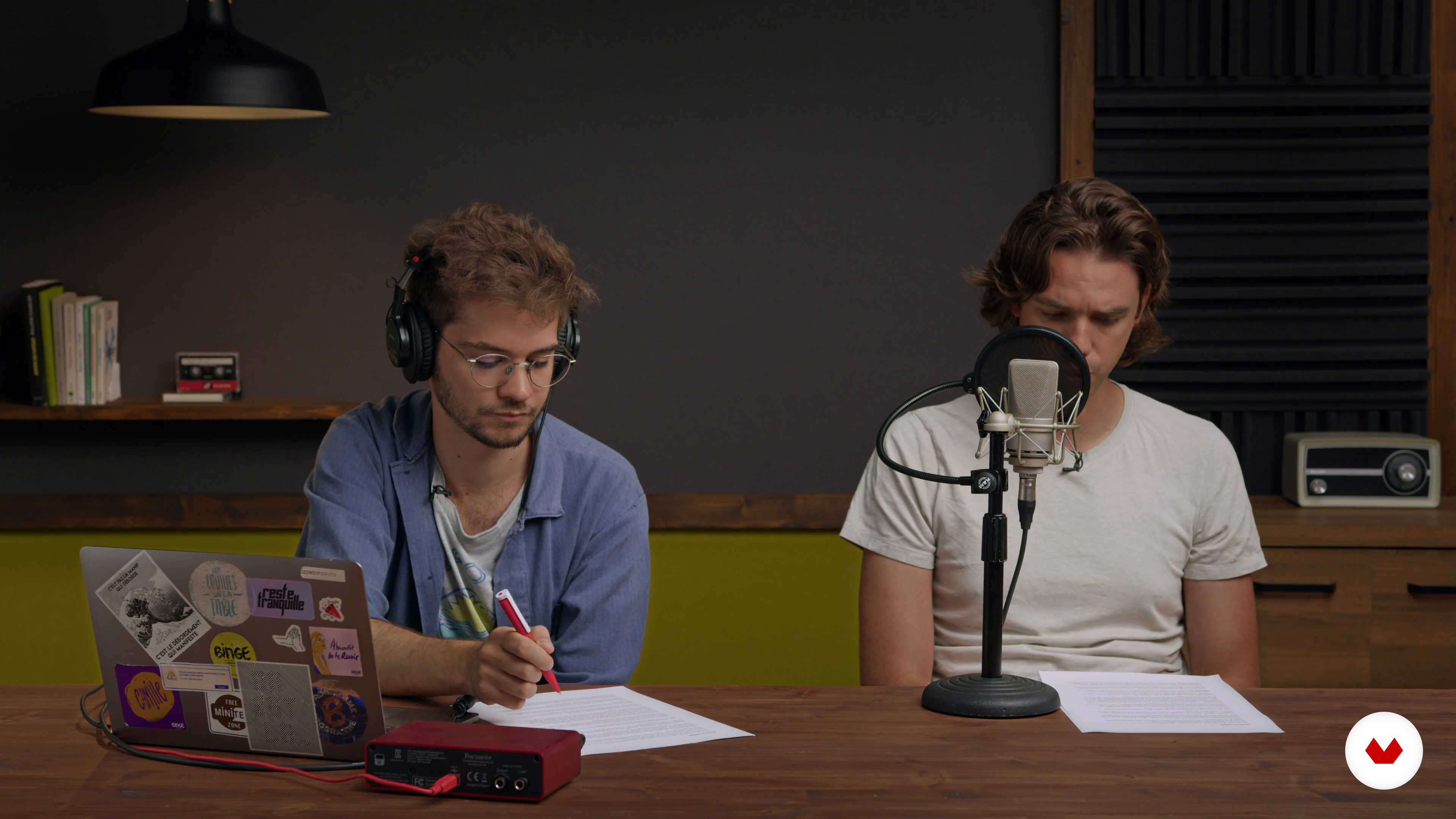
This is the big day ! Accompanied by an actor who will read the text, I'm going to take the sound. You will see how to carry out tests, then how to take notes during recordings and debrief with the actor on what needs to be corrected or changed.
16m
image
12
Selecting Rushes and Editing 1
An important step is the “logging”, that is to say the selection of the best takes. I will therefore edit a first version of my recording, which I will enrich with better takes as soon as I come across a passage with which I am not 100% satisfied.
11m
image
13
Selecting Rushes and Editing 2
I will continue here to clean up the take, removing too long pauses or mouth noises, for example, and adjusting specific sequences. The pre-assembly will thus be done.
11m
image
14
Sound Editing 1
I have a voice edit, naked, without dressing. Now is the time to add atmospheres, sound effects and music. You will see how to import selected sounds and start adding them step by step to the montage.
19m
image
15
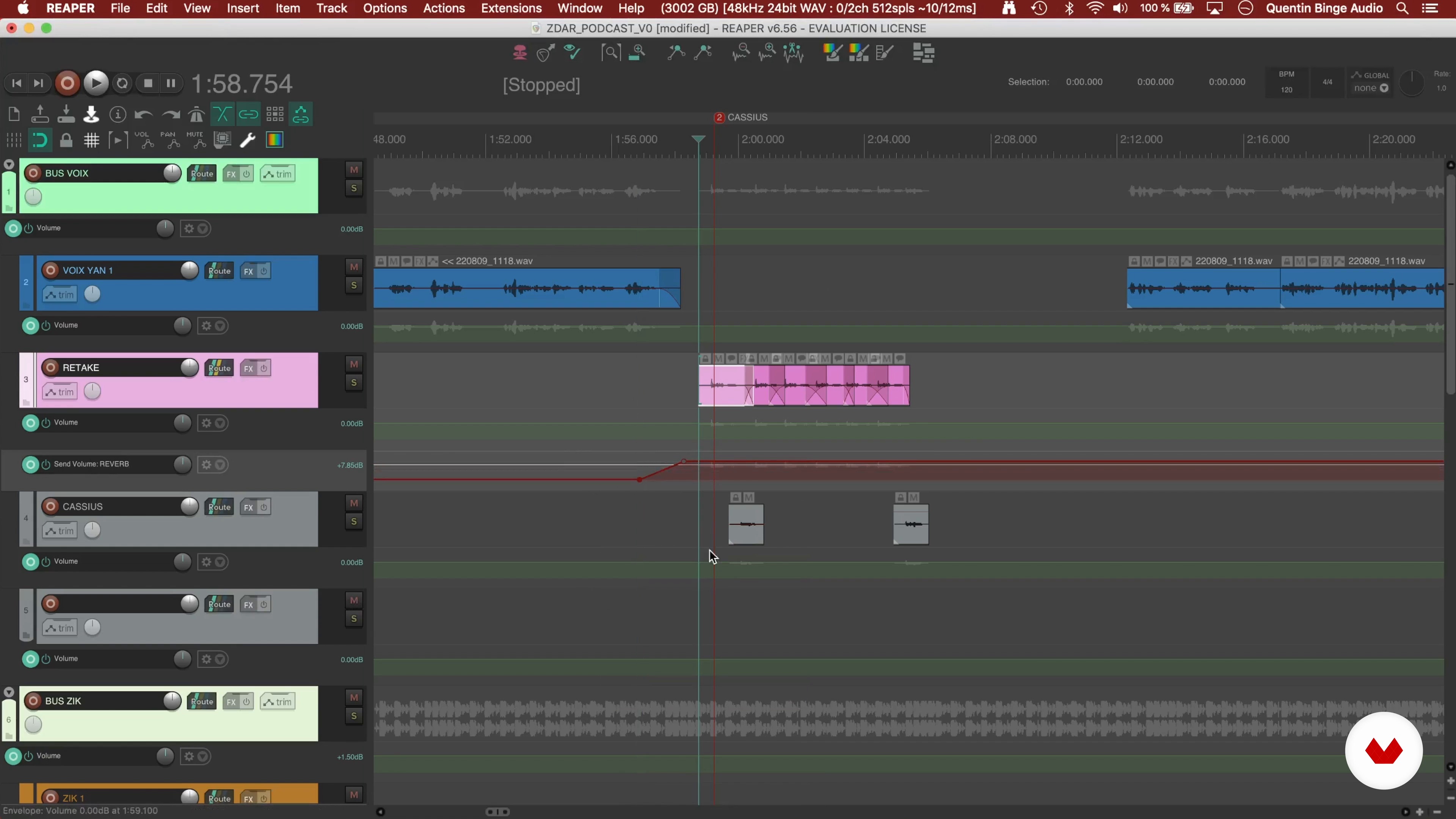
Sound Editing 2
As I add up sounds, I'll show you how to create effects, like reverb.
17m
image
16
Sound Editing 3
I arrive at the last seconds of the assembly. I will add the last music and work on the end to finish on the best possible note. Once that's done, I'll listen to everything again to see what happens and what needs to be corrected.
13m
image
17
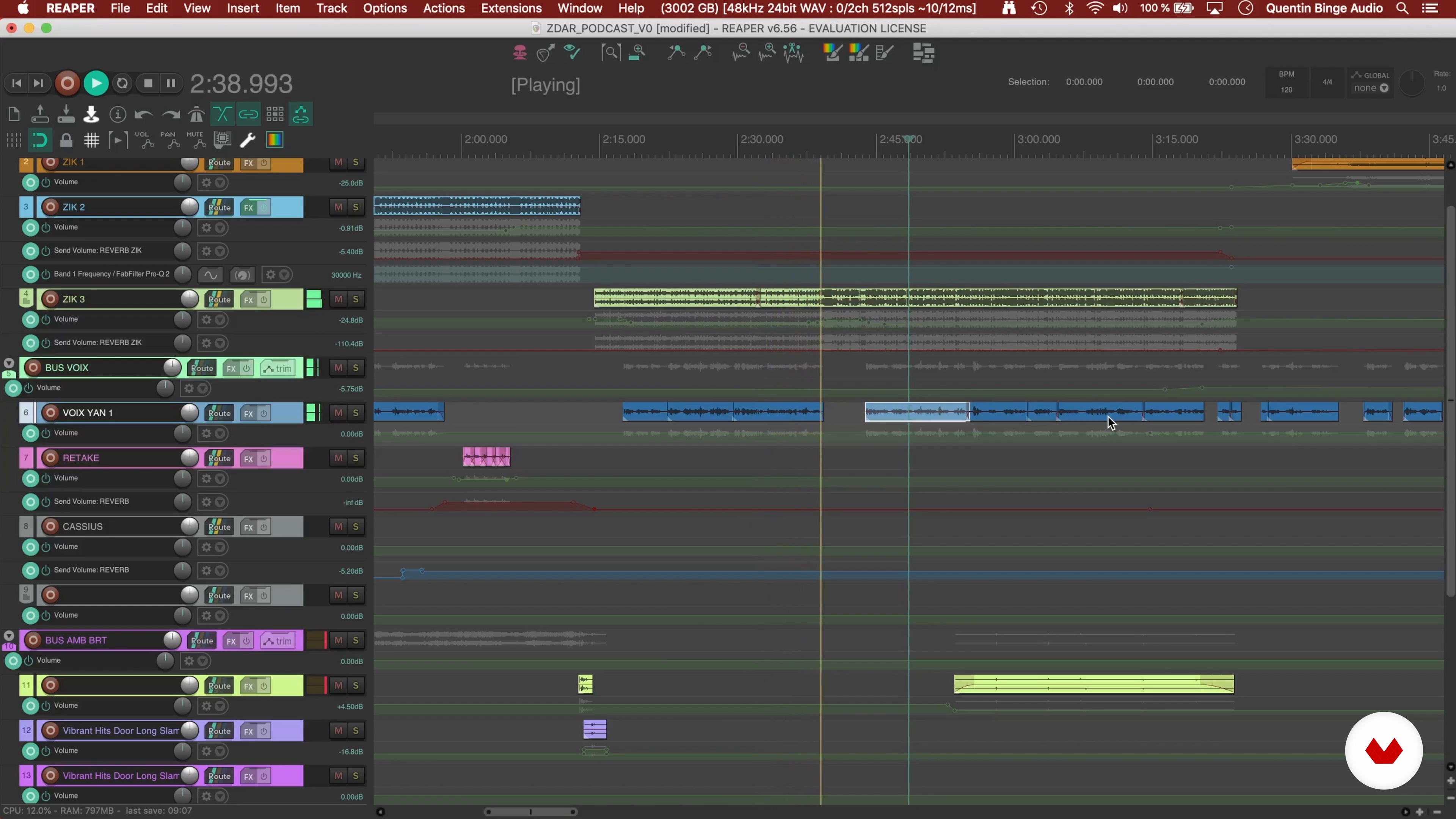
Mixing 1
We are reaching the goal! The last stage of the project will be to mix the product so that it corresponds to broadcast standards, but also to smooth it and make it perfectly intelligible. First of all, it will be a question of doing “mastering”, that is to say processing all the tracks, then I will work on the “Voice Bus”.
19m
image
18
Mixing 2
I will now listen to the whole podcast again and play on the volumes at the level of the transitions to see what I want to emphasize. Finally, I'll show you how to export the podcast!
19m
image
3
The story behind the podcast
In this lesson, I'll explain what we'll be working on together in this course. Everything is geared towards you being able to create your own podcast at the end. Before that, I'll give you everything you need to do that. I'm really looking forward to your podcast!
9m
image
4
Audio Marketing
In this lesson, you'll learn everything about the different facets of audio marketing. It's worth sticking with it!
2m
image
5
Podcast Marketing
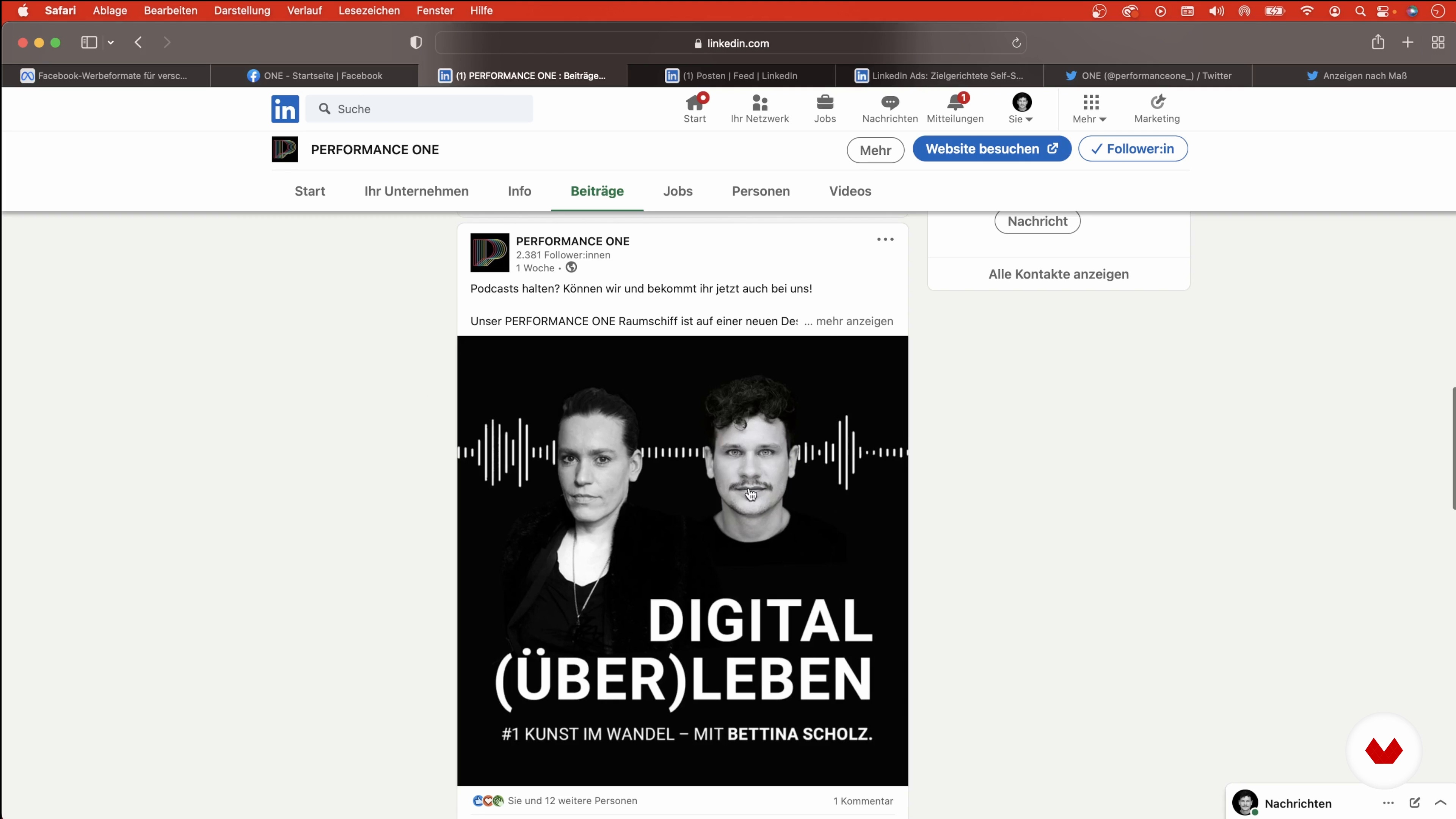
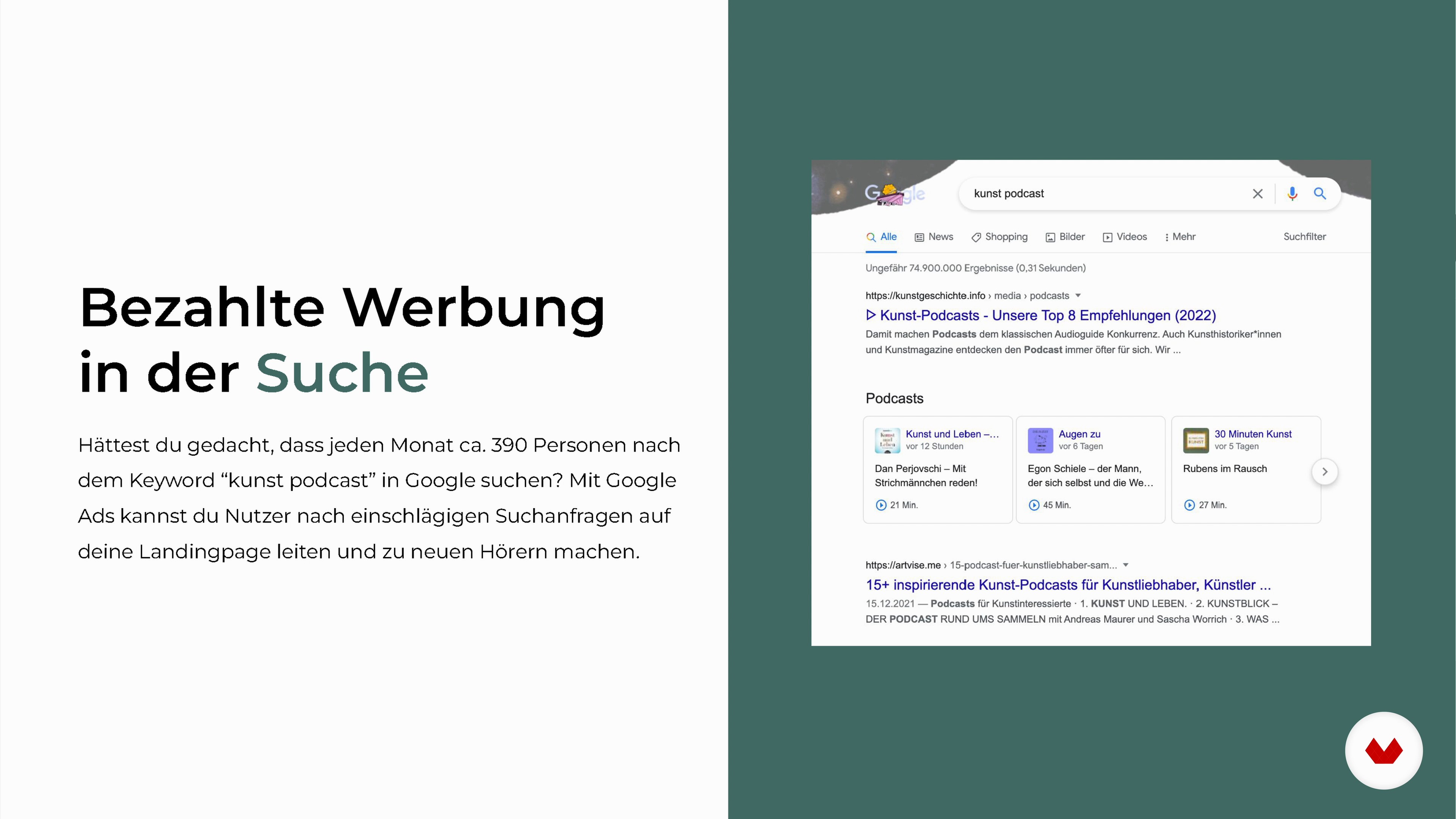
Now we come to podcast marketing as part of the content marketing strategy. We will also look at who actually listens to podcasts in Germany and what forms of podcast advertising are available to us to make a real fuss. So, let's move on!
19m
image
6
Podcast production and what you need for it
In this lesson, you'll learn how to start your own podcast, with a focus on on-site and remote recording. We'll also discuss the equipment and software needed for a professional production. Stay tuned for concepting tips in the next step!
3m
image
7
Creating a podcast concept
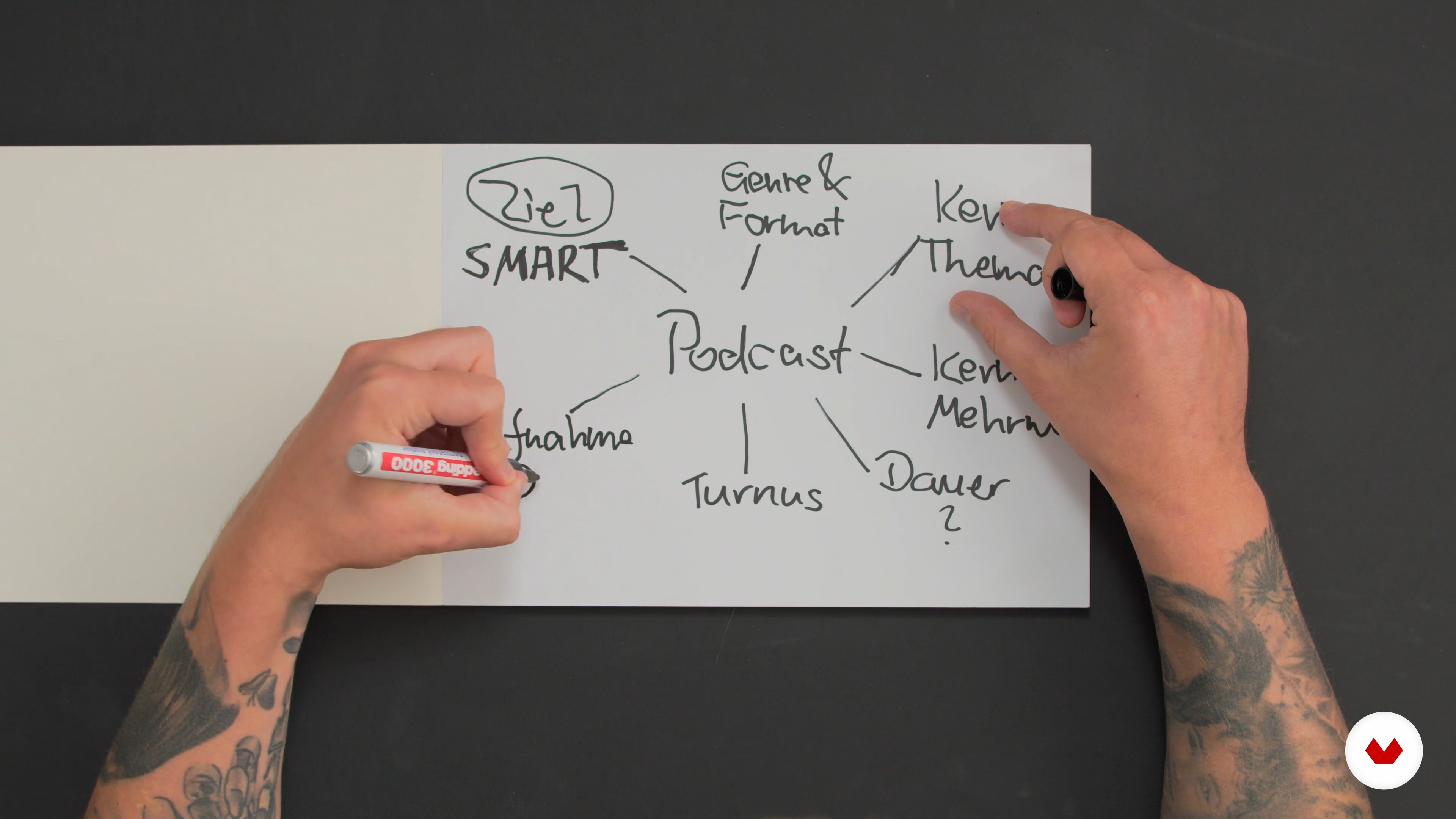
It all starts with the framework, the framework you set for your podcast. You'll learn what's important here in this lesson. Check it out!
5m
image
8
The listeners
Who do we want to address with our podcast? That needs to be defined. How? And that's exactly what I'll show you in this lesson. So, take a look!
19m
image
9
Formulate the story
What do you want to say in our podcast? And how did you come up with that idea? Is there a specific problem you want to solve? Or a clear requirement? That's what you need to define and put down on paper.
9m
image
10
Research host and guests
Interview podcasts require two protagonists: the host, i.e. the person who is interviewing, and the guest, i.e. the person being interviewed. I'll show you how to research both.
7m
image
11
Preparation of the briefing
Si está planeando un podcast de entrevistas y ha investigado a sus invitados, el siguiente paso es recopilarlos. Con una sesión informativa. Descubrirás lo que todo esto implica en esta lección.
6m
image
12
Develop the script
What will your podcast be like? We define that in the script, the screenplay of your podcast. I'll show you how I structure my podcast and I'm already very excited to see how you approach it.
7m
image
13
Preparing the equipment
What kind of technique, technique is needed? I'll tell you in this lesson. So, you know what to do. Watch!
4m
image
14
The recording
Get to the microphone, let's get started. We're recording the podcast now!
8m
image
15
Post-production and finalisation of the podcast 1
We continue exploring fascinating concepts in this phase of the lesson - make sure you join us!
12m
image
16
Post-production and finalisation of the podcast 2
We continue exploring interesting concepts in this part of the lesson - don't miss it!
20m
image
17
Post-production and finalisation of the podcast 3
We continue exploring fascinating concepts in this phase of the lesson - make sure you join us!
15m
image
18
Sound effects and samples from sound libraries
With sounds and samples you can take your podcast to a whole new level. How? I'll show you. So stay tuned!
5m
image
19
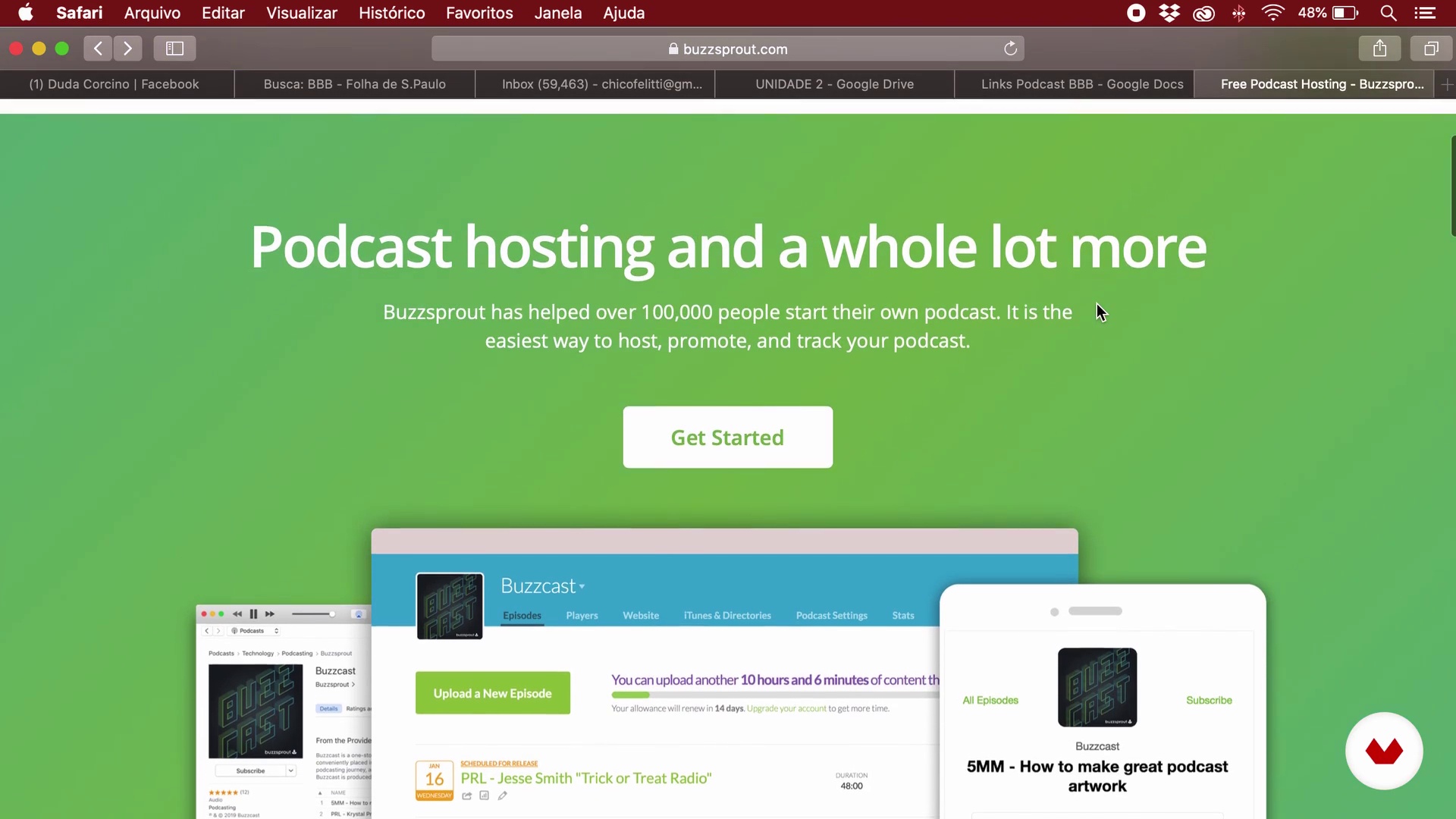
Hosting platforms and podcasts
Where do you put your podcast after recording and post-production? Well, to one of the many hosts out there. Which one exactly? That's up to you. Which one do I use and recommend to you? You'll find out in this lesson. Take a look!
12m
image
20
Social networks
Spoilt for choice? Social networks like Instagram, Facebook, Twitter or Linkedin are perfect
7m
image
21
Marketing approaches to increase reach
That's not the end of it. I have a few more marketing approaches for you that will help your podcast reach more people. So it's worth taking a look!
3m
  • 296 students
  • 85 lessons (14h 39m)
  • 89 additional resources (33 files)
  • Online and at your own pace
  • Audio: English, German, Spanish, Spanish (Latam), French, Indonesian, Italian, Dutch, Polish, Portuguese, Romanian, Turkish
  • Spanish · English · Portuguese · German · French · Italian · Polish · Dutch · Turkish · Romanian · Indonesian
  • Level: Beginner
  • Unlimited access forever

What is this course's project?

Develop a complete podcast concept, including theme, format, target audience, and planned episodes. Write scripts for three episodes using professional narrative techniques. Set up a recording studio, produce three high-quality episodes, and create a launch and marketing strategy.

Who is this specialization for?

Aspiring podcasters and creators passionate about storytelling and audio production, from beginners to those with some experience, will benefit from this course. Ideal for individuals eager to master podcast creation, production, marketing, and audience engagement.

Requirements and materials

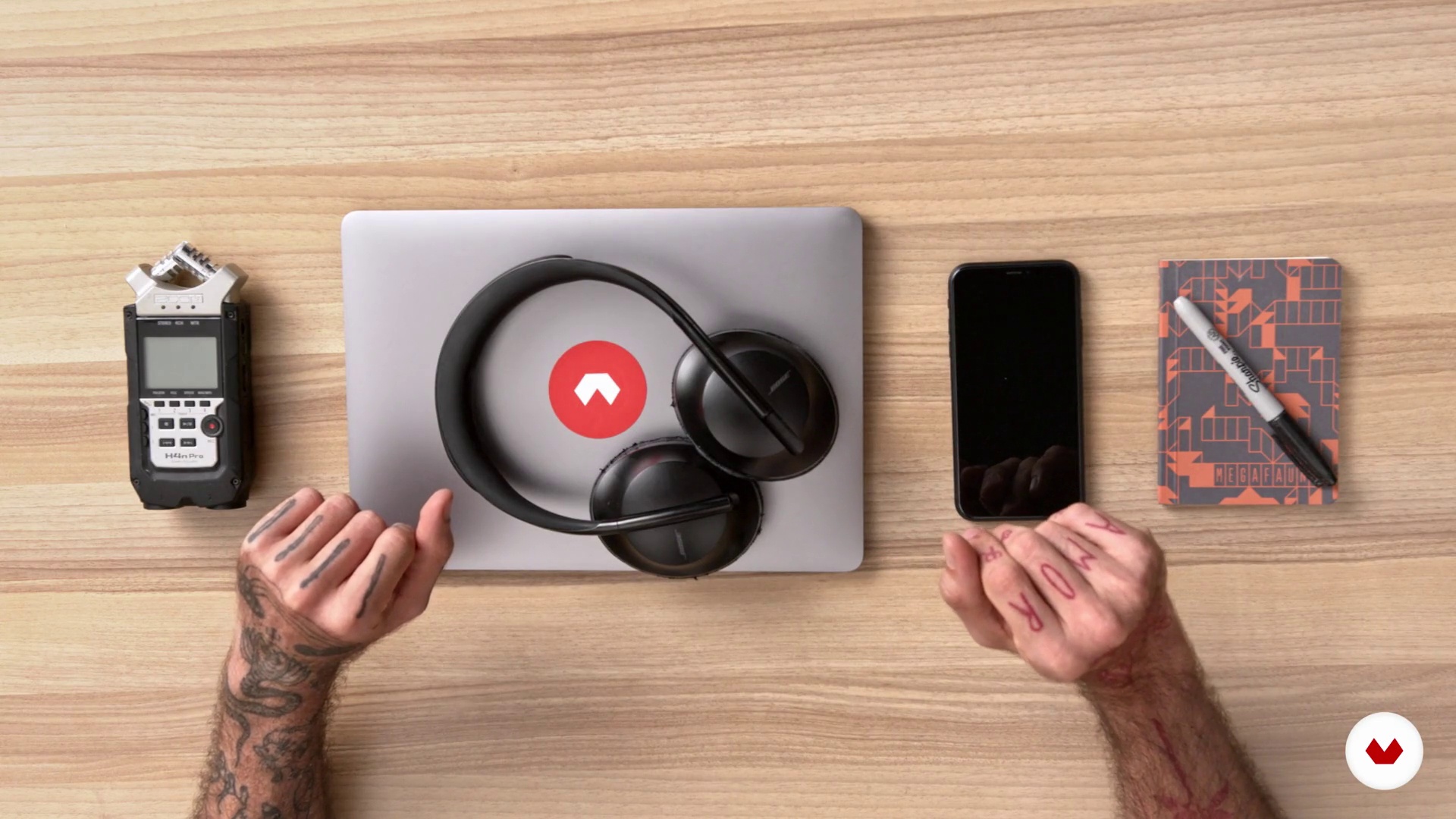
No extensive prior knowledge needed. Essentials include a computer with a mic, headphones, and basic recording software. A mixing console can enhance experience. Access to the internet is required for streaming content and engaging in community discussions.

Select to get to know your teachers in this specialization course
Read more ↓

What to expect from this specialization course

  • Learn at your own pace

    Enjoy learning from home without a set schedule and with an easy-to-follow method. You set your own pace.

  • Learn from the best professionals

    Learn valuable methods and techniques explained by top experts in the creative sector.

  • Meet expert teachers

    Each expert teaches what they do best, with clear guidelines, true passion, and professional insight in every lesson.

  • Certificates
    Plus

    If you're a Plus member, get a custom certificate for every specialization course. Share it on your portfolio, social media, or wherever you like.

  • Get front-row seats

    Videos of the highest quality, so you don't miss a single detail. With unlimited access, you can watch them as many times as you need to perfect your technique.

  • Share knowledge and ideas

    Ask questions, request feedback, or offer solutions. Share your learning experience with other students in the community who are as passionate about creativity as you are.

  • Connect with a global creative community

    The community is home to millions of people from around the world who are curious and passionate about exploring and expressing their creativity.

  • Watch professionally produced courses

    Domestika curates its teacher roster and produces every course in-house to ensure a high-quality online learning experience.


FAQs

Domestika courses are online classes that allow you to learn new skills and create incredible projects. All our courses include the opportunity to share your work with other students and/or teachers, creating an active learning community. We offer different formats:
Original Courses: Complete classes that combine videos, texts, and educational materials to complete a specific project from start to finish.
Basics Courses: Specialized training where you master specific software tools step by step.
Specialization Courses: Learning paths with various expert teachers on the same topic, perfect for becoming a specialist by learning from different approaches.
Guided Courses: Practical experiences ideal for directly acquiring specific skills.
Intensive Courses (Deep Dives): New creative processes based on artificial intelligence tools in an accessible format for in-depth and dynamic understanding.

All specialization courses are 100% online, so once they're published, specialization courses start and finish whenever you want. You set the pace of the class. You can go back to review what interests you most and skip what you already know, ask questions, answer questions, share your projects, and more.

The specialization courses are divided into different modules. Each one includes lessons, informational text, tasks, and practice exercises to help you carry out your project step by step, with additional complementary resources and downloads. You'll also have access to an exclusive forum where you can interact with other students, as well as share your work and your final project, creating a community around the specialization courses.

You can redeem the specialization courses you received by accessing the redeeming page and entering your gift code.

If you're a Plus member, when you complete a course you've purchased, you'll instantly get your personalized certificate. You can see all your certificates in the Certificates section of your profile. You can download your certificates as PDFs and share the link online. Learn more about certificates.
Podcasting Specialization From Concept to Audience. Marketing, Business, Music, and Audio course by Domestika

Podcasting Specialization From Concept to Audience

A specialization by multiple teachers
Berkeley, United States.
Joined April 2002
  • 296 students