Specialization

Naming Specialization: Strategy, Creativity and Verbal Identity

Master the art of strategic naming, creating memorable and effective verbal identities for brands with lasting impact.

Specialization · 6 modules

Master the art of naming with this specialization designed for branding professionals, entrepreneurs, and creatives seeking to create memorable and effective brand names. Explore everything from strategic fundamentals to advanced creative methodologies, guided by Alejandro Pascalis, Xavier Grau Castelló, Ignasi Fontvila, Carlos Cornejo, and Erica Wolfe-Murray. Learn to develop verbal identities that connect emotionally with audiences, building lasting brand value.

Throughout this training program, you'll discover how to use various naming techniques, define touchpoints, and create materials that form part of your brand's identity. Delve into strategic methodology, combining market analysis with advanced creativity to develop innovative and memorable brand names. You'll also understand the legal aspects of naming and trademark protection, ensuring your creations are properly safeguarded. By the end, you'll be equipped to create creative, strategic, and legally protectable verbal identities.

Read more ↓

What will you learn in this specialization?
A total of 6 modules and 67 lessons
A total of 11h 0m of vídeo lessons
Taught by 5 selected expert teachers
image
4
The importance of the strategic design of a brand focused on the user
In this lesson we will delve into the importance of not only defining a brand at an aesthetic level, but also a strategic one, finding the reason for its existence and the problem it solves, with the aim of connecting with people at a sensory and emotional level. We will review the most relevant parts that make up a brand beyond just the logo and present examples to help us better understand this point.
13m
image
5
Elements that make up a brand I: Perception, experience and product
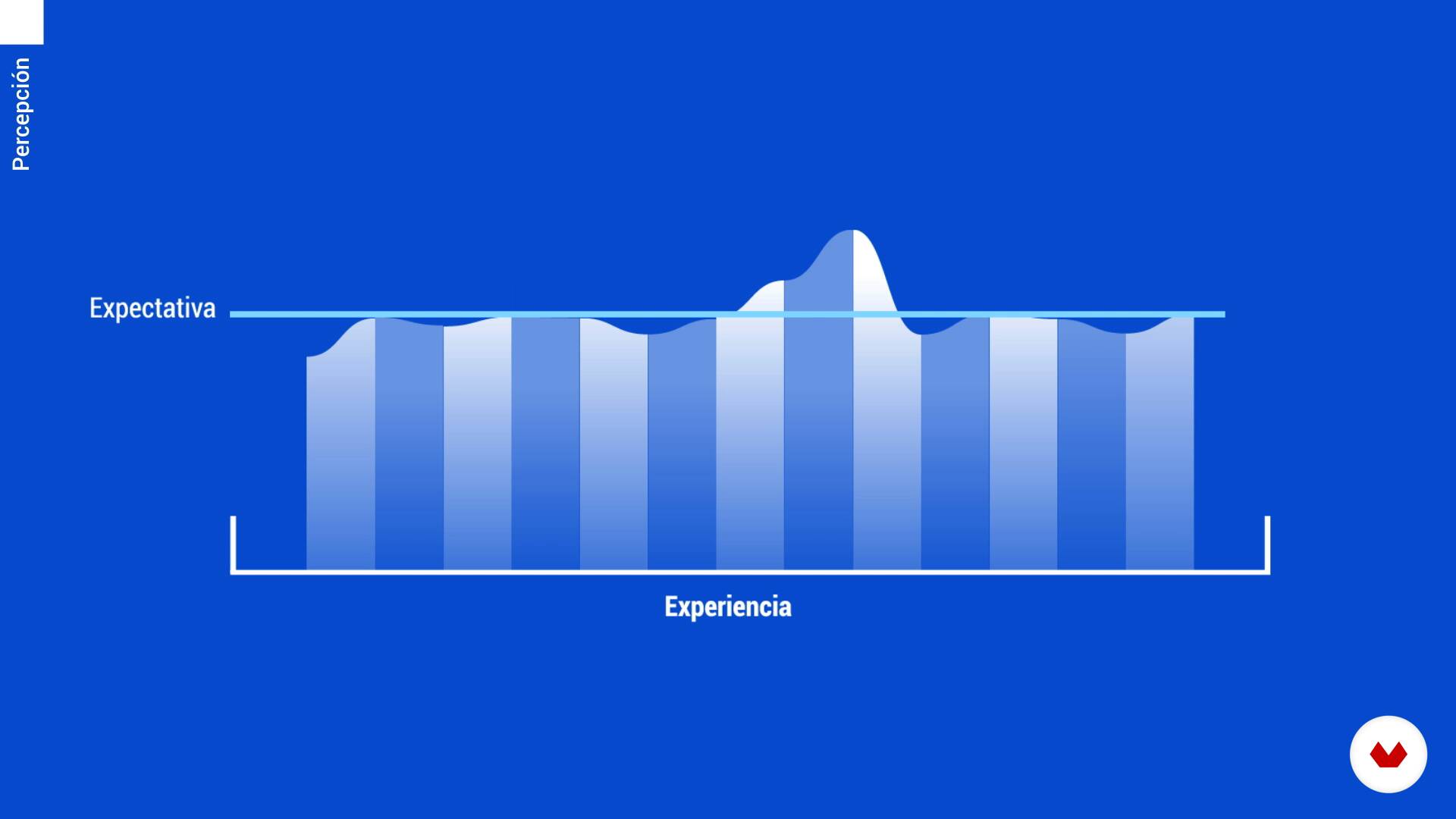
It is time for you to get to know three areas that generally, as designers, we do not pay much attention and neither do we discuss with our clients, I am talking about perception , experience and the product or service these 3 areas are fundamental since they are the way people interact with a brand and, depending on the experience, it is that a perception is built that is finally associated with two other very important elements but that we will see in Lesson 3 of this unit.
7m
image
6
Elements that make up a brand II: Symbol and name
Continuing with elements that make up a brand, we will now delve into the different types of symbols and possible names when we start to think about the design of the brand and how these two elements will be the "objects" with which the resulting emotions (perception) of the experience with the product or service.
9m
image
7
Definition of the problem and the brand opportunity area
It is vital to understand the methodology to define, together with your client, the problem that the brand seeks to solve. For this I will share some key questions that will serve as a guide to generate an benchmark and map it to a four-quadrant model from four main variables, which will allow you to more easily visualize the area of opportunity with greater possibility of value for the future brand.
19m
image
8
Understanding of our user
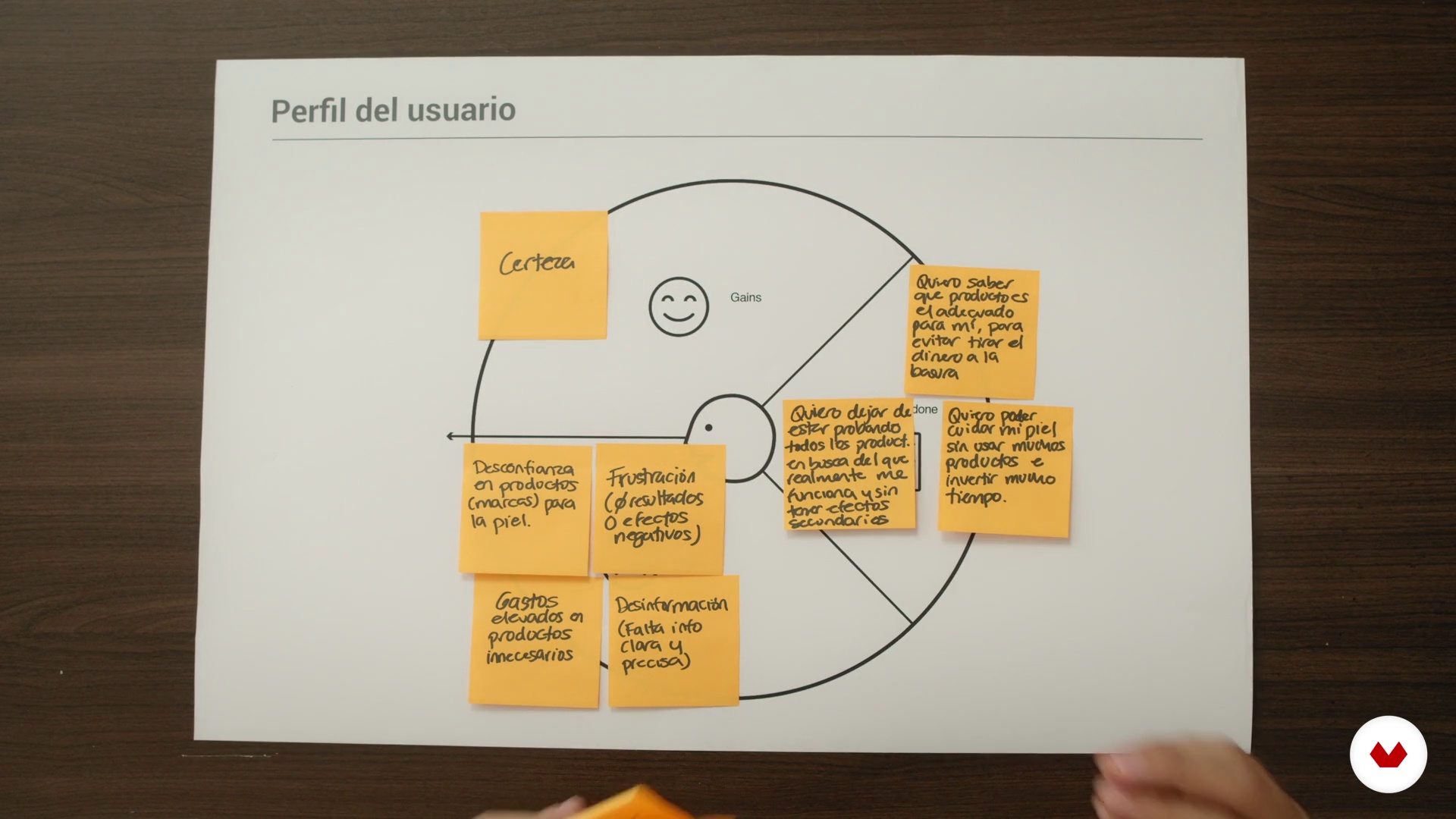
At the center of the strategy must be the user, so understanding it is essential if we want to build a powerful and attractive brand. Using the Value Proposition , specifically the part that corresponds to User Profile , I will teach you how to detect and materialize jobs to be done or tasks that the user seeks to solve, the pains or fears that prevent them from achieving it and the most relevant gains or benefits that the user is seeking to obtain, all with the aim of being able define the value proposition of the brand.
7m
image
9
Definition of the Brand Value Proposition
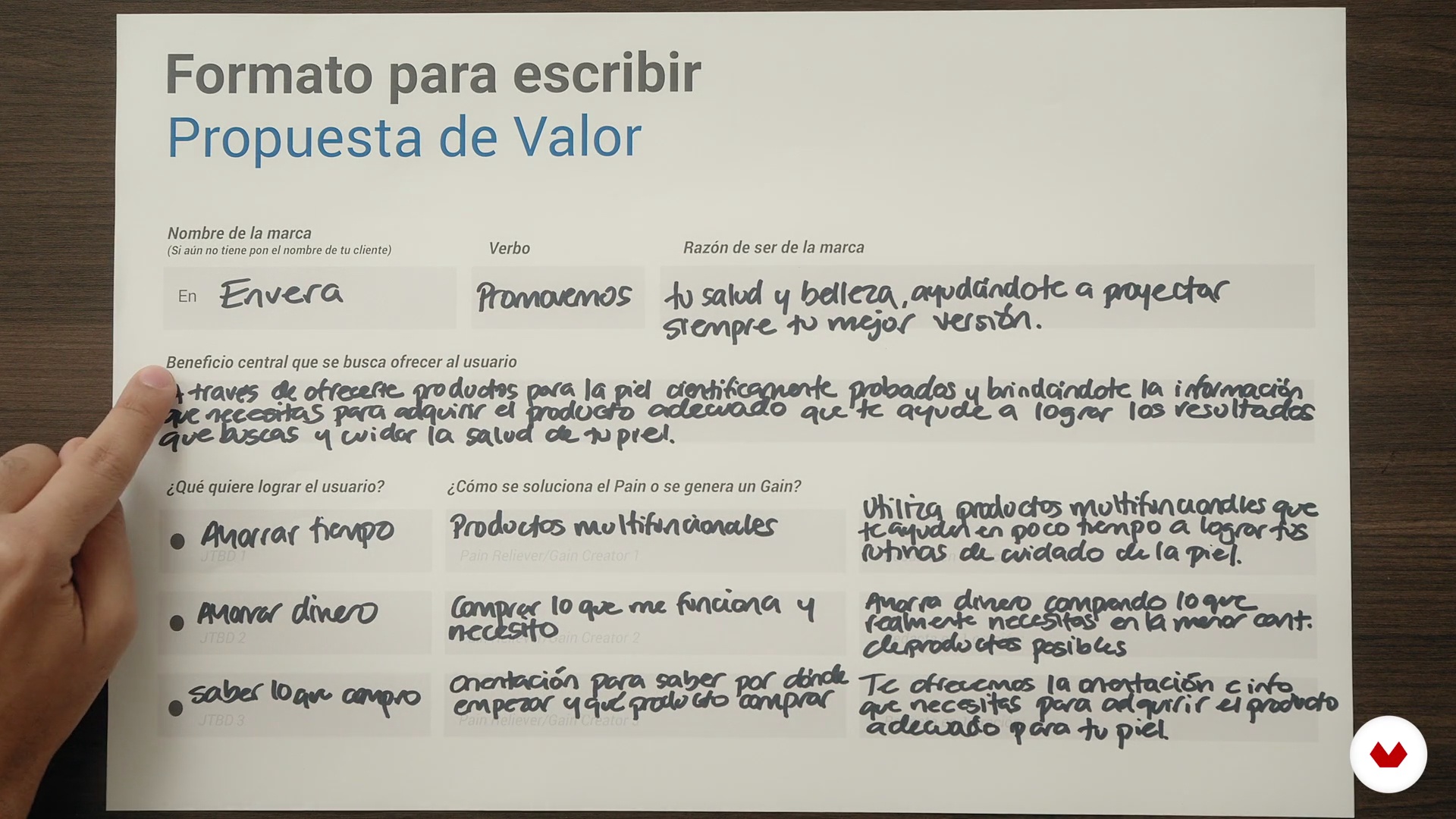
Using the Value Proposition and based on what you worked on in the last lesson, we will work on defining the Pain Relievers or fear relievers and the Gain Creators o Most important profit creators, that regardless of the product or service, the brand will have to deliver to its users in order to fulfill its Value Proposition .
12m
image
10
Brand essence: Head and heart
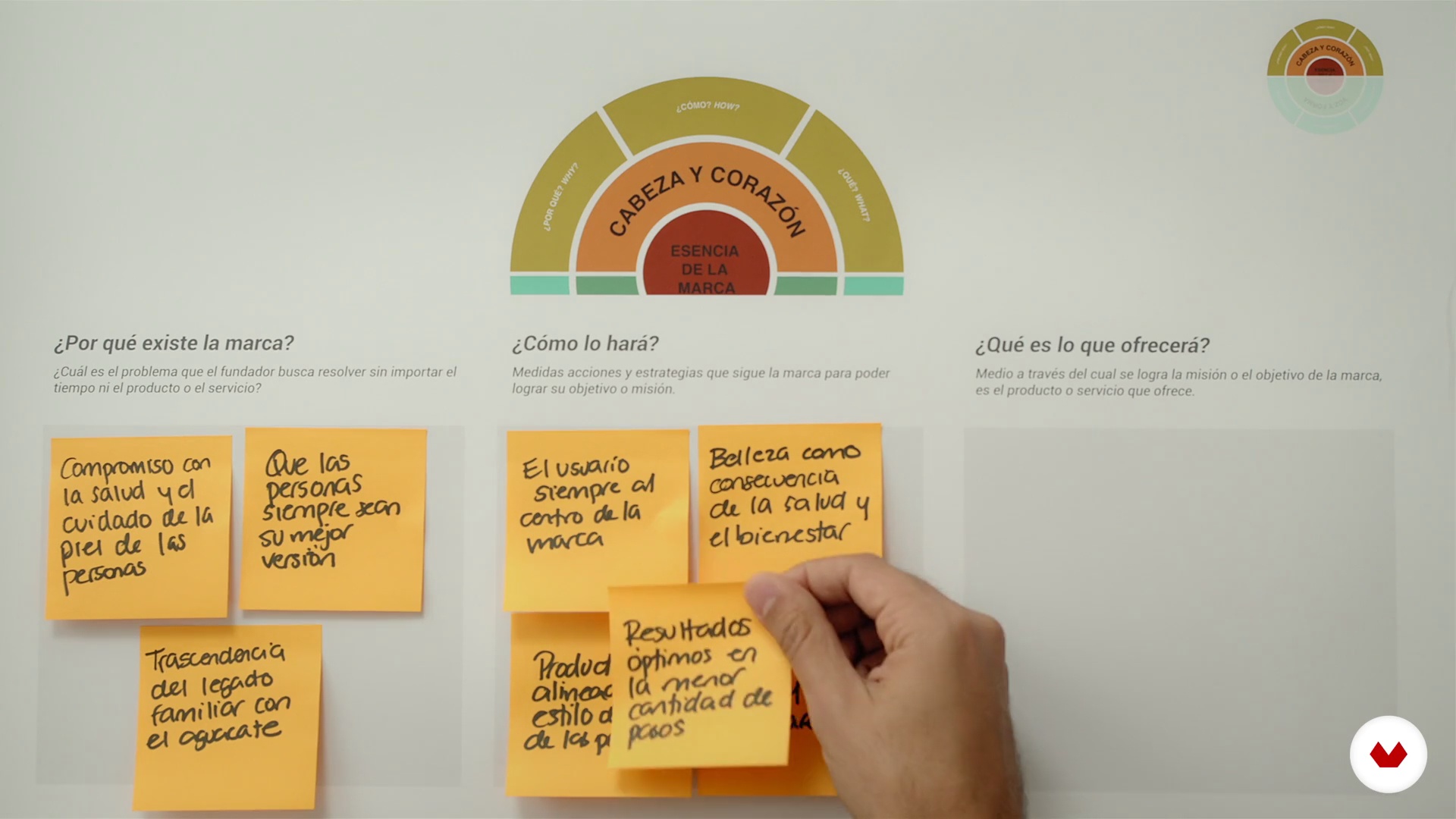
I will begin this Unit by sharing a model that allows you to understand the toughest and most emotional essence of the brand, in order to respond and define as a team with your client three areas that support the brand; which are the vision , the values and the beliefs of it.
7m
image
11
Brand essence: Voice and form
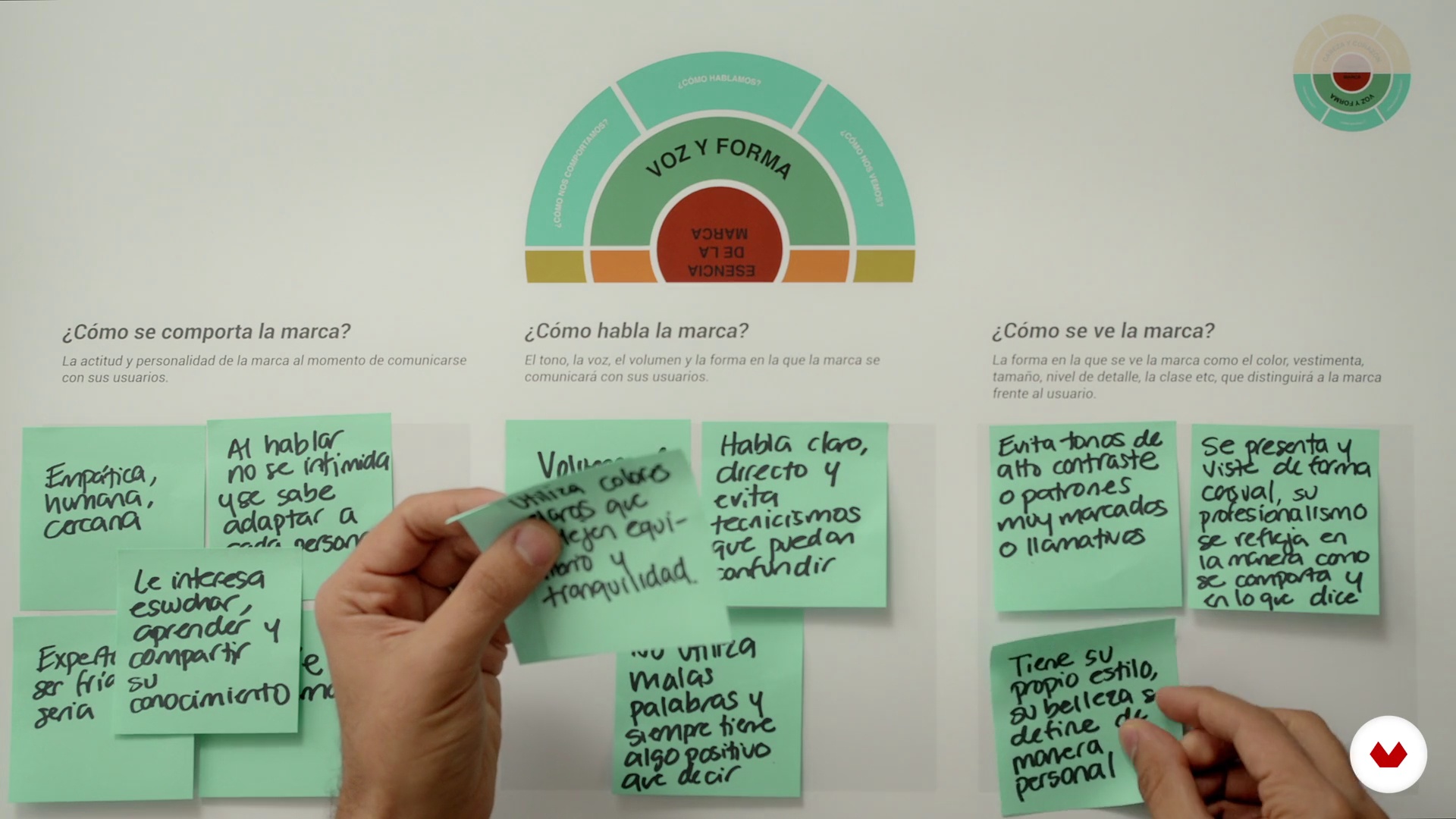
We will continue working on the model of Brand essence but in the area that bears the name Walking and Talking that I am sure will seem much more familiar to you, since it responds to the way how the brand is seen, spoken and behaved. However, the important thing is that this lesson works as a guide for you to discuss the model and define it together with your client; even before you start designing, especially with the aim of aligning their vision and the expectations that both have about the brand and the way in which it will materialize.
8m
image
12
Brand name
I want to share a simple technique that will help you to create a naming session with your client and others involved in the project, managing to come up with proposals that are not only creative, but are also supported by the strategy and the guidelines that you have been working on in the previous lessons so far.
10m
image
13
Definition of brand identity materials
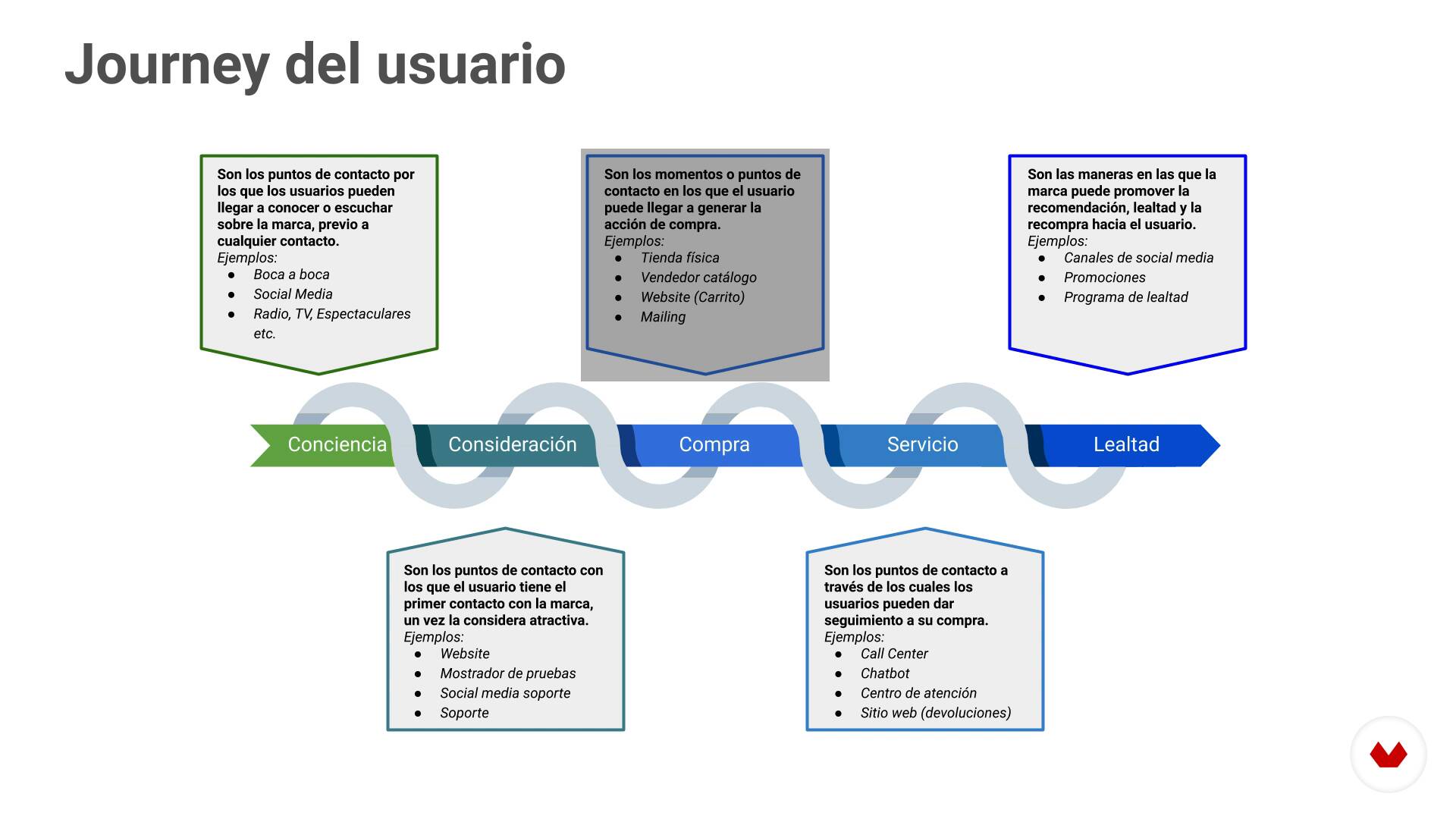
Leaning on a framework of Customer Journey , you will be able to define those touchpoints with greater relevance throughout the experience that a user experiences with a brand. This, with the aim of proposing identity materials to your client that really generate value and impact.
13m
image
14
Development of mood boards for brand identity materials
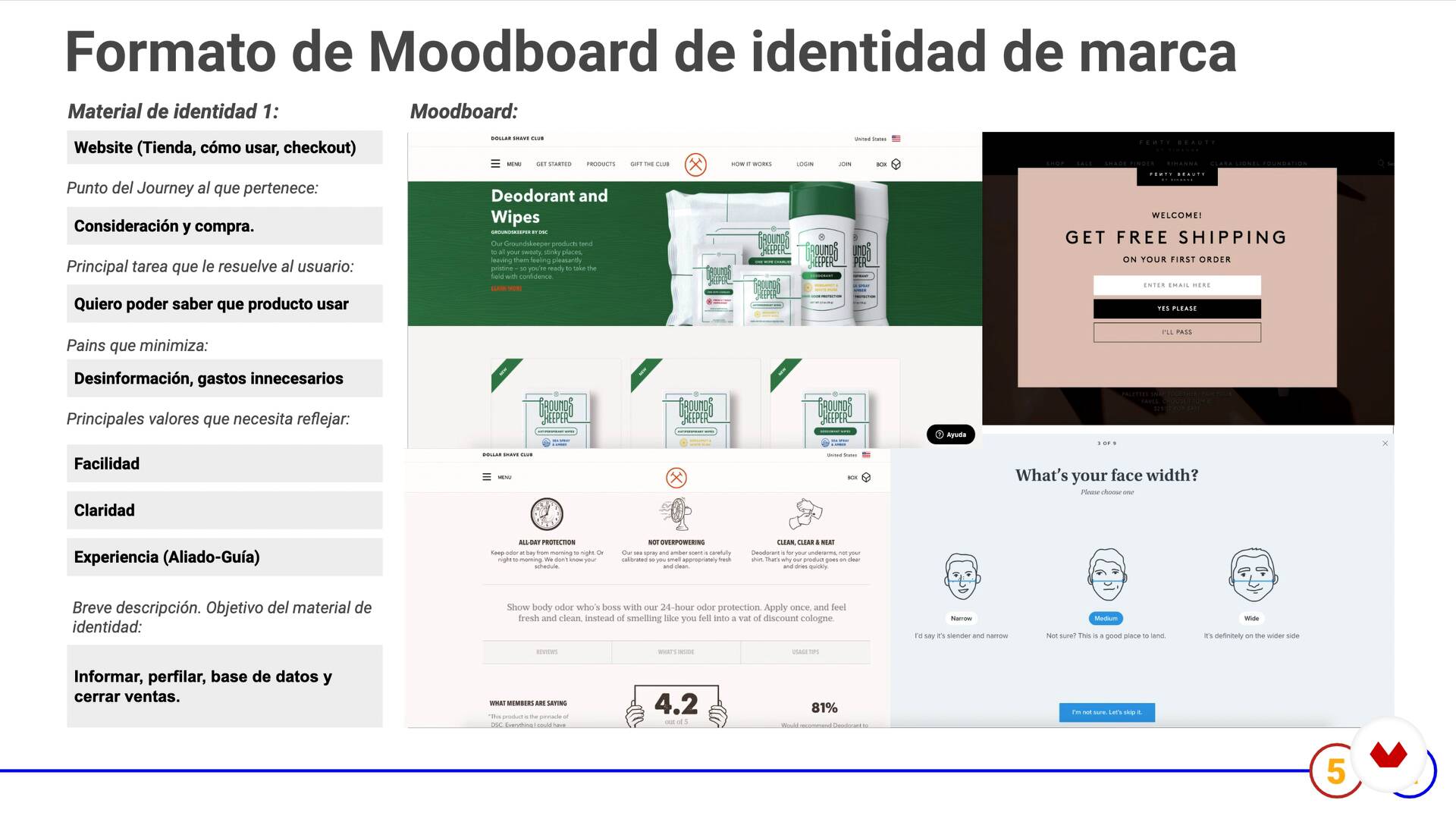
I will share an idea to create an inspiration mood board for each of the identity materials. This model will help you materialize the possible solution before you start to design, in this way, your client will be able to better understand the idea and share their feedback, in order to place it on the same page, avoid rework and reduce development times , making the design process easier and reducing rounds of revisions.
14m
image
15
Development of the brand strategic document
In this last lesson, I will teach you a simple way to organize all this information in a strategic brand document, which will accompany and strengthen the rest of your delivery.
12m
image
2
The process of naming
In this lesson, I am going to present you with the general issues necessary to face the process of creating a name.
12m
image
3
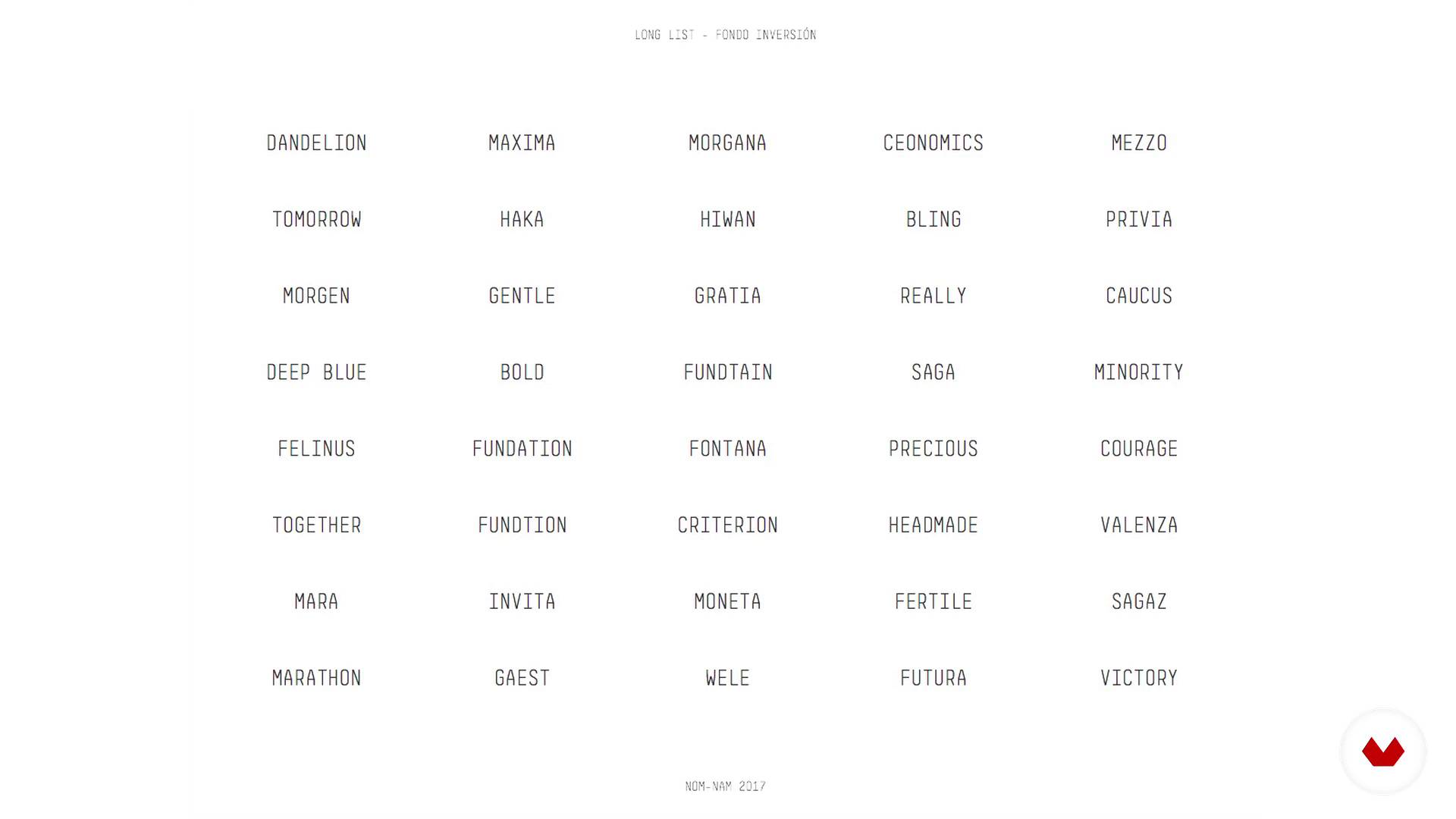
The long list
Creating a long list of names can seem very complicated. With the indications that I give you, you will see how it will be very easy for you.
10m
image
4
Decide the short-list
Making a short-list is a process full of nuances that will determine the success of your proposals in front of your client. In this lesson I explain the way to proceed.
15m
image
5
The battle of the registry
The time has come to check if really these names that you have chosen can be used. For this it is very important to take into account the geographic scope in which this name will act.
9m
image
6
Submit the naming
To present the selected names to your client, I use a very simple method and away from the presentations made directly on a screen.
14m
image
7
Naming for institutions
In this first case, I am going to explain the breafing given by the client and the different options that I looked for to give name to a university.
12m
image
8
Naming for professionals
In this second case you will see how the name was created for an architecture studio dedicated to bioclimatic architecture.
7m
image
9
Naming for companies
This case is quite curious, it is about a historic family real estate in Barcelona that has accumulated a significant number of commercial premises. My job was to name a platform to see what kind of client could access commercial premises.
6m
image
10
Namings small
This is a very curious case since it consisted of naming a newly created product.
9m
image
11
I want to be a namer, what do I do?

In this lesson I am going to give you some slogans to be able to dedicate yourself to naming.
5m
image
3
The identity of the brand, the verbal identity and its elements
Every company or product needs a name, that nobody discusses. But what exactly is the brand name for? What can we expect from him and what other elements of identity accompany him and complement him? In this lesson you will find an answer to all these questions.
11m
image
4
Problems of starting in the creation of names
When addressing a naming process we will have to face a series of common problems in all cases: knowing them is the best way to minimize their possible negative impact. Here I tell you how you should approach the creation of names to overcome all these obstacles.
9m
image
5
Consequences of a bad choice of name
In this lesson, we will see that making a mistake in choosing the name can lead to dire consequences for the brand, which can range from undesirable meanings to loss of financial value.
11m
image
6
Creative processes
Depending on the time and available resources, there are different ways of approaching a naming process: from companies that carry out the whole process internally to those that outsource it and leave it in the hands of specialized professionals. I will explain the pros and cons of each of these scenarios.
10m
image
7
Phases of the process of creating the brand name
In this lesson we will quickly see what are the different phases of a name creation process, starting with the conceptualization, following the strategy and ending with the validation.
5m
image
8
The collection of information: the naming briefing
A good creative process starts with a good collection of information. That the client provides us with an adequate briefing is the basis for us to develop a successful strategy and, consequently, good creativity. In this lesson I will provide you with a model of namebrief to obtain all the essential data to set the project successfully.
17m
image
9
The concept board and the creative strategy
Once the information has been collected, it must be analyzed, selected and weighted. This leads us to the development of a concept board where the identity elements of the brand are defined and the subsequent elaboration of the creative strategy, which details what the name should say and how to say it. Here I will explain a simple application strategic model.
21m
image
10
Types of names
Depending on which message we wish to convey through the name we must work one or more types of names. In this lesson we will see six different types of names depending on the nature of the message they convey.
12m
image
11
Creative techniques
All brand names that exist can be classified into two large groups: existing names and neologisms. In this lesson we will see which techniques are used most frequently for each of these groups.
12m
image
12
The selection of names: principles of the brand name
When we see a name for the first time it generates a first impression that can be good, neutral or bad. But beyond this purely subjective appreciation there are a series of attributes that allow us to assess whether a name fulfills its purpose correctly.
15m
image
13
Presentation and argumentation of the names
The names must be presented in a simple and clear way, supported by an adequate argumentation, their meanings, their possibilities of legal registration, the availability of domain names, etc.
10m
image
14
Linguistic and cultural validation
Names that work perfectly in a certain market can be fatal in a different cultural context. It is necessary to make linguistic and cultural controls to make sure that the names we are going to use are acceptable in all the markets where the brand will be present.
9m
image
15
Legal validation
The final purpose of any naming process is to have a name that is legally registrable, that is, that can be appropriated exclusively to distinguish a product or a service. In this lesson we will see some important legal questions about names.
11m
image
3
Name vs. Mark
I will tell you about the main problem when creating a name and also selecting it: understanding the difference between the concept of a brand and the concept of a name.
8m
image
4
Let's start with a why?
I invite you to discover the what and why of the project. What you define will be the spine and will help you know what and how you want to convey it.
5m
image
5
Brief or project vision
In this lesson I will talk about the importance of a brief. I will teach you some key questions to build it, how to fill it in properly and how to decipher the most valuable information in the entire document, in this way you will have clear the key points for development.
18m
image
6
Investigation
I will show you different places where you can obtain information, I will give you tips to collect it and you will understand what is the most important thing to recognize in any source of information.
6m
image
7
Insight
You will discover how to select the appropriate insight for the project, based on what you investigated in various sources and above all, knowing in depth the field, the users and the competition.
4m
image
8
Creative concepts
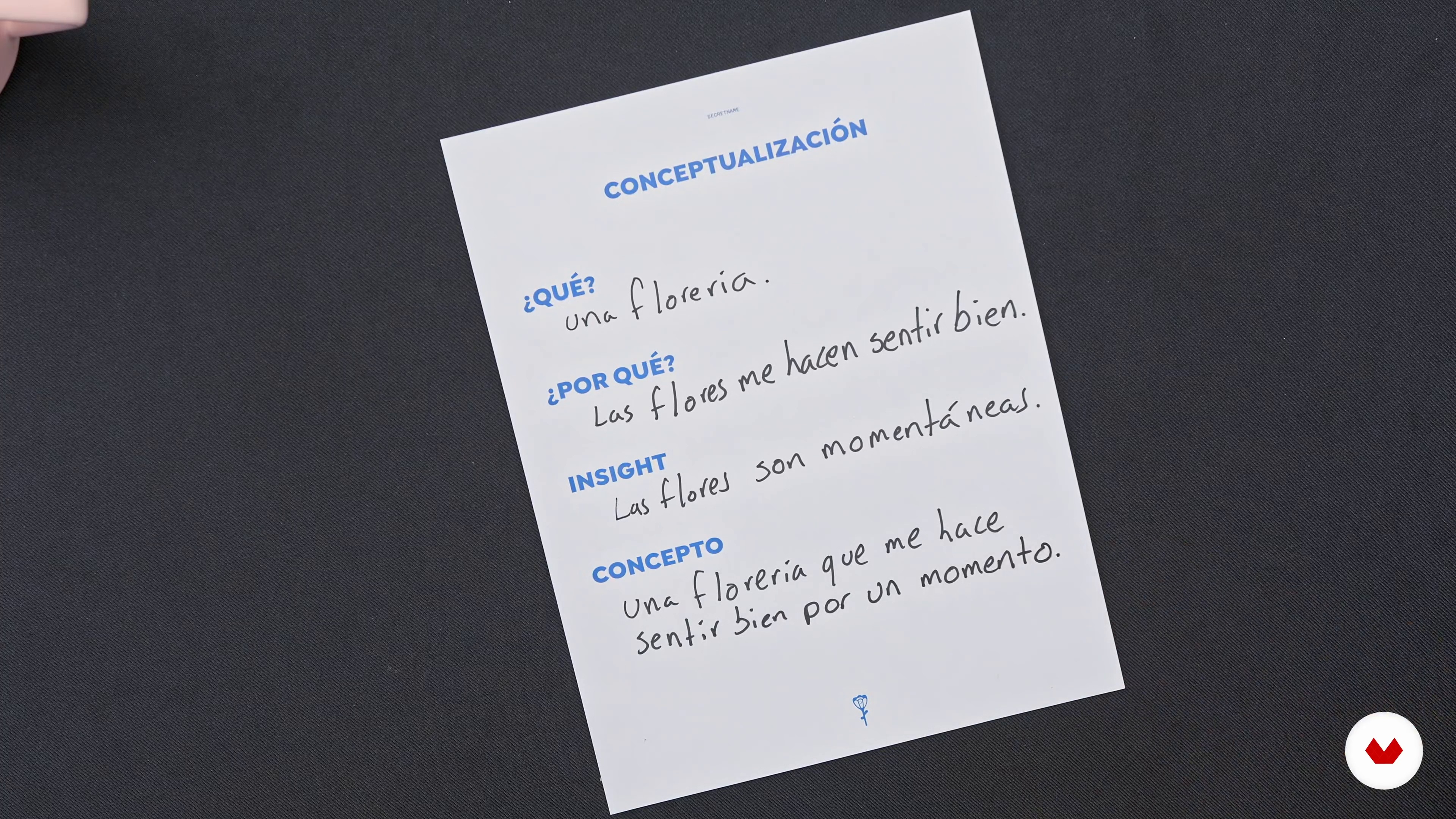
In this lesson, you will transform insights into creative concepts through a fusion of what? and why? Thus, generating an interesting story that helps you write functional names.
4m
image
9
Layers exercise
Now I want to share with you an infallible method to create stories, it will help you to know the various layers of thought and how they work to reach much deeper solutions.
5m
image
10
Writing techniques
I'll show you some naming techniques that you can use and show you how each one works so that you have different options for both names and concepts.
7m
image
11
Legal validation
I will show you what you must take into account to make a correct legal review of the name proposals, I will give you tips and I will share a case study to study it closely.
17m
image
12
Commercial validation and user selection
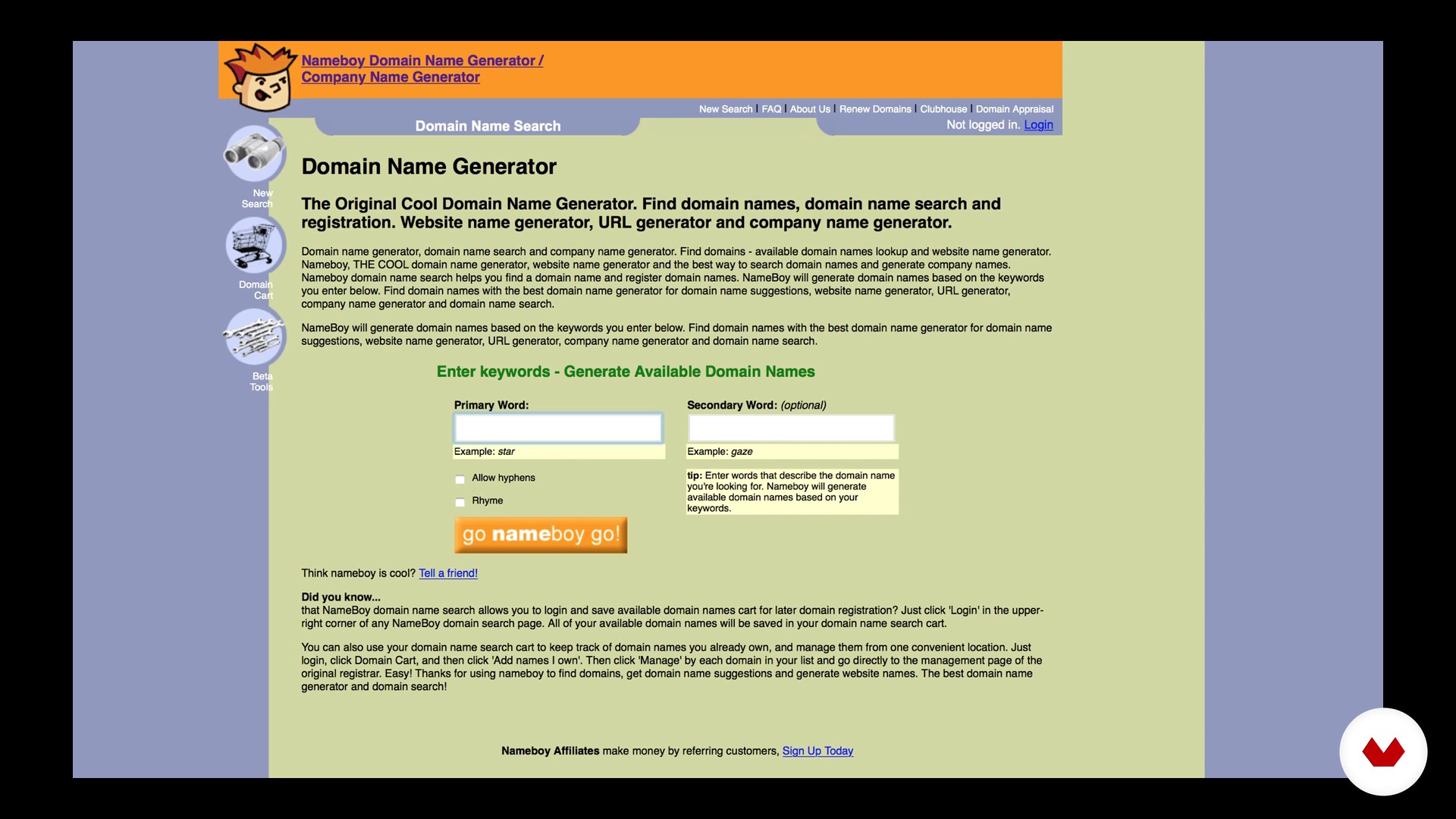
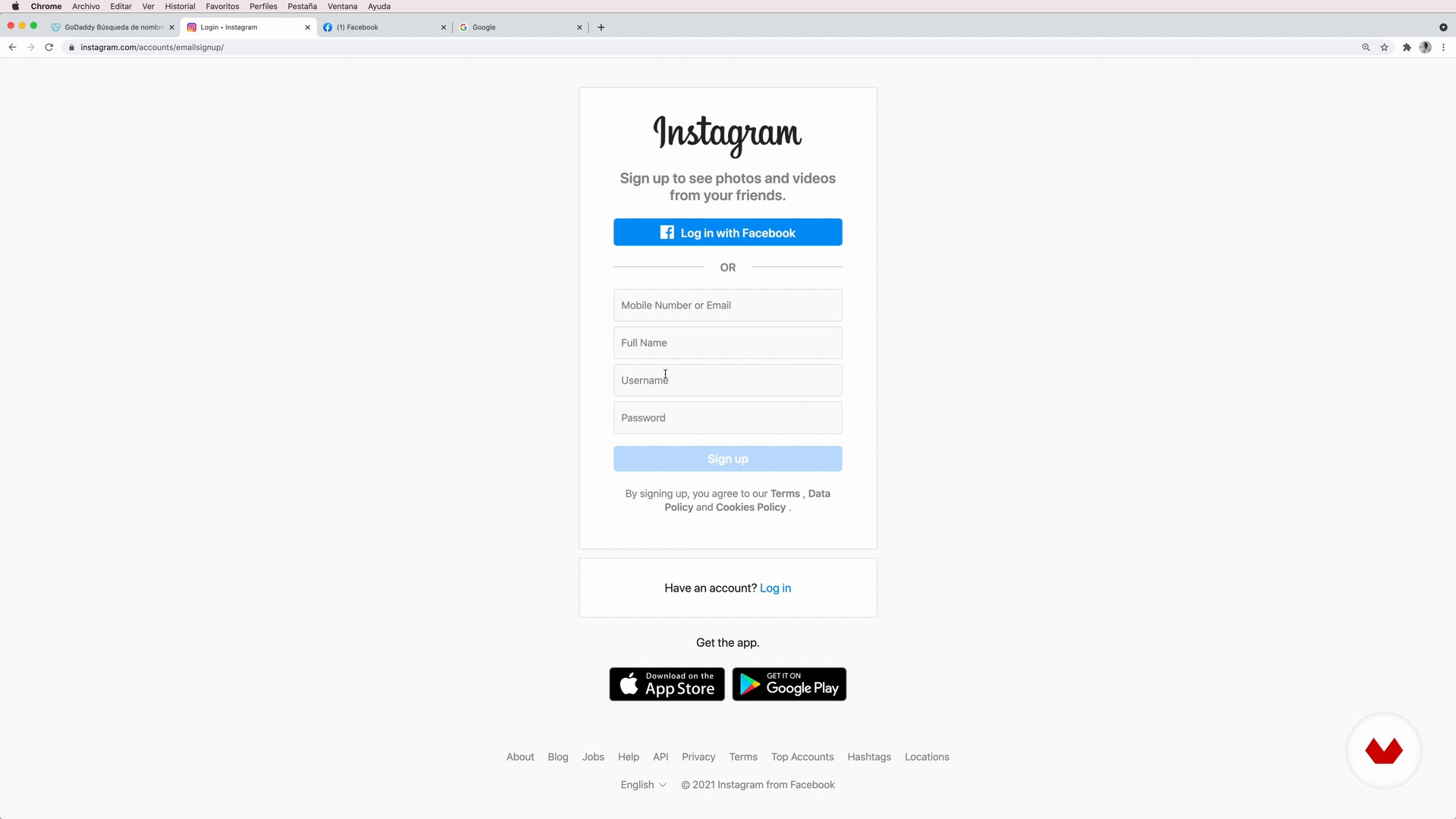
Here you will see how to do accurate and uncomplicated searches to avoid brand conflicts at a commercial level. I will also tell you about the platforms I use to verify the availability of web domains and users for the different social networks.
8m
image
13
Presentation
I will give you some tips to create an entertaining presentation that focuses on getting people to identify your concept, fall in love with your story and choose a winning name.
10m
image
14
How to generate a mood board
I will show you some resources to create a mood board that helps you explain your idea visually, dividing into different resources such as typography, illustrations and icons.
7m
image
3
IP in the Creative Industries and Why It Matters
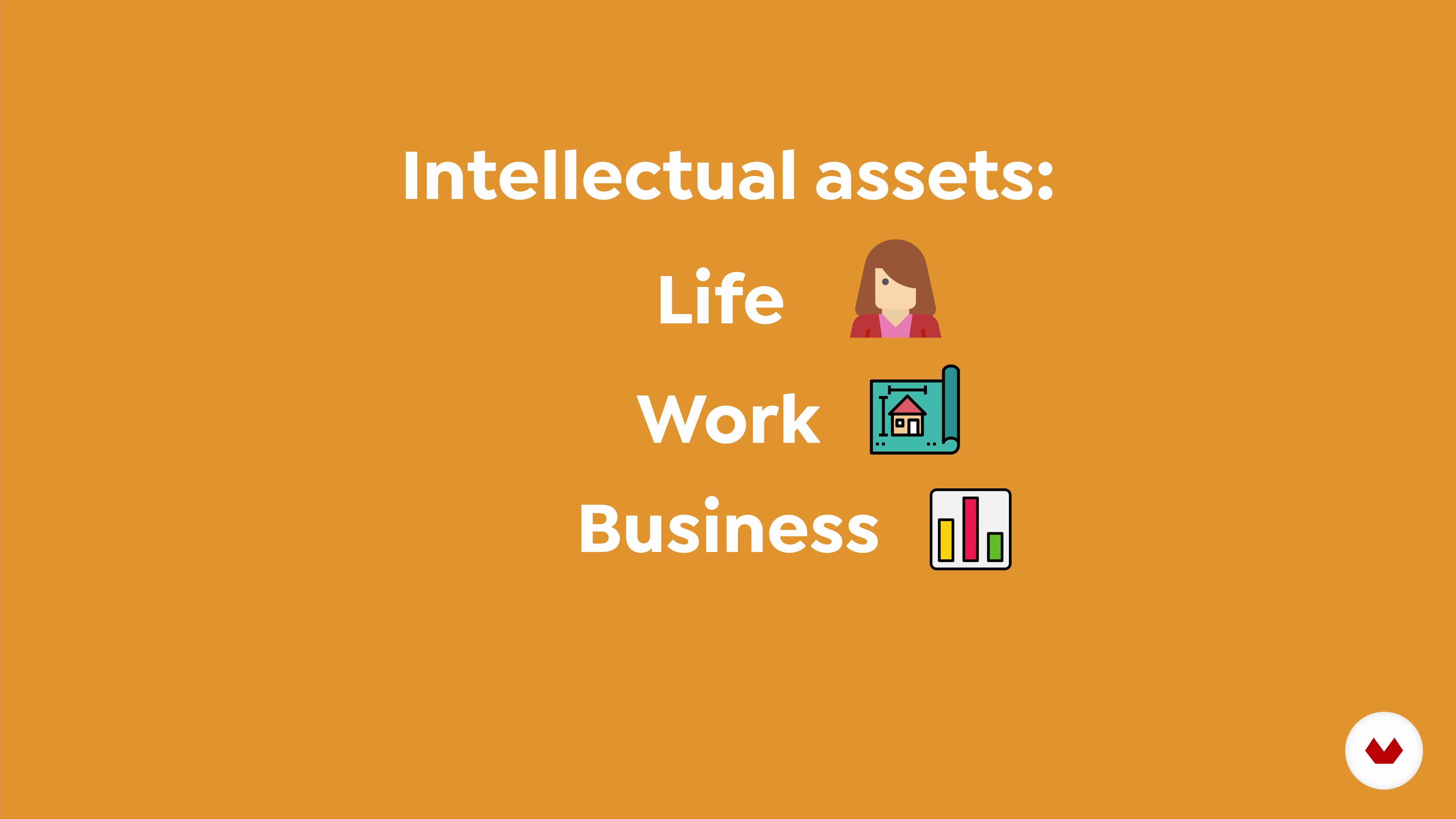
In this lesson you will learn about your final project and how the work we do through the course will help you gather together the intellectual assets and IP that you own.
7m
image
4
Types of IP: Copyright and Trademark
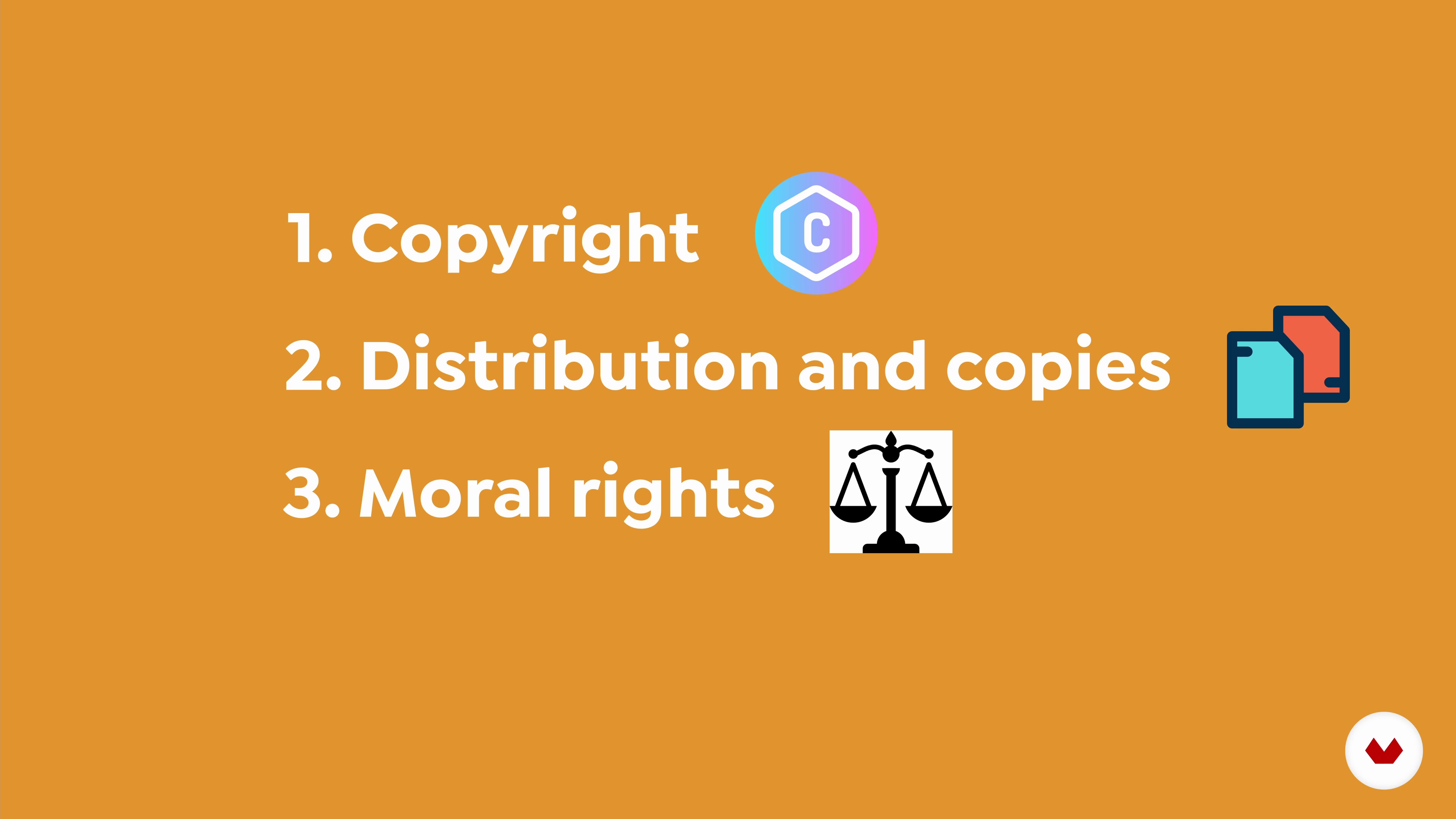
In this lesson we are going to look at two types of intellectual property starting with copyright and trademarks.
13m
image
5
Types of IP: Design Rights and Patents
In this lesson we are going to continue discovering about Intellectual Property - learning about design rights and patents.
7m
image
6
Meeting Our Case Study
Over the next few lessons, we will be meeting Loubna who runs documentary production company Docco. We will be exploring her intellectual assets and IP as we go to see what she owns and what she should put into her audit and IP strategy.
8m
image
7
How to Look For Your IP and How to Audit Your Intellectual Assets
In this lesson I will outline what we will be covering over the next few lessons, as well as a quick reminder of the difference between IP and IA.
1m
image
8
How to Audit Your Existing IP
In this lesson you will have clear guidance on how to collate a list of what IP you own.
15m
image
9
How to Audit Your Existing Intellectual Assets
In this lesson you will be learning how to audit your existing intellectual assets to discover how your journey to here gives you a unique set of building blocks.
7m
image
10
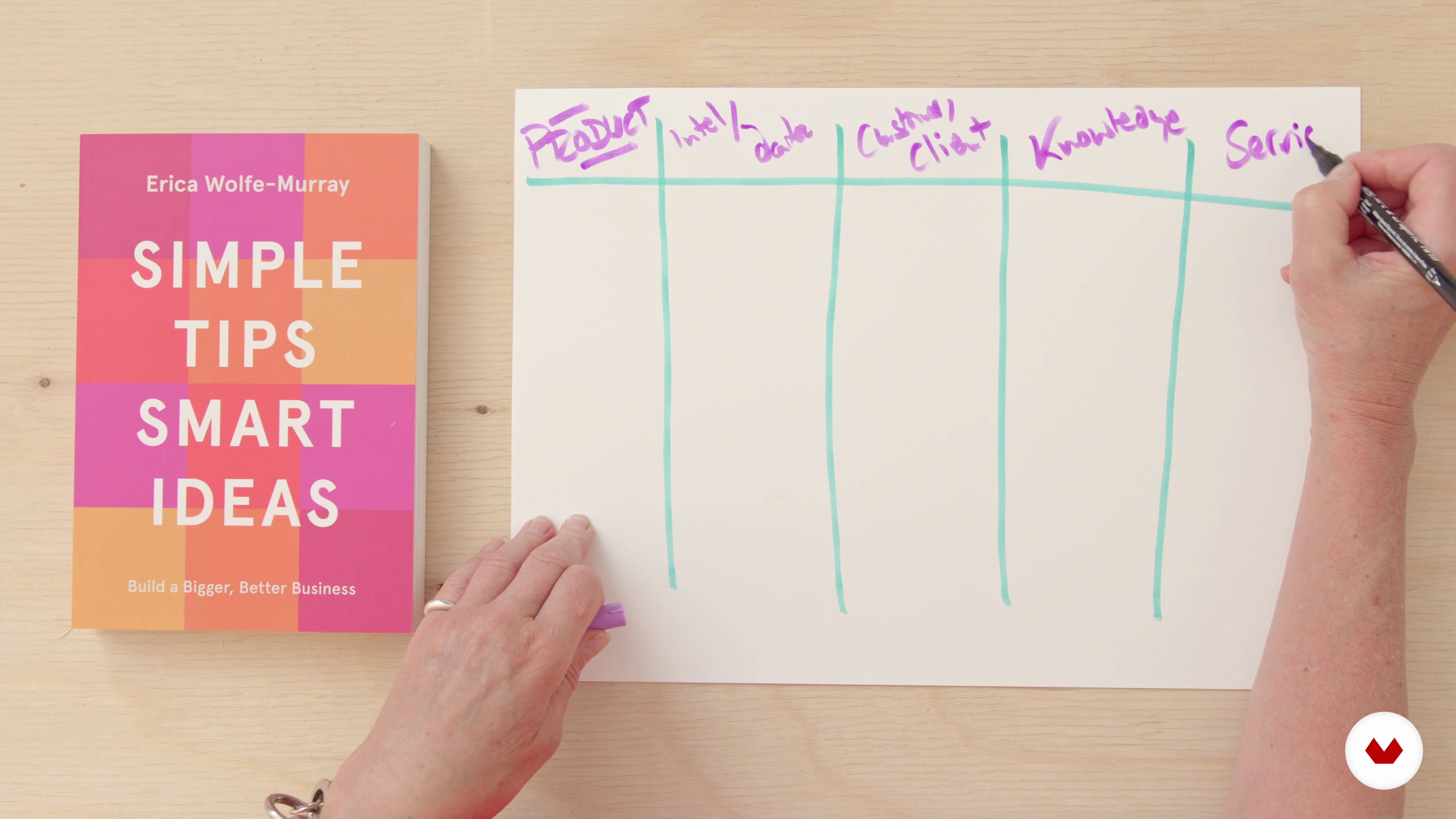
How to Identify Value in Your IP and Your Assets 1
In this lesson we are going to use a simple, but smart tool to help you identify where you could find additional value in your IP and assets.
12m
image
11
How to Identify Value in Your IP and Your Assets 2
Second part of the lesson, where we will continue to work with our case study on breaking down assets and IP to identify value.
12m
image
12
How to Manage Your IP on a Regular Basis
In this lesson we are going to learn how to look after your IP and assets.
10m
image
13
IP Considerations With Your Team and With Freelancers
In this lesson we will think about how employing people or hiring freelancers may impact your IP.
7m
image
14
Using Other People’s IP in Your Projects
In this lesson we will learn what you need to take into consideration when using other people’s intellectual property in your own work.
5m
image
15
IP in Social Media and the Digital World
In this lesson we will be looking at what aspects of IP you need to be aware of when using social media and when working digitally.
5m
image
16
Understanding What a License Is and When to Use It
In this lesson we will be finding out more about licences and when to use them.
4m
image
17
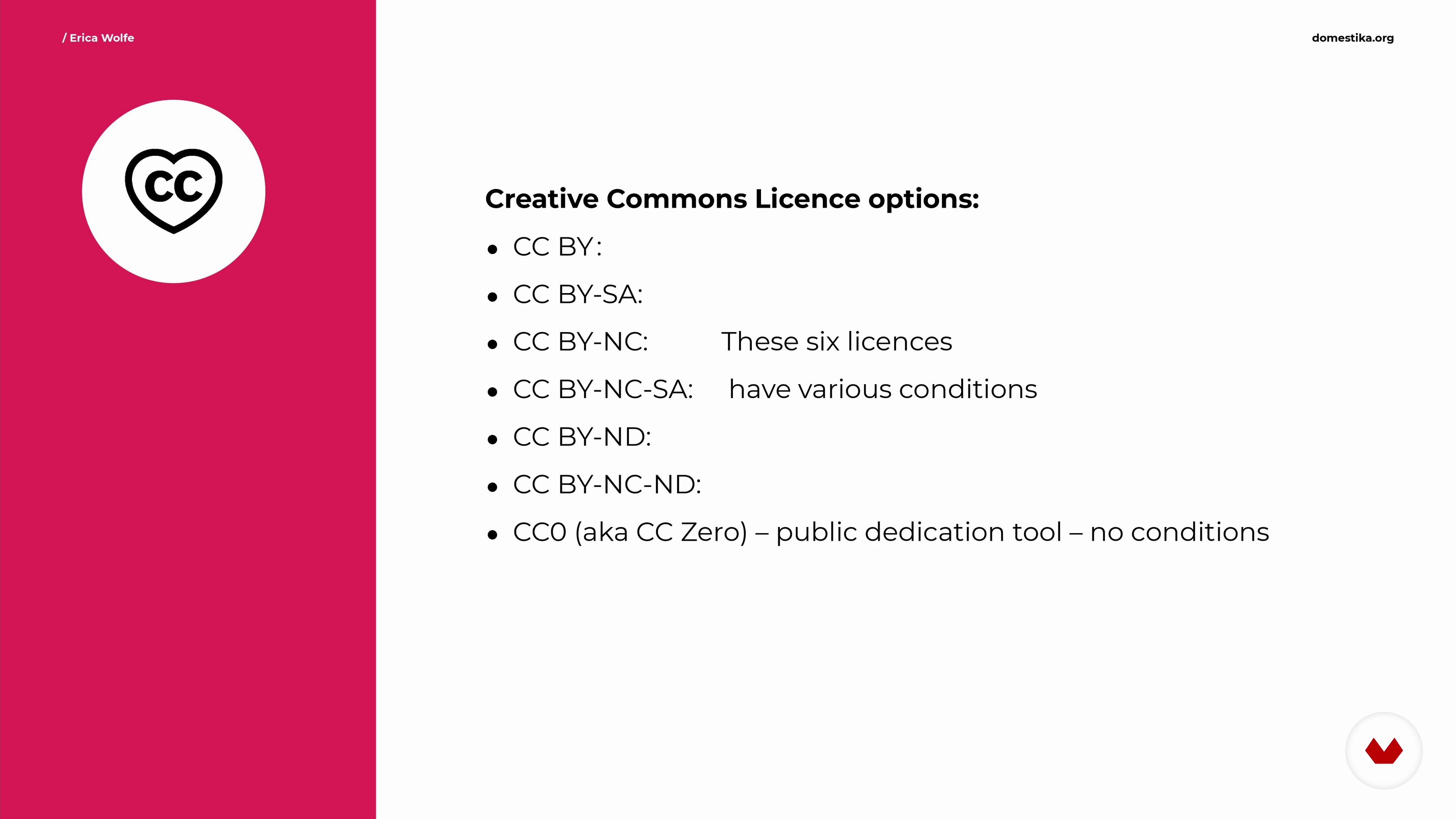
Creative Commons
In this lesson we’ll be looking at what a Creative Commons licence is.
3m
  • 11 students
  • 67 lessons (11h 0m)
  • 64 additional resources (34 files)
  • Online and at your own pace
  • Audio: Spanish, German, English, Spanish (Latam), French, Indonesian, Italian, Dutch, Polish, Portuguese, Romanian, Turkish
  • Spanish · English · Portuguese · German · French · Italian · Polish · Dutch · Turkish · Romanian · Indonesian
  • Level: Beginner
  • Unlimited access forever

What is this course's project?

Students will create a complete verbal identity for a new brand by applying naming strategies, develop a portfolio with creative proposals, conduct effectiveness and memorability tests, and develop a legal protection plan to ensure the viability of the name.

Who is this specialization for?

Aimed at branding professionals, entrepreneurs and creatives who want to perfect their naming skills, this specialization offers a deep understanding of creating memorable brand names, covering everything from strategy to legal protection, strengthening effective and lasting verbal identities.

Requirements and materials

This course requires a computer with an internet connection and basic branding knowledge. Extensive prior experience is not required. A curiosity about language and a desire to explore creativity in name creation are recommended.


Select to get to know your teachers in this specialization course
Read more ↓

What to expect from this specialization course

  • Learn at your own pace

    Enjoy learning from home without a set schedule and with an easy-to-follow method. You set your own pace.

  • Learn from the best professionals

    Learn valuable methods and techniques explained by top experts in the creative sector.

  • Meet expert teachers

    Each expert teaches what they do best, with clear guidelines, true passion, and professional insight in every lesson.

  • Certificates
    Plus

    If you're a Plus member, get a custom certificate for every specialization course. Share it on your portfolio, social media, or wherever you like.

  • Get front-row seats

    Videos of the highest quality, so you don't miss a single detail. With unlimited access, you can watch them as many times as you need to perfect your technique.

  • Share knowledge and ideas

    Ask questions, request feedback, or offer solutions. Share your learning experience with other students in the community who are as passionate about creativity as you are.

  • Connect with a global creative community

    The community is home to millions of people from around the world who are curious and passionate about exploring and expressing their creativity.

  • Watch professionally produced courses

    Domestika curates its teacher roster and produces every course in-house to ensure a high-quality online learning experience.


FAQs

Domestika courses are online classes that allow you to learn new skills and create incredible projects. All our courses include the opportunity to share your work with other students and/or teachers, creating an active learning community. We offer different formats:
Original Courses: Complete classes that combine videos, texts, and educational materials to complete a specific project from start to finish.
Basics Courses: Specialized training where you master specific software tools step by step.
Specialization Courses: Learning paths with various expert teachers on the same topic, perfect for becoming a specialist by learning from different approaches.
Guided Courses: Practical experiences ideal for directly acquiring specific skills.
Intensive Courses (Deep Dives): New creative processes based on artificial intelligence tools in an accessible format for in-depth and dynamic understanding.

All specialization courses are 100% online, so once they're published, specialization courses start and finish whenever you want. You set the pace of the class. You can go back to review what interests you most and skip what you already know, ask questions, answer questions, share your projects, and more.

The specialization courses are divided into different modules. Each one includes lessons, informational text, tasks, and practice exercises to help you carry out your project step by step, with additional complementary resources and downloads. You'll also have access to an exclusive forum where you can interact with other students, as well as share your work and your final project, creating a community around the specialization courses.

You can redeem the specialization courses you received by accessing the redeeming page and entering your gift code.

If you're a Plus member, when you complete a course you've purchased, you'll instantly get your personalized certificate. You can see all your certificates in the Certificates section of your profile. You can download your certificates as PDFs and share the link online. Learn more about certificates.
Naming Specialization: Strategy, Creativity and Verbal Identity. Design, Marketing, and Business course by Domestika

Naming Specialization: Strategy, Creativity and Verbal Identity

A specialization by multiple teachers
Berkeley, United States.
Joined April 2002
  • 11 students