Documentary Photography Projects
A course by Marcos Zegers, Photographer

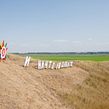
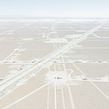

Create a photography series with a critical eye and personal style

Telling stories through photographs to convey ways of life, experiences, and situations from your own perspective is an art form that photographer Marcos Zegers has been refining since he was very young. Through his documentary projects, he acts as a bridge between stories and people. His work has been exhibited in France, Great Britain, China, and Spain. His photographs have also graced the pages of The New York Times and he was awarded a prize at the POY (Picture of the Year) Latam 2019 contest in the environment category.
In this online course, learn how to develop a documentary photography series, building your own story and conveying it visually. Choose a number of urban themes, selecting some that are based on your own city, and convey these through a photography series with Marcos' work methodology.
What will you learn in this online course?
12 lessons & 16 downloads
What's included in this course?
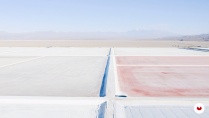
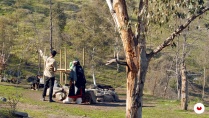
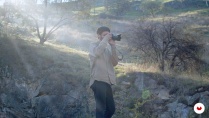
Meet Marcos and learn about his architectural background and how that led him to discover his interest in territory and its scale. He explains how his work gained more strength and social meaning as he carried out documentary projects in places like the Atacama desert and Russia. Find out who his main references are in terms of photography and photo series and discover the different perspectives with which they approach a subject.
Learn about Marcos’ process to create a documentary photo series. Start by analyzing the importance of choosing a subject. Then, do some thorough research before deciding on a specific "case" or subject to photograph and how to approach it.
Once you’ve defined a theme and several subjects, it’s time to plan your first outing. Take some practical considerations on board and decide whether to produce a photography series that narrates through a story or through repetition.
By way of some practical examples, discover how you must face different situations to obtain a genuine result.
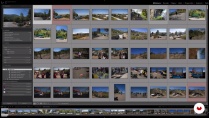
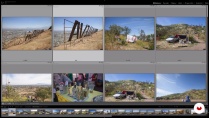
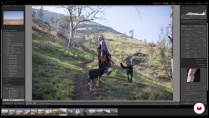
Select the images according to Marcos’ advice to portray your subject in the best way. Learn about the main criteria for retouching documentary photographs, thereby reflecting a unique identity.
Now you’re all set to create your own photography series with a critical eye and signature style.
- 97% positive reviews (216)
- 7,404 students
- 12 lessons (2h 10m)
- 16 additional resources (4 files)
- Online and at your own pace
- Available on the app
- Audio: Spanish, German, English, French, Italian, Portuguese, Turkish
- Spanish · English · Portuguese · German · French · Italian · Polish · Dutch · Turkish
- Level: Beginner
- Unlimited access forever
What is this course's project?
Develop a documentary photographic series critiquing a specific theme and create a visual story that can be published in a magazine or contest.

Projects by course students


Who is this online course for?
Photography enthusiasts and amateurs who seek to develop projects rooted in contemporary documentary photography.
Requirements and materials
You need basic knowledge of photography and Adobe Lightroom or another image editing software.
In terms of materials, you need a camera and a computer with a photo editing program installed.

Reviews

Marcos Zegers
A course by Marcos Zegers
Mark Zegers is a Chilean photographer with a degree in architecture. His documentary photography work focuses mainly on geopolitical and territorial conflicts, which he produces in a contemporary and multidisciplinary style.
Among his projects is an investigation that was published in The New York Times about the young people who left Chile for Russia in 1973 and were unable to return to their country. The long-term project that earned him a POY Latam 2019 award in the environment category is his series focused on the history of extraction (mining) in the Atacama Desert, Chile, and its current relationship with lithium in South America. This visual essay has been exhibited in Chile, Shanghai, and Paris as well as at the AIPAD Photography Show 2019 in New York, the Photo London fair, and as part of World Press Photo's 6x6 program.
Content
-
U1
Introduction
-
Presentation
-
Influences
-
What will we do in the course
-
-
U2
From the choice of subject and case, to the field trip
-
Why is something interesting?
-
What do we photograph?
-
Planning
-
Photographing the case
-
-
U3
Retouching and publishing
-
Selecting the images
-
Assembling the photo series
-
Finding the retouching of the series
-
Finding the retouching of the series (part 2)
-
Revealed in LR and export for publication
-
-
FP
Final project
-
Documentary photography projects
-
What to expect from a Domestika course
-
Learn at your own pace
Enjoy learning from home without a set schedule and with an easy-to-follow method. You set your own pace.
-
Learn from the best professionals
Learn valuable methods and techniques explained by top experts in the creative sector.
-
Meet expert teachers
Each expert teaches what they do best, with clear guidelines, true passion, and professional insight in every lesson.
-
Certificates
PlusIf you're a Plus member, get a custom certificate signed by your teacher for every course. Share it on your portfolio, social media, or wherever you like.
-
Get front-row seats
Videos of the highest quality, so you don't miss a single detail. With unlimited access, you can watch them as many times as you need to perfect your technique.
-
Share knowledge and ideas
Ask questions, request feedback, or offer solutions. Share your learning experience with other students in the community who are as passionate about creativity as you are.
-
Connect with a global creative community
The community is home to millions of people from around the world who are curious and passionate about exploring and expressing their creativity.
-
Watch professionally produced courses
Domestika curates its teacher roster and produces every course in-house to ensure a high-quality online learning experience.
FAQs
You’ll learn how to choose and narrow down photographic topics, research relevant cases, integrate archives and press materials, develop coherent visual narratives, edit series, and plan the publication of projects in various media and editorial formats.
This course is designed for people with basic photography skills who want to dive deeper into documentary projects and build a strong visual narrative. It’s perfect for intermediate-level photographers.
Prior experience in documentary photography isn’t required, but you should have basic photography knowledge and camera skills. The course will guide you through research, editing, and publishing photographic projects.
You’ll need a digital or film camera, a computer with editing software like Lightroom, and internet access. Having personal or press archives for narrative exercises is recommended.
You’ll learn observation methods, media research, and environmental analysis to identify and narrow down topics with strong narrative potential and social relevance in documentary photography.
Yes, the course covers editing techniques, image selection, creating narrative sequences, and organizing photo series to maintain aesthetic and thematic consistency.
You’ll work on ways to interact with subjects, use natural light, compose shots, and capture the environment to create intimate, contextual portraits for documentary projects.

Excelente curso para ir creando una narrativa visual en los primeros trabajos de campo.
Curso excelente, com abordagem simples e didática. Ótimo para quem quer embarcar na fotografia documental e ter boa estratégias de por onde começar. Organizado processos e entendendo necessidades.
Course content is fascinating, so is the photographer. Unfortunately, only recommended if you understand Spanish. Subtitles were generated automatically and are very error-prone (as is the case with all courses), the audio track doesn’t match the spoken content or shown in the subtitles + keeps cutting out + plays way too fast. A frustrating experience – because of this! Prices at Domestika are outstanding, but I would pay a lot more if that meant I’d get proper translations and audio tracks.
Nothing major but some really good tips!
perfect !