Introduction to 3D Vehicle Modeling
A course by Alber Silva3D Artist
A course by Alber Silva, 3D Artist

Learn how to model, texture, and render your first car with Maya, Substance Painter, and Keyshot
If you're passionate about vehicles, not only because of their horsepower but also their design, in this course, enjoy learning how to model a car in 3D from scratch, with the guidance of a professional like Alber Silva, a 3D artist specialized in vehicle and machinery modeling who makes a living from his passion for car design. In his job as 3D Modeler for WebCreek Ecuador, he develops assets used in training systems through virtual reality, applied to the oil industry and, in parallel, he collaborates as a 3D modeler for companies such as Maersk and Moving Message Co. and their client VectorZero.
In this online course, learn to model a car step by step with Autodesk Maya, Substance Painter, Keyshot, and Adobe Photoshop. First you will define the project, you will search for reference images, you will learn modeling techniques, optimization, UV's cuts, texturing and export of maps, to finally import and render your car with the maximum level of detail.
What will you learn in this online course?
52 lessons & 12 downloads
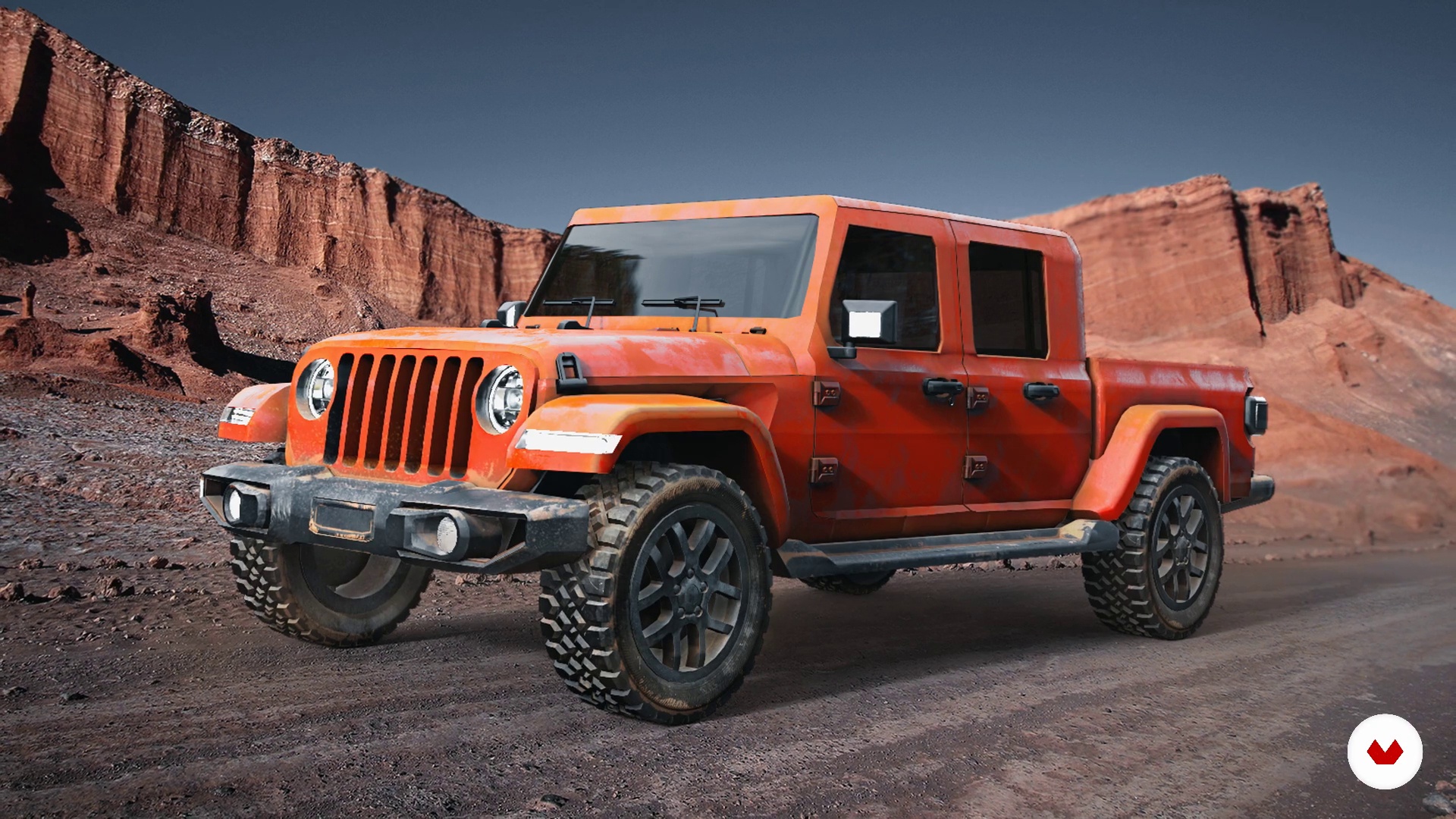
What will we do during the course?
1 minute, 19 seconds
Rendering Modeling
8 minutes, 54 seconds
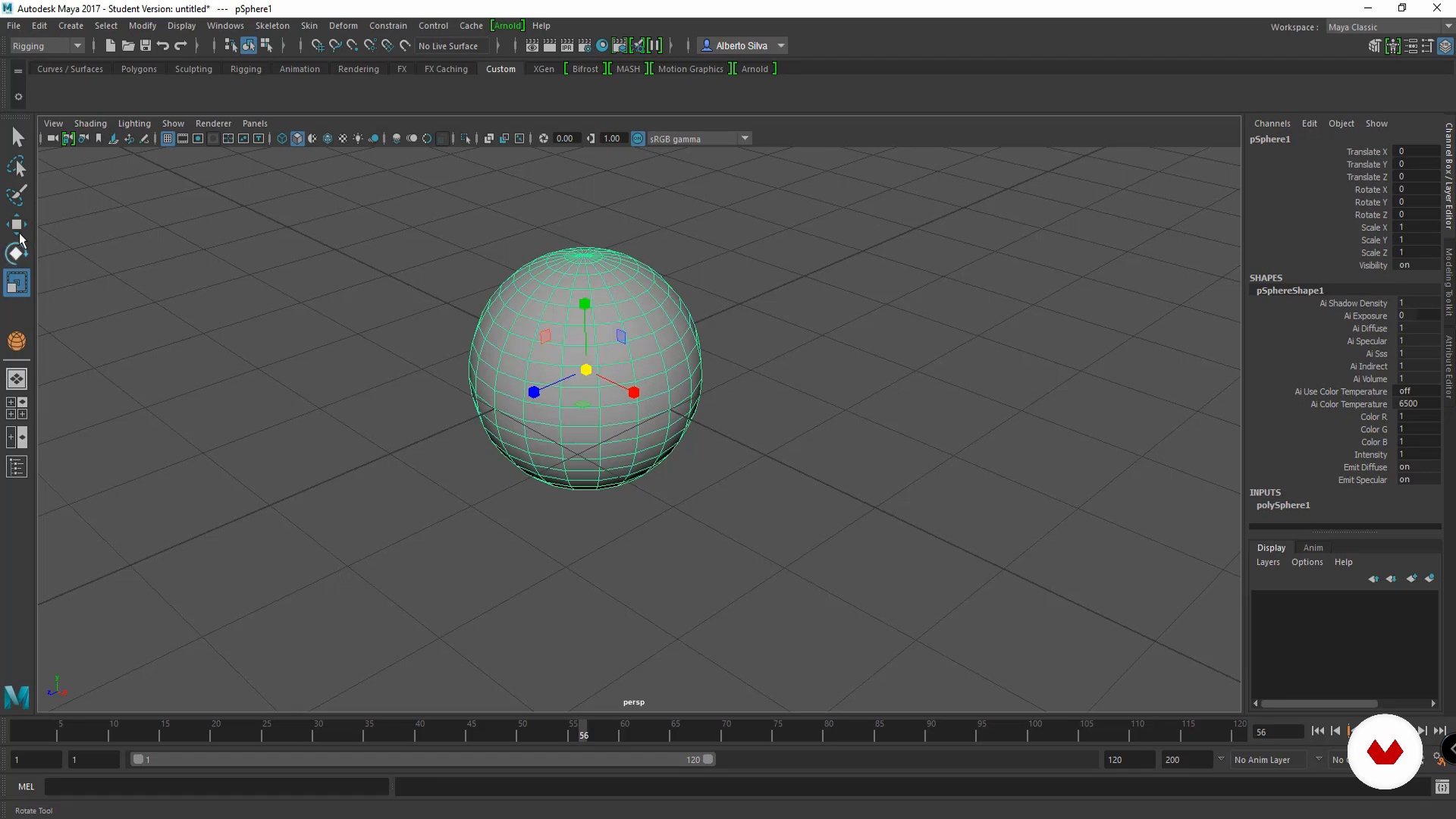
Autodesk Maya, General Review, basic figures
14 minutes, 0 seconds
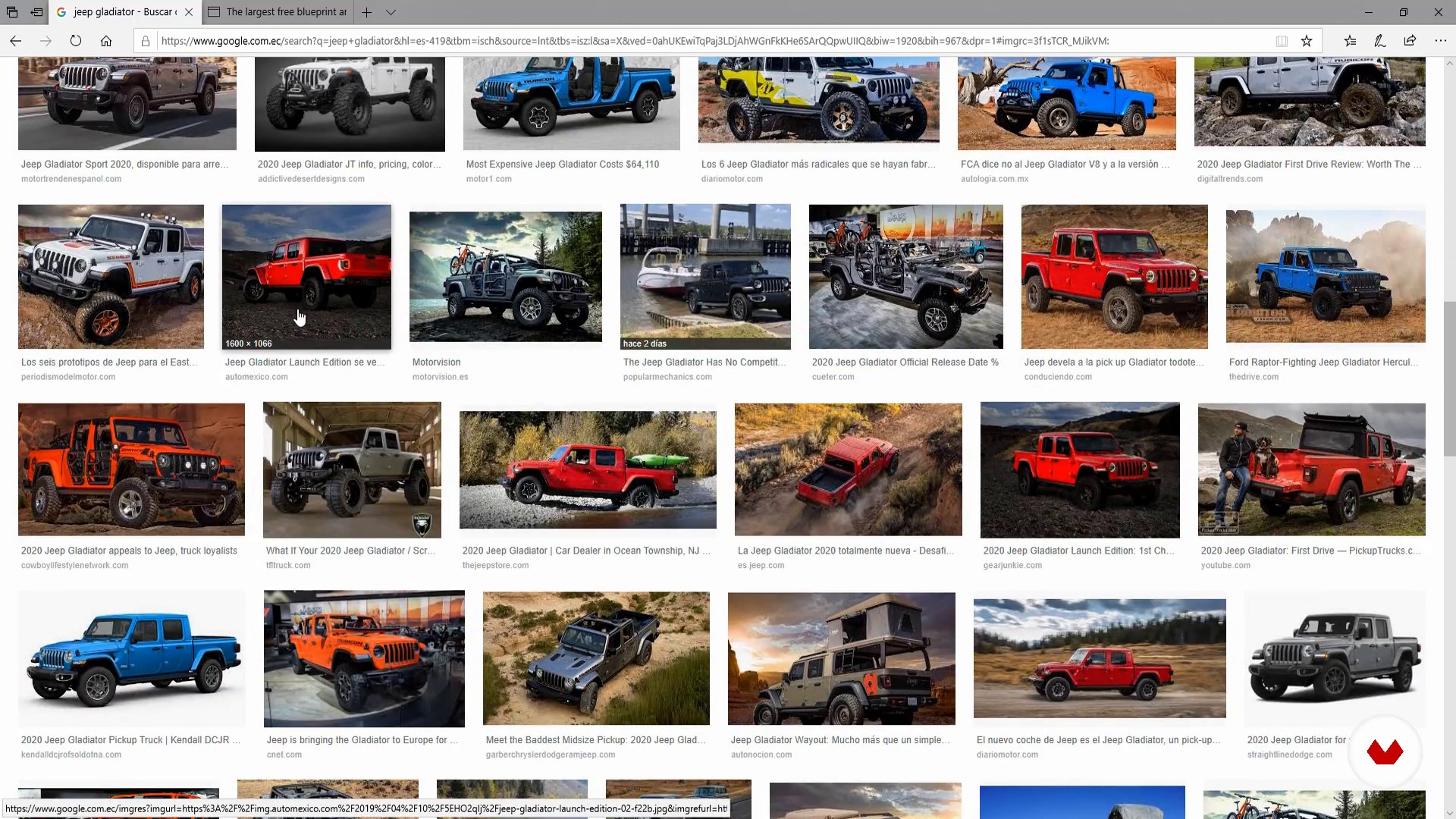
Reference search, blueprints of our model to work
8 minutes, 42 seconds
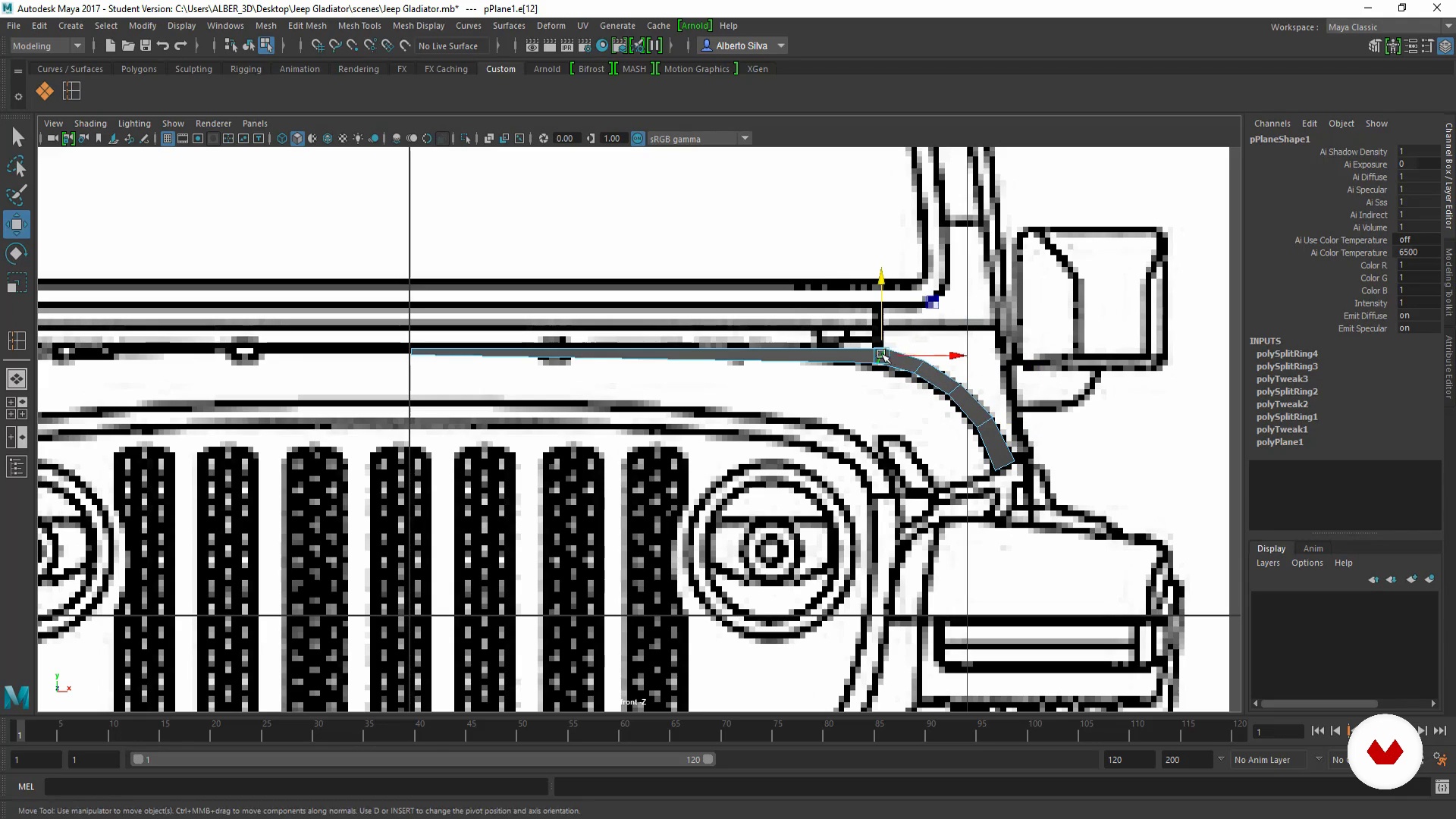
Project management and hood modeling
18 minutes, 3 seconds
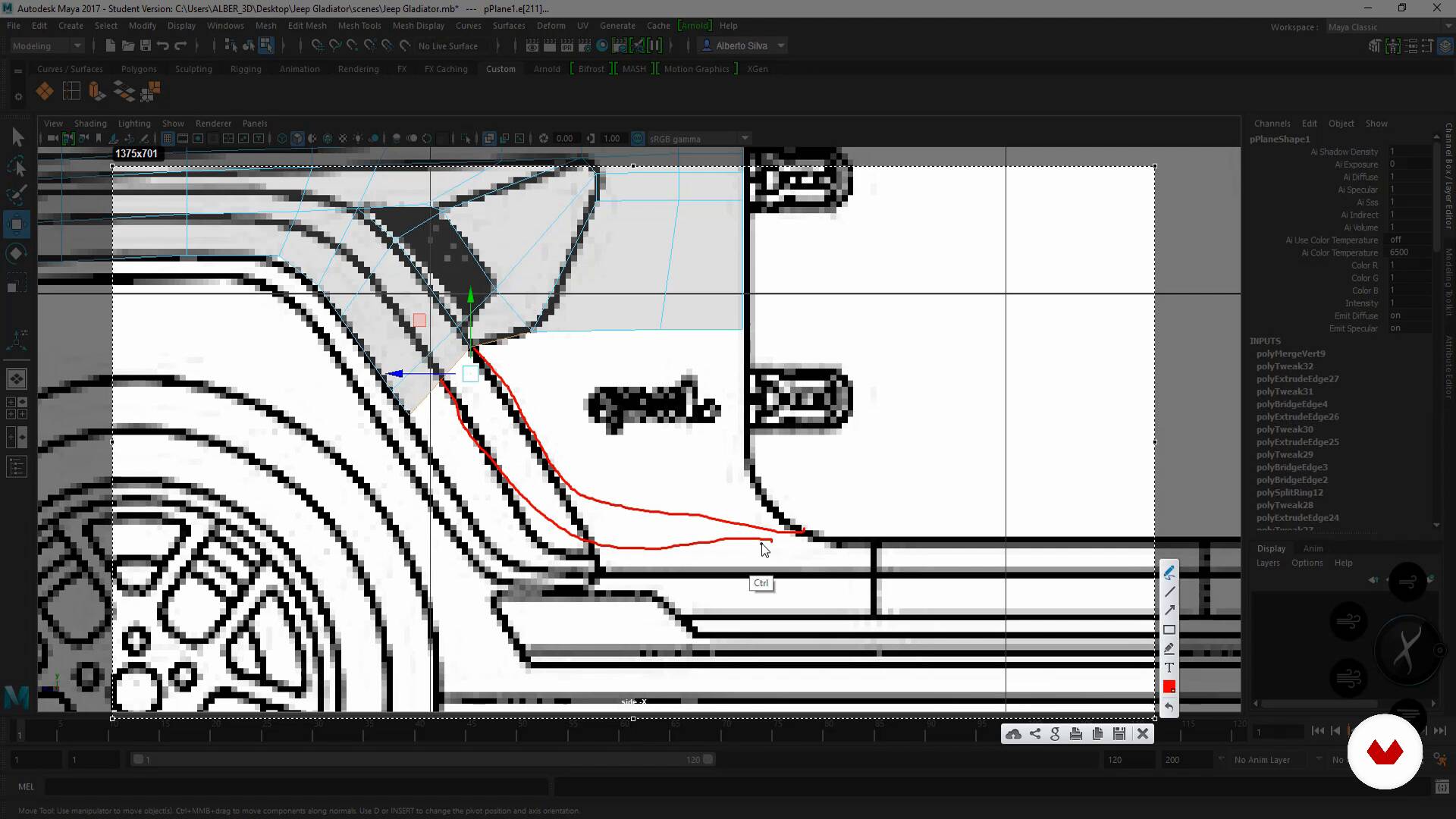
Modeling the sides, fenders and roof - part 1
12 minutes, 43 seconds
What's included in this course?
Begin by meeting Albert Silva, who tells you about his professional journey and how he entered the world of 3D simulation. See his main influences, from automotive brands to artists specialized in Hard Surface and car texturing and modeling, among other skills.
Then familiarize yourself with the three scenarios where car modeling is used, to be able to better define the focus of your modeling project, whether it's for rendering, video games, or augmented reality.
Alongside Alber, take a brief tour of the Autodesk Maya interface, one of the most popular 3D production software across different industries. Learn how to navigate a project, move the camera, and edit shapes. Then look for photographic references of each detail of the vehicle that you want to work on, in order to model it accurately.
Start modeling the hood, to make it easier for you to accommodate the polygons of the mesh, and continue creating the rest of the components—sides, fenders, doors, windows, roof, tires, front and rear lights, and additional accessories, and finish off with some modeling details.
Once the modeling stage is finished, review each piece created, renaming them with Outliner and smoothing their vertices. Next, make the UV cuts and organize each cut piece manually with the Layout tool.
Review the main functionalities and interface of Substance Painter, to later import and texture your model using the available libraries.
Move on to make a simple render to explore the Keyshot functionalities, importing one of the scene's elements and get to know the render engine's interface and tools of this render engine. Now configure the lighting, camera, and blackplate for rendering.
Wrap things up with the post-production of your render, to correct the color, lighting, and shadow in Adobe Photoshop.
Recommended software & tools for this course
What is this course's project?
Model, optimize, texture, and render a Jeep Gladiator truck in a desert environment. The process focuses mainly on the textures and lighting.
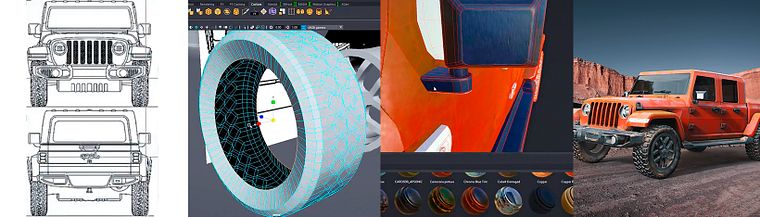
Projects by course students


Who is this online course for?
Anyone passionate about cars who wants to get started with Maya and learn the process of modeling a car in 3D from scratch.
Requirements and materials
Alber explains everything from scratch, so all you need is a desire to learn to model.
In terms of materials, you need a computer installed with Autodesk Maya, Substance Painter, KeyShot, and Adobe Photoshop (you can download the trial or student versions to take the course). It's also very important that your computer has a dedicated graphics card so that you don't have problems when moving your project.
Reviews
- 10 months ago
Estoy viendo que utiliza una tableta, y no ha explicado nada sobre eso.
- 1 year ago
gracias a este autor del curso he aprendido a manejar con soltura Autodesk Maya, de momento estoy en la etapa del modelado y me ha costado un poco por que sabia muy poco de Maya, pero estoy deseando acabar el curso por que estoy aprendiendo muchisimo y creo que con los otros programas me ocurrira igual.Ojala este profesor hiciese algun otro de algun coche mas deportivo por ejemplo....
- 1 year ago
Me parecio bueno el curso, completo y bien explicado
- 1 year ago
Un curso muy completo y explicado paso a paso, perfecto
- 1 year ago
me parece un exelente curso como base e introduccion al diseño 3d en especifico en el area automotriz

Content
- U1
Introduction
- Presentation
- Influences
- What will we do during the course?
- U2
Definition of the modeling project
- Rendering Modeling
- Autodesk Maya, General Review, basic figures
- Reference search, blueprints of our model to work
- U3
Modeling stage
- Project management and hood modeling
- Modeling the sides, fenders and roof - part 1
- Modeling the sides, fenders and roof - part 2
- Modeling the sides, fenders and roof - part 3
- Modeling the cargo box - part 1
- Cargo box modeling - part 2
- Creating the mask, front and rear bumper - part 1
- Creating the mask, front and rear bumper - part 2
- Creating the mask, front and rear bumper - part 3
- Creating the mask, front and rear bumper - part 4
- Creating the mask, front and rear bumper - part 5
- Detailing of body lines, chamfering and part separation - part 1
- Detailing of body lines, chamfering and part separation - part 2
- Detailing of body lines, chamfering and part separation - part 3
- Windows
- Symmetry
- Front and rear headlights - part 1
- Front and rear headlights - part 2
- Front and rear headlights - part 3
- Front and rear headlights - part 4
- Tires - part 1
- Tires - part 2
- Tires - part 3
- Tires - part 4
- Tires - part 5
- Additional accessories and latest modeling details
- Additional accessories and latest modeling details - part 2
- Additional accessories and latest modeling details - part 3
- Additional accessories and latest modeling details - part 4
- Additional accessories and latest modeling details - part 5
- Additional accessories and latest modeling details - part 6
- Additional accessories and latest modeling details - part 7
- U4
Optimized mesh, UVS cutting and Udims preparation
- Part smoothing and designation of parts in the Outliner - part 1
- Part smoothing and designation of parts in the Outliner - part 2
- UV cutting of each of the pieces
- Annex on the cutting and organization of UVs
- U5
Import, bake, texturing and exporting maps from Susbtance Painter
- Main features of Substance Painter
- Importing and texturing our model, using the libraries: Materials and Smart Materials - part 1
- Importing and texturing our model, using the libraries: Materials and Smart Materials - part 2
- Importing and texturing our model, using the libraries: Materials and Smart Materials - part 3
- Importing and texturing our model, using the libraries: Materials and Smart Materials - part 4
- Configuration of maps for texture export.
- U6
Quick Render on KeyShot
- Importing the scene into KeyShot and configuring materials - part 1
- Importing the scene into KeyShot and configuring materials - part 2
- Assignment of backplate, lighting, camera and render
- U7
Postproduction on Rendering
- Color correction, highlight and shadow enhancement in Photoshop
- FP
Final project
- Final project
What to expect from a Domestika course
Learn at your own pace
Enjoy learning from home without a set schedule and with an easy-to-follow method. You set your own pace.
Learn from the best professionals
Learn valuable methods and techniques explained by top experts in the creative sector.
Meet expert teachers
Each expert teaches what they do best, with clear guidelines, true passion, and professional insight in every lesson.
Certificates
PLUSIf you're a Plus member, get a custom certificate signed by your teacher for every course. Share it on your portfolio, social media, or wherever you like.
Get front-row seats
Videos of the highest quality, so you don't miss a single detail. With unlimited access, you can watch them as many times as you need to perfect your technique.
Share knowledge and ideas
Ask questions, request feedback, or offer solutions. Share your learning experience with other students in the community who are as passionate about creativity as you are.
Connect with a global creative community
The community is home to millions of people from around the world who are curious and passionate about exploring and expressing their creativity.
Watch professionally produced courses
Domestika curates its teacher roster and produces every course in-house to ensure a high-quality online learning experience.
FAQs
You’ll learn hard surface 3D modeling techniques, texturing, optimization, how to use automotive visual references, and asset creation for virtual reality using tools like Maya, Blender, and Photoshop.
This is an intermediate-level course, so having basic knowledge of 3D modeling and experience with software like Maya or Blender is recommended.
You’ll need a computer capable of running Maya, Blender, and Photoshop, plus internet access to download references and materials. Basic 3D modeling knowledge is recommended.
The course mainly uses Maya and Blender for modeling, and Photoshop for image editing and 3D model texturing.
Hard surface modeling involves creating objects with hard, detailed surfaces—like cars and machinery—using techniques like subdivision, extrusion, and geometry tweaking in 3D software.
Yes, the course teaches how to reduce polygon counts, optimize meshes, and prepare efficient 3D models for games and virtual reality experiences.
You’ll learn how to gather, organize, and align blueprints and reference images to model vehicles accurately in terms of proportions and details.