Ceramics at Home for Beginners
A course by Paula Casella BiaseCeramic Artist
A course by Paula Casella Biase, Ceramic Artist

Learn modeling and enameling techniques to create decorative pieces
Working with clay can be another form of meditation, especially if you do it with care and passion like Paula Casella, a graduate in fine arts and the founder of Bambucito Cerámica Orgánica. With 15 years' experience in this artisanal craft, she teaches you everything you need to know to get started in ceramics.
In this course, learn how to model and glaze ceramics at home from scratch, creating some pieces with unbaked clay and others with fired clay (you need access to a kiln for the latter). Learn the nuanced differences between oven bake clay and air dry clay, as well as how to make plaster molds that you can reuse to create an infinite number of pieces in future projects.
This course complements Ceramic Glazing for Beginners, where Paula teaches you the basics for decorating and glazing your ceramic pieces.
Featured review
Yes, it was fun, well explained, good quality videos, lots of extra resources.
Very clear instructions and a friendly fun teacher.
What will you learn in this online course?
21 lessons & 9 downloads
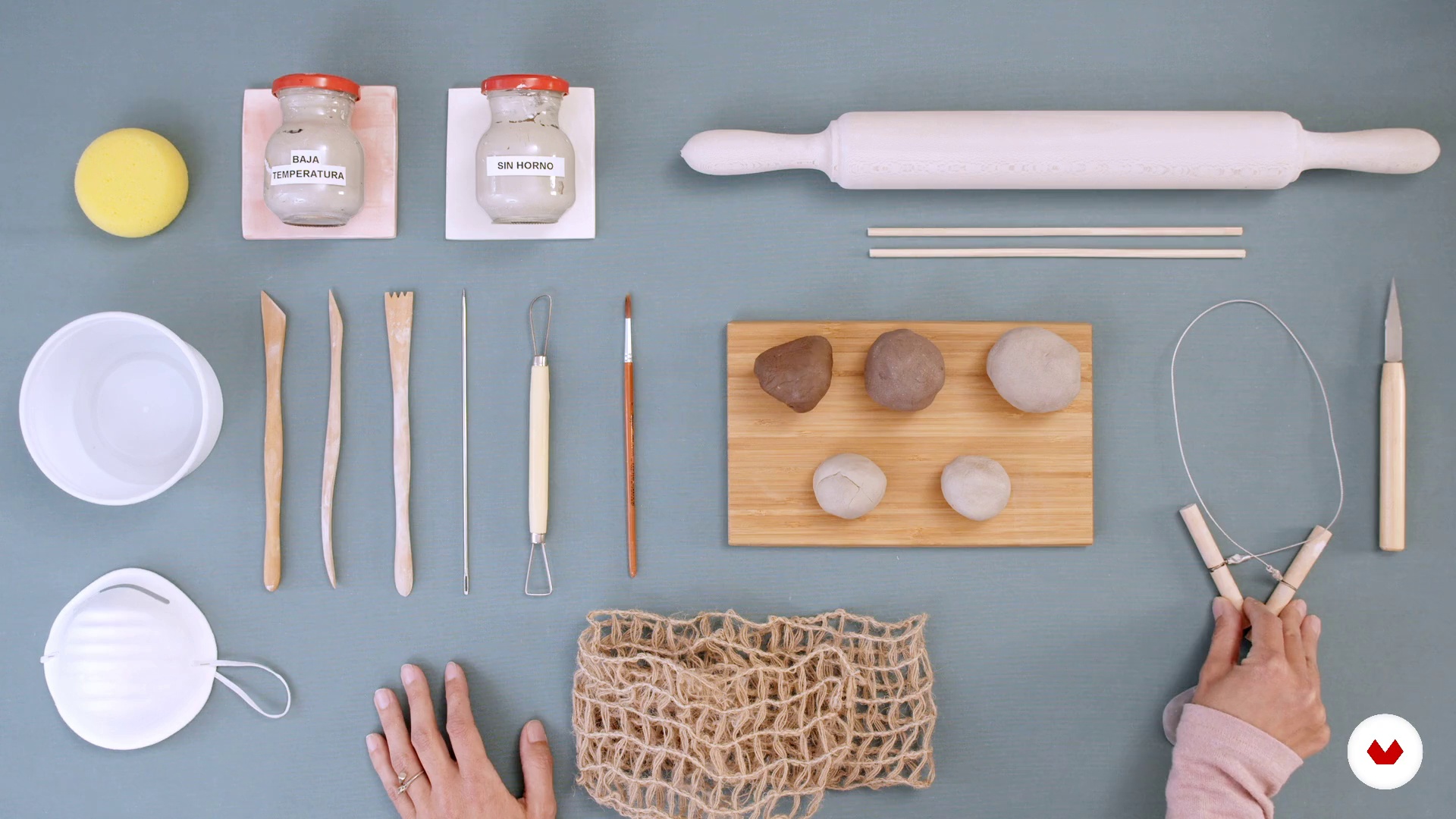
Meet the different types of clay and tools
12 minutes, 21 seconds
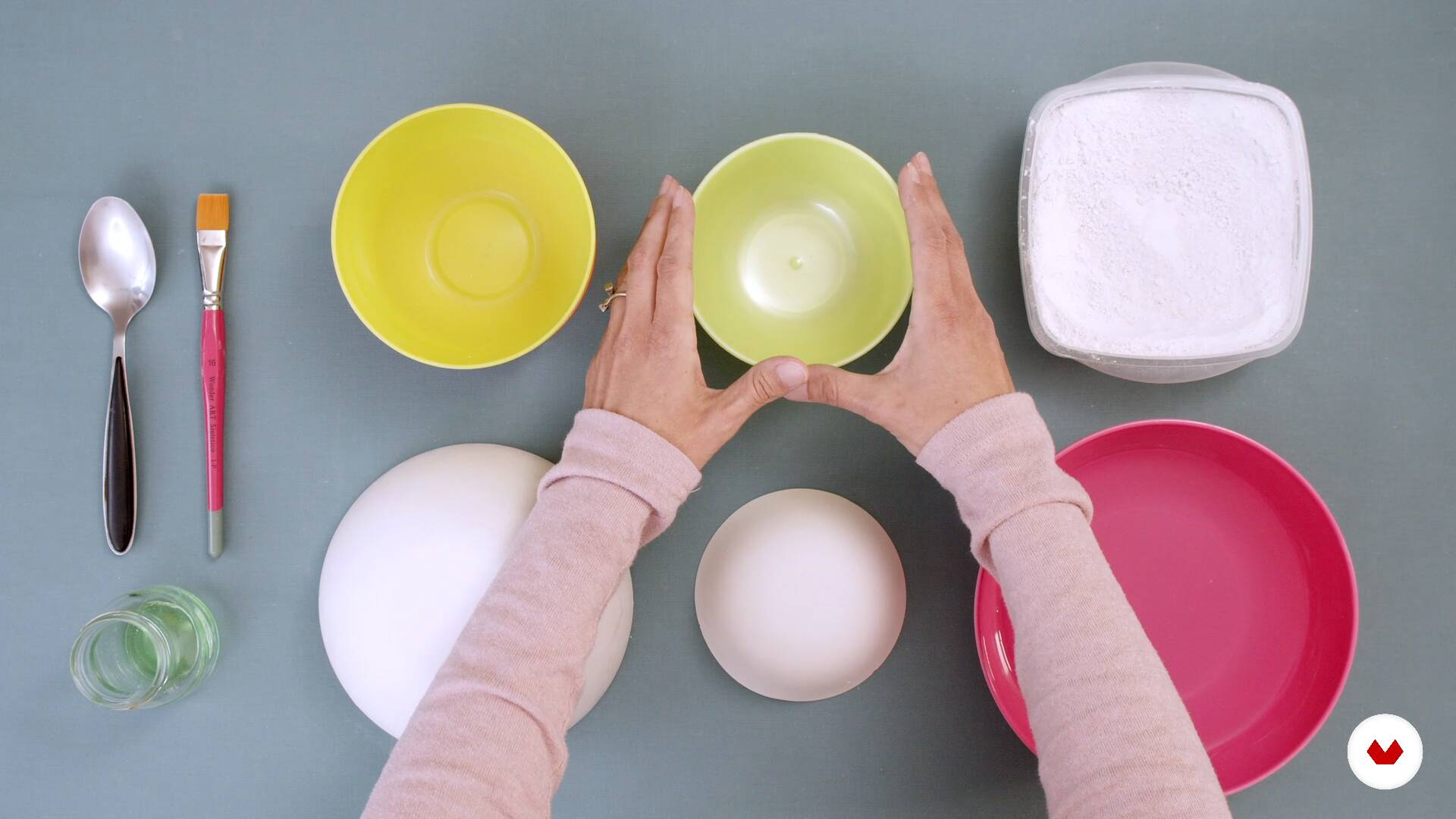
What you need to make molds
4 minutes, 52 seconds
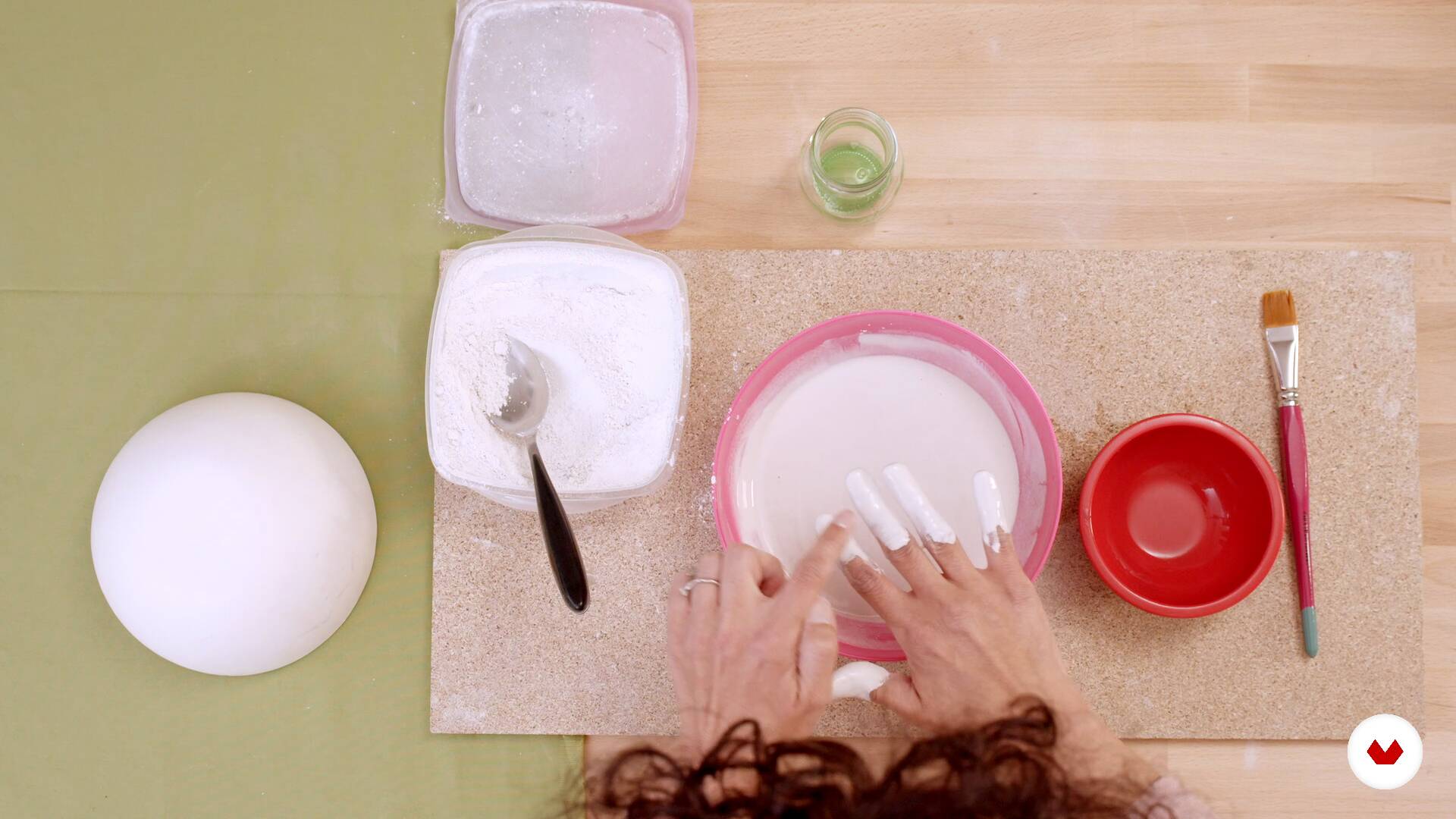
Making a plaster cast
8 minutes, 2 seconds
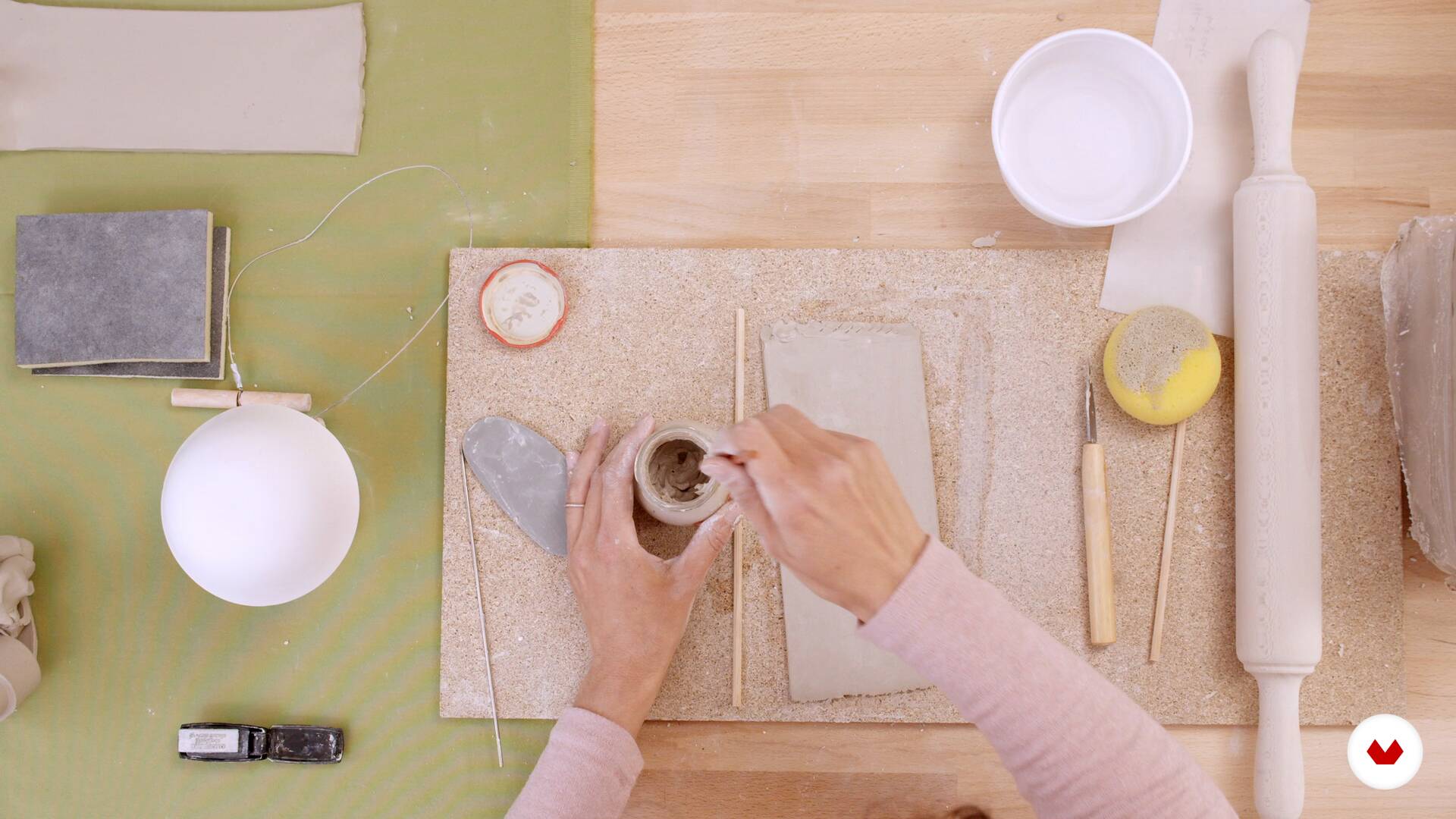
Modeling using Slabbing I
18 minutes, 20 seconds
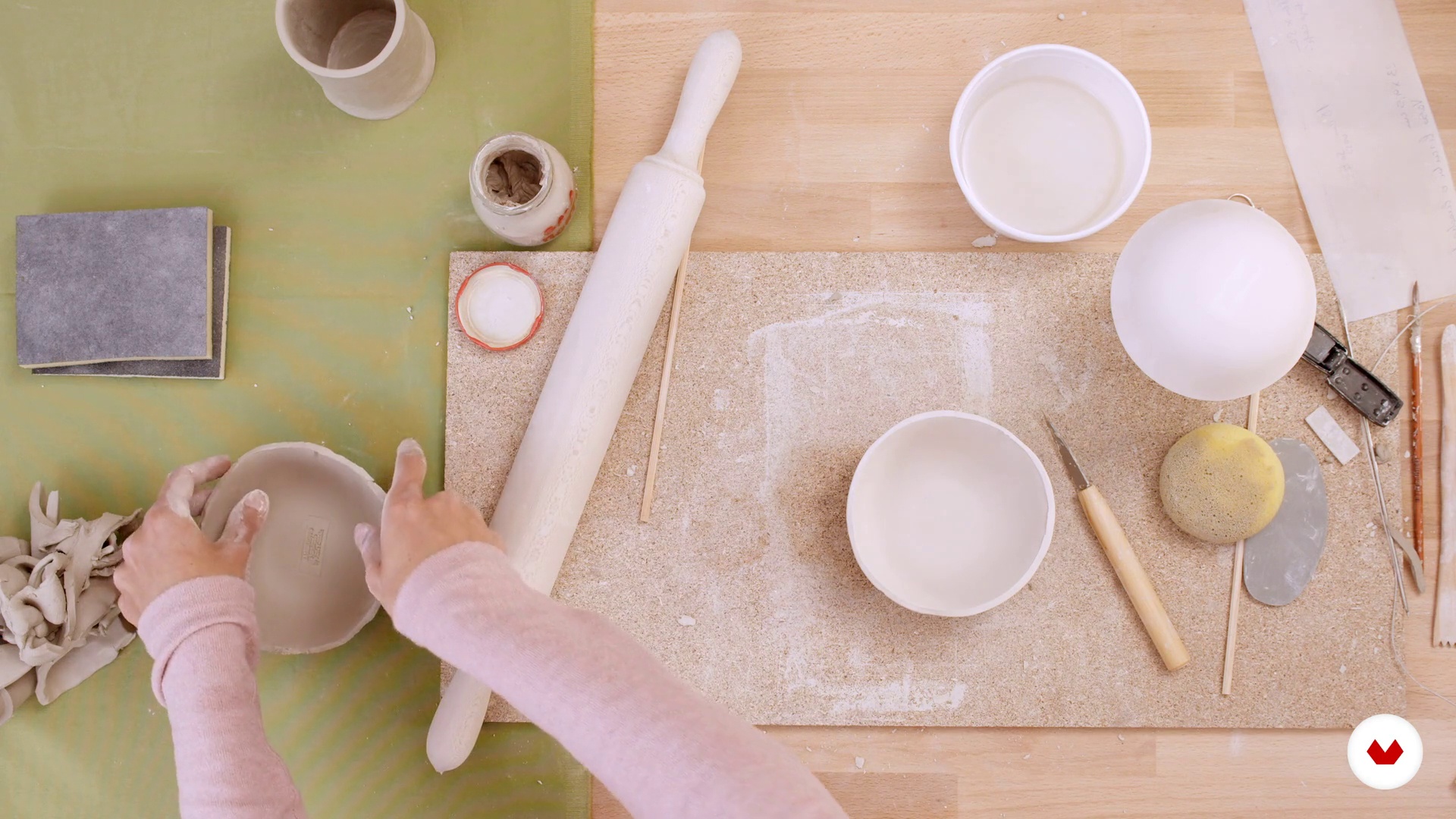
Modeling using Slabbing II
16 minutes, 12 seconds
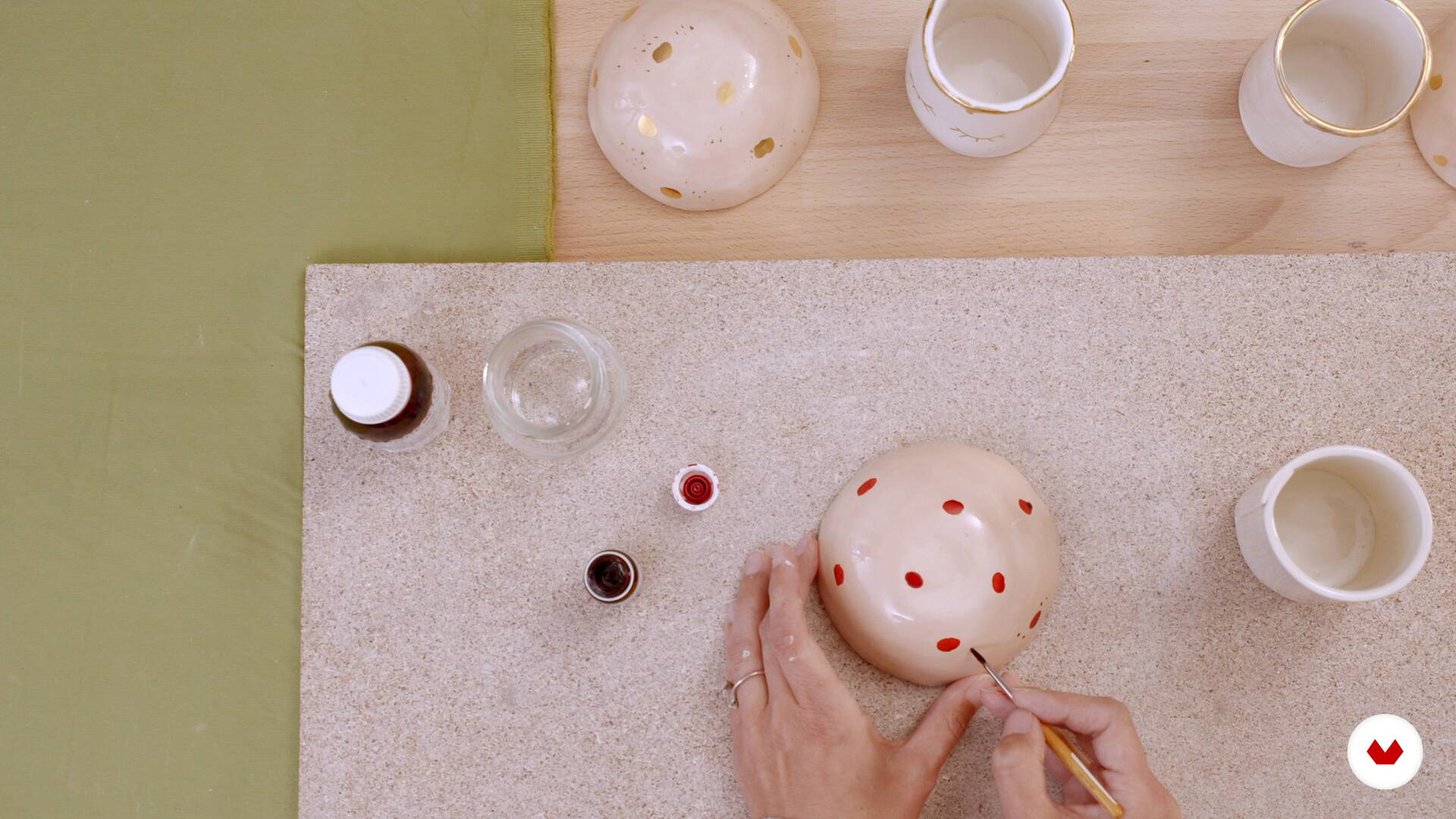
Gold luster
11 minutes, 19 seconds
What's included in this course?
Start by getting to know Paula and her background in fine arts, teaching, and ceramics. She shows you some pieces from her varied collection and then talks about some of her main influences.
Have a look at the materials you need, types of clay, what you need to make plaster molds, and the different glazes to decorate your pieces.
Discover the importance of recycling the excess clay correctly and learn how to make your basic plaster mold at home, which you can reuse as many times as you want to create different ceramic pieces.
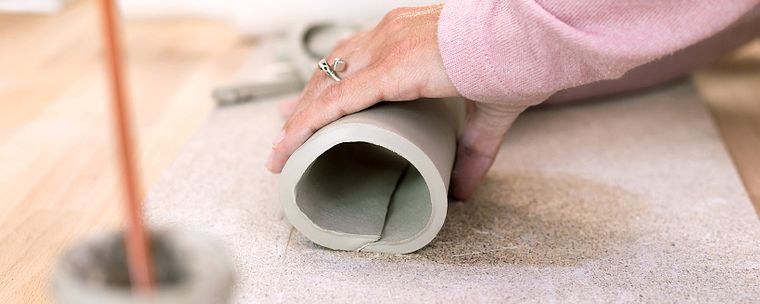
Now it’s time to start crafting! Following Paula's guidance, create the base and bowl for your first set using the slab modeling technique and the plaster mold you made beforehand. Continue with the second set, which is purely decorative, by applying the coil modeling technique.
Move on to the third set and shape it using the pinch technique–no need for a mold this time. To round out the modeling phase, make the fourth set by repeating the same design as the previous ones, but this time larger, and you learn how to add different textures to the pieces.
Learn different decorative clay techniques, how they are used and when it is best to apply them. Explore two decorating methods for air dry clay. Then, discover glazes in suspension, the decorative gold luster technique, the oxide technique or "marble effect," and the enamel wash method.
Finally, let your imagination take over and see the infinite ways you can use each of the sets made throughout the course. To preserve your pieces, Paula gives you valuable advice on how to take care of each one of them on a day-to-day basis and how to transport them.
What is this course's project?
Make four sets in the shape of a mushroom. The first three are made by applying three basic clay modeling techniques and three glazing techniques to create versatile tableware (breakfast, jewelry box, etc.) The fourth set is made using fabric and by applying the slab technique, also adding textures, and using a different glazing technique.
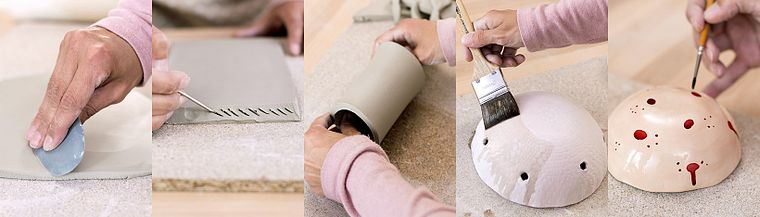
Projects by course students


Who is this online course for?
Anyone interested in getting started in ceramics and curious about the creative process of this craft.
Requirements and materials
To take this course you don't need any previous knowledge, just the desire to discover the creative process of ceramic making.
As for materials, you need a basic ceramic starter kit (modeling tools, sponge, cutter) that you can get in any dollar store, and also clay, a roller, old fabrics, powdered gypsum, enamels, and acrylic paints. Keep in mind that to complete some parts of the course, you need to have access to an artisan kiln or ceramic workshop, which are very easy to rent out.
Reviews
- 8 days ago
Me está resultando un curso muy didáctico y sencillo de seguir. Completamente recomendable
- aguasbentaaPLUS18 days ago
curso fantastico e didatica faraonica!
- xwvjspf7xpPLUS19 days ago
Me ha gustado mucho este curso porque no se limita a enseñar una sola técnica. Explica distintos métodos para trabajar con diferentes tipos de arcilla, incluyendo opciones para quienes no contamos con un horno de cerámica. Eso lo hace muy práctico y accesible, ya que demuestra que es posible crear piezas de buena calidad con materiales y procesos adaptados a cada situación.
- 1 month ago
Recomiendo este curso absolutamente. Me pareció super completo y comprensible. Soy principiante y tenía algunos conocimientos básicos, pero gracias a este curso aprendí mucho más y me siento más segura para empezar a crear. Excelente!!
- 3 months ago
I've seen many courses and tutorials on ceramics, but this one is the most fun, with the most thorough explanations for beginners.

She is a lover of nature and cooking, and combines these two passions in her Bambucito ceramics workshop, where you can enjoy a delicious meal on her handmade crockery.
Content
- U1
Introduction
- Presentation
- Influences
- U2
Knowing the materials
- Meet the different types of clay and tools
- What you need to make molds
- Materials to decorate your pieces
- U3
How to make a mold and clay modeling techniques
- Brief explanation of the ceramic process
- How to recycle clay at home
- Making a plaster cast
- Modeling using Slabbing I
- Modeling using Slabbing II
- Modeling using Coiling I
- Modeling using Coiling II
- Pinching modeling
- Slabbing Modeling with textures
- U4
Clay Glazing Techniques
- Mud decoration without oven
- Enamels in suspension
- Gold luster
- Decorate with oxides. Marble effect
- Glaze with gouache
- U5
Different uses, care and transport of your parts
- Let the imagination fly
- Care and transport of parts
- FP
Final project
- Ceramic Decorative Techniques
What to expect from a Domestika course
Learn at your own pace
Enjoy learning from home without a set schedule and with an easy-to-follow method. You set your own pace.
Learn from the best professionals
Learn valuable methods and techniques explained by top experts in the creative sector.
Meet expert teachers
Each expert teaches what they do best, with clear guidelines, true passion, and professional insight in every lesson.
Certificates
PLUSIf you're a Plus member, get a custom certificate signed by your teacher for every course. Share it on your portfolio, social media, or wherever you like.
Get front-row seats
Videos of the highest quality, so you don't miss a single detail. With unlimited access, you can watch them as many times as you need to perfect your technique.
Share knowledge and ideas
Ask questions, request feedback, or offer solutions. Share your learning experience with other students in the community who are as passionate about creativity as you are.
Connect with a global creative community
The community is home to millions of people from around the world who are curious and passionate about exploring and expressing their creativity.
Watch professionally produced courses
Domestika curates its teacher roster and produces every course in-house to ensure a high-quality online learning experience.
FAQs
In this course, you'll learn hand-building and wheel-throwing techniques, glazing, marbling, preparing and using slip, plaster molds, decorating with acrylics and oxides, recycling clay, and personalizing pieces like tableware, bowls, and imprint tiles.
Yes, the course is designed for people with basic pottery experience who want to refine their modeling, glazing, mold-making, and advanced decoration skills.
You'll need clay, basic pottery tools, a wheel (optional), glazes, oxides, plaster, molds, ribs, sponges, rollers, wire cutters, and brushes. Access to a ceramic kiln is also recommended for certain techniques.
Yes, many techniques can be done at home with accessible materials. For pieces that require firing, it's best to coordinate with local studios or kiln services that offer pick-up and delivery.
You'll work with stoneware, black clay, and air-dry clay. The choice depends on the type of piece and desired finish; the course explains their uses and differences.
High-temperature glazing involves applying a compatible glaze to a dry or bisque-fired piece and firing it in a kiln above 1200°C. The course covers steps, precautions, and glaze types.
Yes, you'll learn how to create a marble effect on ceramic pieces by combining oxides, oils, and different clays to achieve unique veins and finishes.